image description
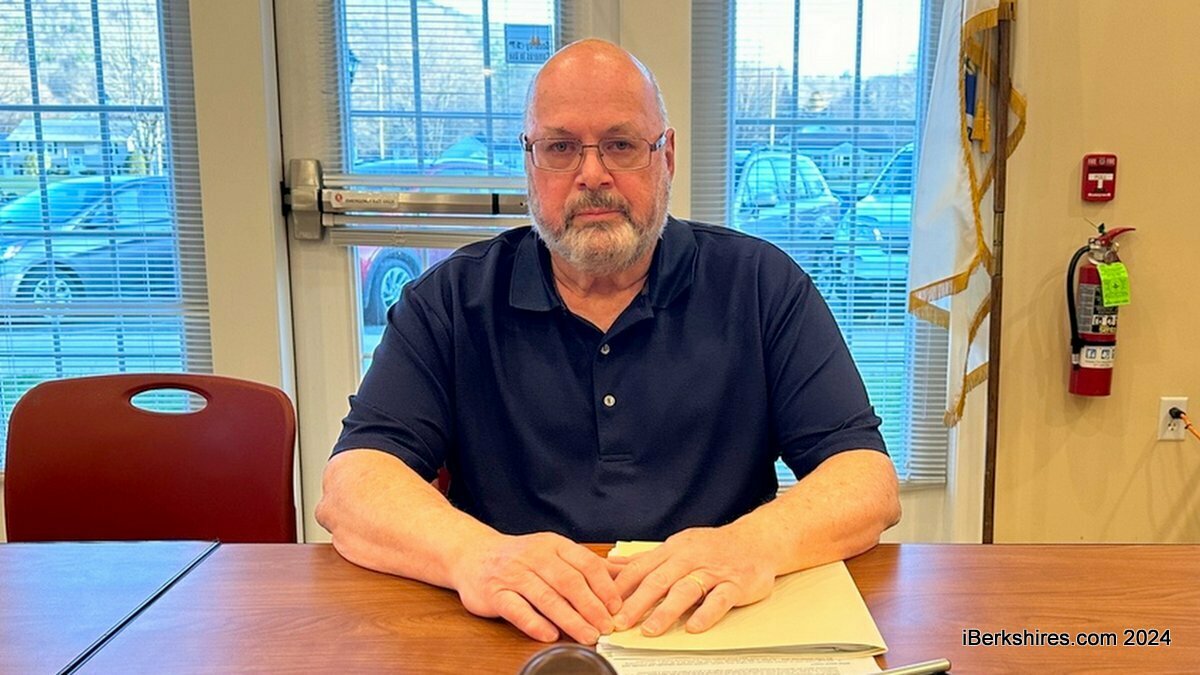
Select Board incumbent Robert Bishop was re-elected to a fourth term on Monday.

Dalton Elections See High Turn Out; Select Board Incumbent Wins

By Sabrina DammsiBerkshires Staff
Print Story | Email Story
DALTON, Mass. — More than 800 residents cast their votes during Monday's town elections, resulting in Select Board incumbent Robert Bishop retaining his seat.
 
"I feel like it was it was a high turnout. We had a lot of mail-in ballots … I think the one contested Select Board race definitely brought people out," Town Clerk Heather Hunt said. 
 
"I think we saw a lot of voters that we haven't seen in a very long time, and I think a lot of them came out specifically to vote for the Select Board." 
 
The town sent out approximately 823 mail-in ballots and received back more than half, Hunt said. 
 
Bishop has served on the Select Board for three terms, and the voters agreed they want him for a fourth three-year term. 
 
In a previous interview with iBerkshires, Bishop emphasized the need for collaboration, obtaining project funding, and keeping taxes down while supporting town departments and employees.  
 
Robert Collins challenged Bishop for the seat, running a campaign focused on the need for a new voice on the board and more discussion.
 
Bishop received 638 votes, while Collins received 201 votes. The race also had two write-in votes, and 12 voters left the Select Board race blank. 
 
Although the voters overwhelmingly supported Bishop for the seat on the Select Board, Collins may still be able to serve the town in a different capacity — the Planning Board.
 
The Planning Board had one open seat but had no candidates running. It received a total of 62 write-in votes, with Collins receiving more than five write-in votes, thus far, and is projected to be the winner.
 
"That tells me that I may not have won the Select Board seat, but people liked my message or liked my ideas so they wrote me in on the planning board. I take it as a compliment that people didn't feel that I was possibly ready for the Select Board," Collins said.
 
"I needed to maybe learn or experience politics a little more because I was green, and I'll take the Planning Board in stride. And if I am awarded that seat, I will definitely contribute the best I can and I will take that experience and learn for the next time I run for selectman."
 
The town is still tallying all the write-in votes received for the vacant seats on the Planning Board, Finance Committee, library trustees, and cemetery trustees. There were 210 write-in votes in this election.
 
The Finance Committee received 103 write-in votes, with the projected winner, Susan Vigeant, receiving almost 70 thus far.
 
Many of the boards and committees didn't have a candidate for each of the open positions. The Finance Committee needed four candidates, but only three entered the race; the library trustees needed four, but only two entered the race; and the Planning Board received no candidates for its open seat. The high number of write-ins was likely mostly generated by the lack of candidates, Hunt said. 

Tags: election 2024,   town elections,   


If you would like to contribute information on this article, contact us at info@iberkshires.com.

Berkshire Towns Can Tap State Seasonal Communities Resources

BOSTON — Governor Maura Healey announced that 18 additional municipalities across Massachusetts have been designated as Seasonal Communities, opening up new tools, support and grant funding to help them manage seasonal housing pressures. 
 
Created as part of the historic Affordable Homes Act signed into law by Governor Healey in 2024, the Seasonal Communities designation was designed to recognize Massachusetts communities that experience substantial variation in seasonal employment and to create distinctive tools to address their unique housing needs. The law also established the Seasonal Communities Advisory Council (SCAC).  
 
The Affordable Homes Act identified several communities to automatically receive the designation, including:   
  • All municipalities in the counties of Dukes and Nantucket;   
  • All municipalities with over 35 percent seasonal housing units in Barnstable County; and   
  • All municipalities with more than 40 percent seasonal housing units in Berkshire County. 
  •  
To identify additional communities, the Executive Office of Housing and Livable Communities (HLC) reviewed available data, specifically focusing on cities and towns with high levels of short-term rentals and a high share of second- or vacation homes.
 
In Berkshire County, Egremont, Great Barrington, Lee, Lenox, New Marlborough, Richmond, Sandisfield, Sheffield, West Stockbridge and Williamstown have been designated. 
 
"Our seasonal communities are a vital part of Massachusetts' cultural and economic fabric, but they're also home to essential workers, families, seniors, and longtime residents who deserve a place to live year-round," said Governor Healey. "That's why we're committed to supporting these communities with innovative solutions like the Seasonal Communities designation to meet their unique needs, and I'm thrilled that we're offering this opportunity to 18 additional communities across the state. Everyone who calls these places home should be able to live, work and grow here, no matter the season." 
 
As with the statutorily identified communities, acceptance of the designation for municipalities is voluntary and requires a local legislative vote. HLC will open an application for newly eligible communities that haven't accepted the Seasonal Communities designation to request consideration. 
 
The Affordable Homes Act created several new tools for communities who accept the Seasonal Communities designation to be able to:  
  • Acquire deed restrictions to create or preserve year-round housing 
  • Develop housing with a preference for municipal workers, so that our public safety personnel, teachers, public works and town hall workers have a place to live 
  • Establish a Year-Round Housing Trust Fund to create and preserve affordable and attainable housing for year-round residents 
  • Create year-round housing for artists 
  • Allow seasonal communities to develop a comprehensive housing needs assessment 
  • Permit tiny homes to be built and used as year-round housing 
  • Permit year-round, attainable residential development on undersized lots 
  • Increase the property tax exemption for homes that are the owners' primary residence 
 
View Full Story

More Pittsfield Stories