Clarksburg OKs $5.1M Budget; Moves CPA Adoption Forward
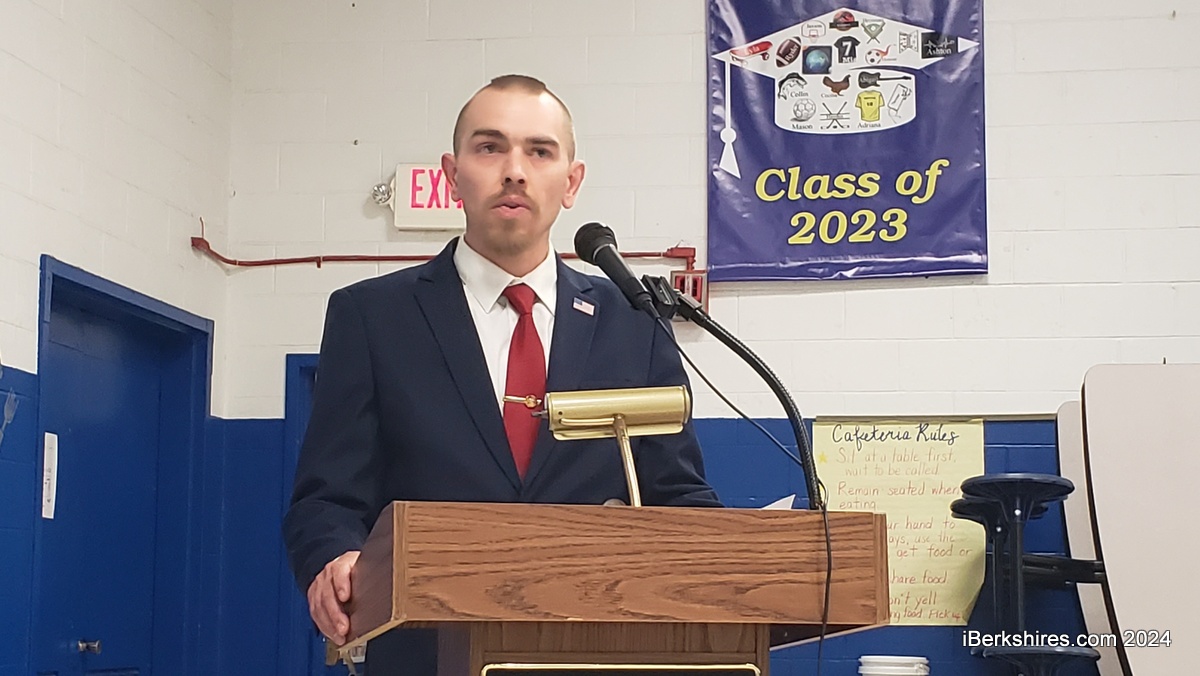
Newly elected Moderator Seth Alexander kept the meeting moving.
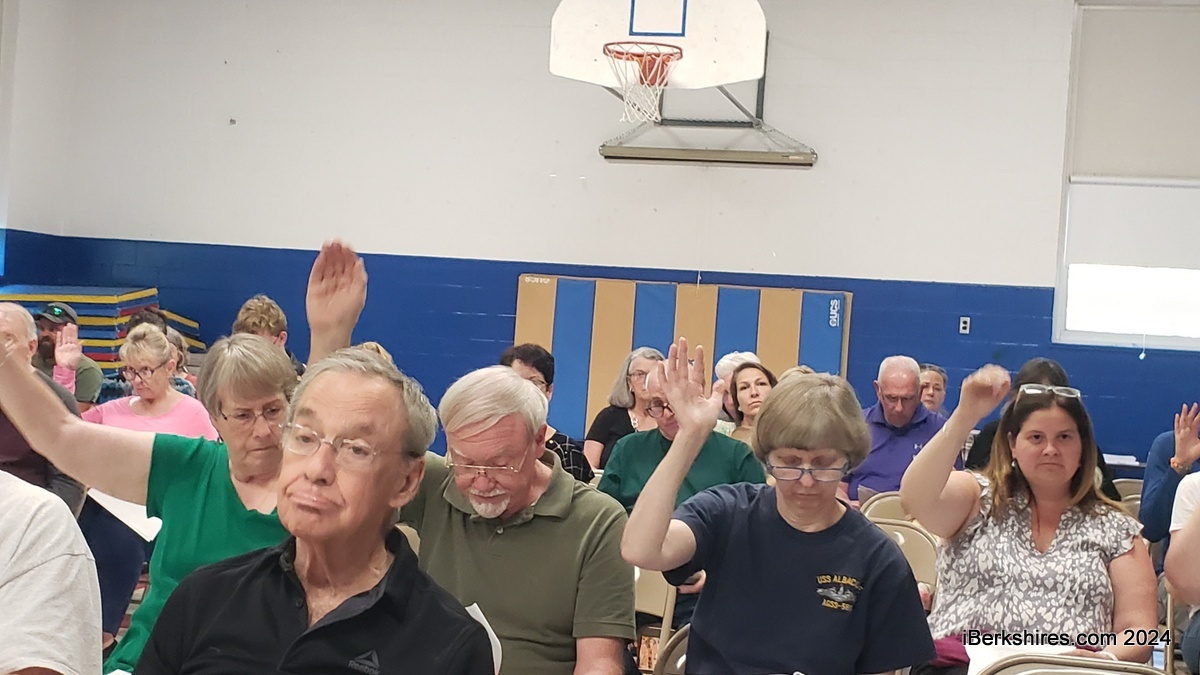
Close to 70 voters at Clarksburg School also moved adoption of the state's Community Preservation Act to the November ballot after a lot of questions in trying to understand the scope of the act.
The town operating budget is $1,767,759, down $113,995 largely because of debt falling off. Major increases include insurance, utilities and supplies; the addition of a full-time laborer in the Department of Public Works and an additional eight hours a week for the accountant.
The school budget is at $2,967,609, up $129,192 or 4 percent over this year. Clarksburg's assessment to the Northern Berkshire Vocational School District is $363,220.
Approved was delaying the swearing in of new officers until after town meeting; extending the one-year terms of moderator and tree warden to three years beginning with the 2025 election; switching the licensing of dogs beginning in January and enacting a bylaw ordering dog owners to pick up after their pets. This last was amended to include the words "and wheelchair-bound" after the exemption for owners who are blind.
The town more recently established an Agricultural Committee and on Wednesday approved a right-to-farm bylaw to protect agriculture.
Larry Beach of River Road asked why anyone would be against and what the downside would be. Select Board Chair Robert Norcross said neighbors of farmers can complain about smells and livestock like chickens.
"We want to keep farms in Clarksburg and we want to back farms," he said.
A half-dozen articles allocating the town's $571,000 in free cash passed unanimously with $142,000 for Department of Public Works truck; $8,000 for new software for the assessor; $5,000 to replace the exterior doors on the Community Center; $113,371 to set aside to match a grant for the school roof; $231,000 to replenish the stabilization account; and $72,000 to lower the tax rate (this funds the preK and underwrite the school budget).
Voters gave the OK for accepting the turnaround on the dead-end Pine Avenue as a public way.
"The turnaround on Pine Ave has been maintained by the town but it doesn't own it," said Highway Foreman Kyle Hurlbut.
All but one of the 23 articles passed unanimously; a handful of voters rejected the CPA article.
The article was amended on the floor by Historical Commission Chair Jeanne Moulthrop to exempt the first $100,000 valuation and those who can qualify for low-income housing and low to moderate senior housing low, and to set a surcharge on resulting tax bills of 3 percent.
"I want to know what the benefit is to the community," said Jean King of River Road. "I'm worried about the 3 percent. I just want to know why do we want to do this, but what is the benefit for our community?"
The state act is funded by fees from registries of deeds that are allocated by up to a 100 percent match to nearly 200 communities have adopted the act.
The 3 percent surcharge would be bill quarterly with the tax bills; a house valued at $300,000 would likely see a surcharge of around $100.
The funds can be used for open space and recreation, historic preservation and affordable housing. Williamstown has used the funds on everything from river organizations to historic barns to a nonprofit community pool to first-time homebuyers programs to town recreational facilities.
Town officials have supported adoption of the act as a way to leverage funding from the state to address community needs the town can't afford.
"It's a method and a way to rehab and preserve community resources. And it does specifically say historic buildings. Our Town Hall is a historic building. This school is the historic building," said Town Administrator Carl McKinney. "So what you're in effect doing is you're getting the Commonwealth of Massachusetts to fund half."
Should it pass in November, a committee made up of representatives of town boards (as delineated by the act) review applications for funds and make recommendations to the Select Board. Town meeting gives final approval.
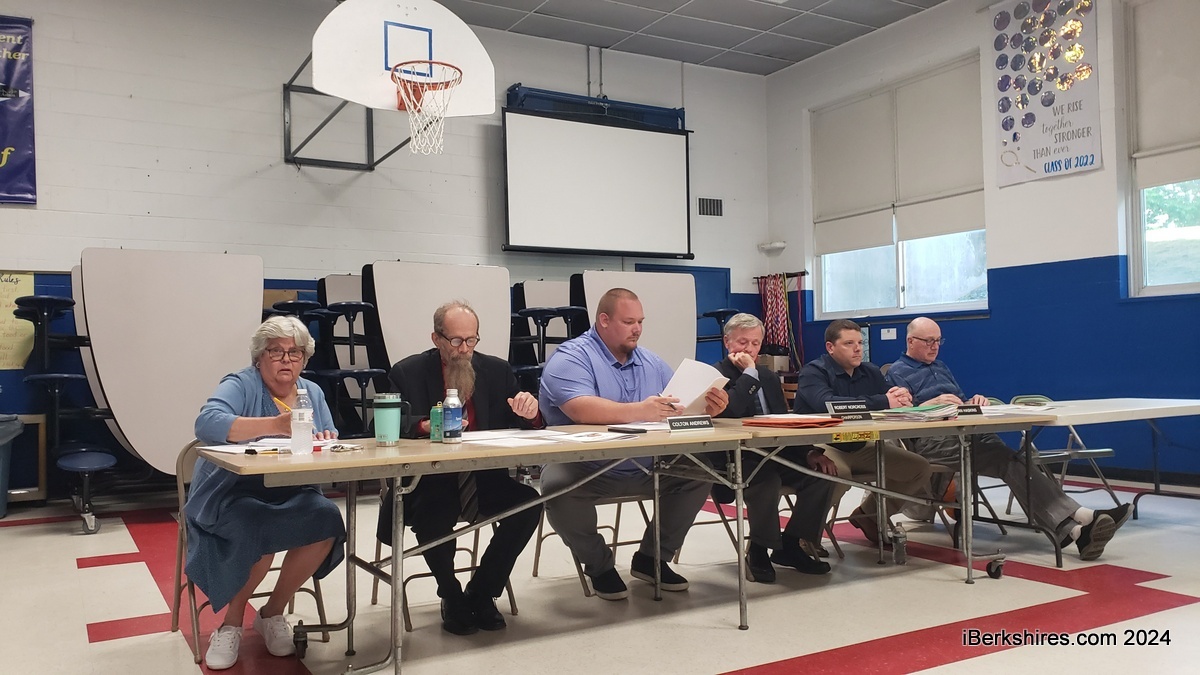
The meeting marked Seth Alexander's first as newly elected town moderator and Colton Andrews as a member of the Select Board.
Town meeting recognized Ray Moulthrop, for whom the town report is dedicated. Moulthrop, who died last year, was active on civic boards and town elections for many years. Alexander also thanked Jeffrey Levanos, who has served on the School Committee and Select Board. He declined to run for re-election this year.
Tags: annual town meeting, clarksburg_budget, CPA, fiscal 2025,