Williamstown's Cost Rising for Emergency Bank Restoration
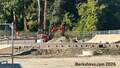
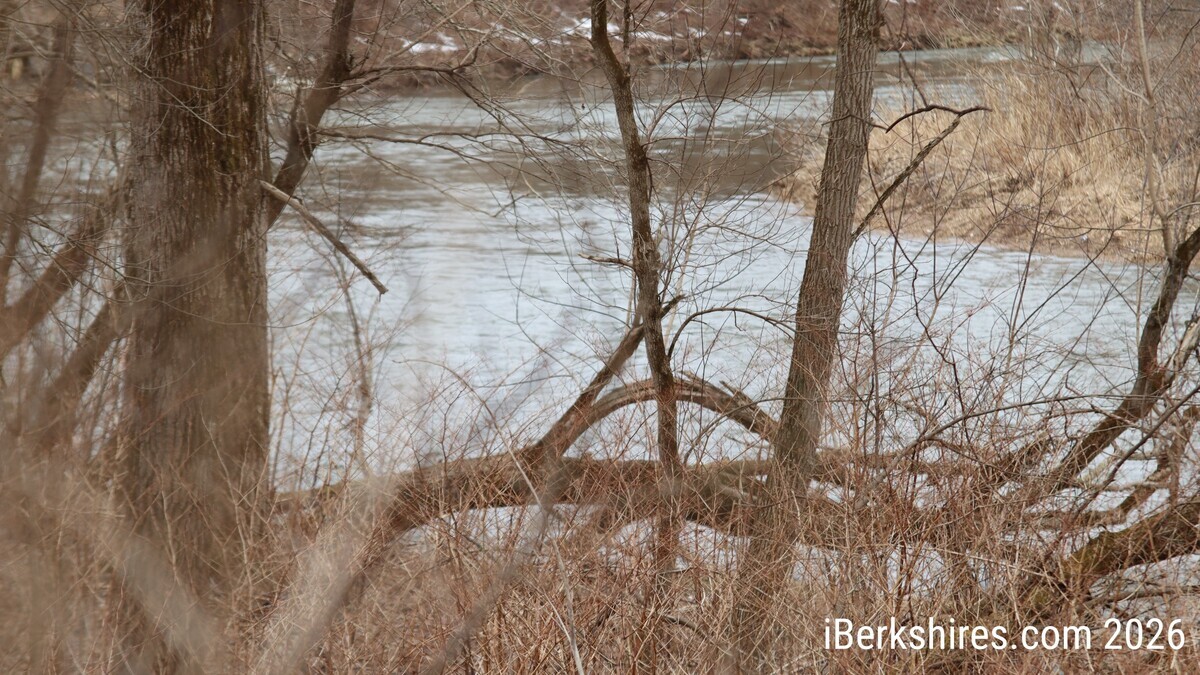
WILLIAMSTOWN, Mass. — The cost to stabilize the bank of the Hoosic River near a town landfill continues to rise, and the town is still waiting on the commonwealth's blessing to get to work.
Department of Public Works Director Craig Clough was before the Finance Committee on Wednesday to share that, unlike the town hoped, the emergency stabilization work will require bringing in a contractor — and that is before a multimillion dollar project to provide a long-term solution for the site near Williams College's Cole Field.
"I literally got the plans last Friday, and it's not something we'll be able to do in-house," Clough told the committee. "They're talking about a cofferdam of a few hundred feet, dry-pumping everything out and then working along the river. That's something that will be beyond our manpower to do, our people power, and the equipment we have will not be able to handle it."
Clough explained that the cofferdam is similar to the work done on the river near the State Road (Route 2) bridge on the west side of North Adams near West Package and Variety Stores.
"We don't know the exact numbers yet of an estimate," Clough said. "The initial thought was $600,000 a few months ago. Now, knowing what the plans are, the costs are going to be higher. They did not think there was going to need to be a coffer dam put in [in the original estimate]."
The draft capital budget of $592,500 before the Fin Comm includes $500,000 toward the riverbank stabilization project.
The town's finance director told the committee he anticipates having about $700,000 in free cash (technically the "unreserved fund balance") to spend in fiscal year 2027 once that number is certified by the Department of Revenue in Boston.
Fin Comm Chair Frederick Puddester noted that if the final free cash figure comes in that high, the town would have another $100,000 to go toward the riverbank problem. Finance Director David Fierro also told the committee that the town currently has about $1.3 million in its stabilization account.
Down the road, the town will face a different magnitude to finance a permanent solution beyond the emergency stabilization. Clough told the Finance Committee on Wednesday that the town has heard "upwards of $3 million" for that project, which does not include other sites along the Hoosic that need to be addressed.
In addition to the fiscal challenge, the town is being hampered by conflicting priorities of state agencies with jurisdiction over the project, Clough explained.
"All up and down the Hoosic River, we have the hairy-fruited sedge grass … right where we need to do the work," he said. "We have to find a way to protect it or move it. [Mass Wildlife's Natural Heritage and Endangered Species Program] says you can't do any work because of this protected grass until we figure out a way to meet their requirements.
"We have one side of Mass [Department of Environmental Protection] saying it has to be done today but another side of Mass DEP saying don't do anything, which doesn't make any sense to me, because we're protecting the grass but letting trash ruin … the habitat."
Nine populations of the critically imperiled sedge have been identified in Massachusetts, all in Berkshire County, according to Mass Wildlife. These are in Adams, Cheshire, Great Barrington, North Adams and Great Barrington.
And, if the Hoosic someday breaches the capped landfill, opening the town to potential liability, Town Manager Robert Menicocci said.
"We are concerned about polluting the river," Menicocci said. "And we have neighbors in two additional states who might have something to say about that and would come after us as well.
"Craig wants to take care of this quickly."
The solution might involve removing the endangered plant life and replanting it elsewhere.
"But we have to find the right place for it to flourish," Clough said. "And then there's a management plan that has to go along with that that saddles us forever with work that needs to be done. We're actually dealing with part of the [Mohican] Shared-Use Path where this stuff has been growing and wasn't managed properly in the past. Now we have to deal with all that management as well.
"It's basically people sitting in an office in Boston who won't come out and look at our problem saying, 'This is our policy. This is what you have to do.' We're trying to work through it methodically. It's just very time-consuming. In the meantime, we have snow melt and rain."
In addition to the swelling and shifting Hoosic River, the Finance Committee had other water issues on its agenda on Wednesday: namely the municipal water rate the committee will send to annual town meeting in May for approval for fiscal year 2027, which begins June 1.
The current rate of $3.85 per 100 cubic feet for residents on the municipal water system has not changed since FY24.
That rate could see a significant increase in FY27 depending on how the town decides to address two capital projects facing the water department: a well replacement scheduled for FY27 ($2.5 million) and the replacement of customers' water meters scheduled for FY28 ($1.5 million).
The town's water department has cash reserves to cover the well replacement, but those reserves will be depleted without an increase in the rate. And an even more substantial increase will be needed to pay for the meter-replacement project.
The committee had some back-and-forth on the efficacy of bonding the capital projects versus a more sizable increase in the water rate for FY27.
Coupled with rising cost for sewage disposal, the draft budget before the Fin Comm saw on Wednesday would see users of municipal water and sewer paying nearly one-fifth more for those services in FY27 versus the current fiscal year.
"What's proposed in the budget are rates that are up — when you squish together water, sewer and the Hoosac Water Quality district — I believe, 18 percent," Fin Comm member Melissa Cragg said. "When you add those three together … $14.48 [per 100 cubic feet of water] is where we wind up from $12.25."
Fierro told the committee that those rate increases are based on a strategy of cash funding for the two big capital projects in the water department.
Puddester said he wants the Fin Comm at its March 11 meeting to finalize a water rate to send to town meeting. In the meantime, he said he would meet with Clough and Fierro to work out different scenarios that could include borrowing for FY28 project.
Tags: endangered, erosion, Hoosic River, riverbank,