Hearing Set on Specialty Minerals Landfill Permit
ADAMS, Mass. — Specialty Minerals is requesting a revision to its landfill permit to create another landfill at its quarry that will last it nearly 100 years.
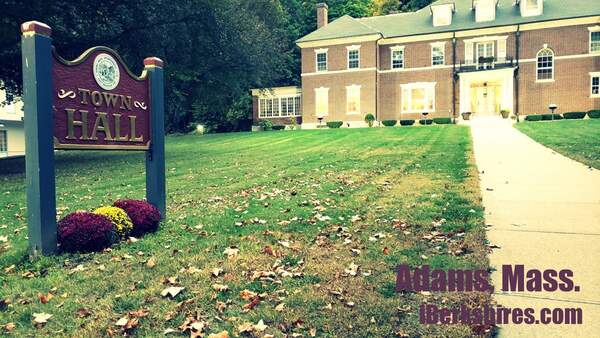
The Board of Health will hold a public hearing on Wednesday at 4 p.m. at Town Hall. It will consist of a presentation by SMI, questions from the board and questions and comments from the public as time permits.
The company uses the landfills to dispose of solid waste comprised of mineral products such as crusher waste, pond solids and waste flousolids from its mining and production facilities.
According to plans filed in 2019 with the state Department of Environmental Protection, "the existing landfills will reach capacity in 2024." Specialty Minerals is proposing to locate the new landfill on 122 acres adjacent to its existing landfills.
It would have a maximum disposal capacity of 135,000 tons per year and have an estimated lifespan of about 92.4 years.
The state has approved waivers related to the groundwater protection system based on the nature of the wastes and that they will be placed at a minimum 4 feet above the groundwater level since monitoring over the past 30 years has not shown impacts from existing landfills.
The landfill will be constructed in three phases, with the first two cells having a projected lifetime of about 30 years each and the third about 33 years.
"The full projected buildout of the landfill will have a footprint of 53.8 acres, a total capacity of 8,709,125 [cubic yards], and an estimated lifetime of 92.4 years. The perimeter of the landfill will be over 250 feet from the nearest surface water (Upton Brook), over 100 feet from the property line, and over 1,000 feet from the nearest residences," according to the permit narrative.
The draft permit is dated Feb. 9 and the comment period for MassDEP was through April 8. During this time, an abutter on Brown Street expressed concerns over noise and dust from the landfill and the stability of the former stockpiles located to the west of Old Columbia Street.
The Hoosic River Watershed Association has concerns over increased temperature downriver and with the expansion of SMI operations creating discharges into the river.
MassDEP noted that the permit does not approve expansion of operations or discharges and that the company must operate within its permit regarding noise and dust.
The full proposal can be found here.
SMI has so far passed preview of the Massachusetts Environmental Policy Act, the DEP review and a third party inspector.
SMI will also hold at least one other public hearing at a time and place to be determined. The Board of Health may hold another public hearing, depending on the sense of the community.
Tags: board of health, landfill, specialty minerals,