Retired Clarksburg Police Chief Reflects on Career
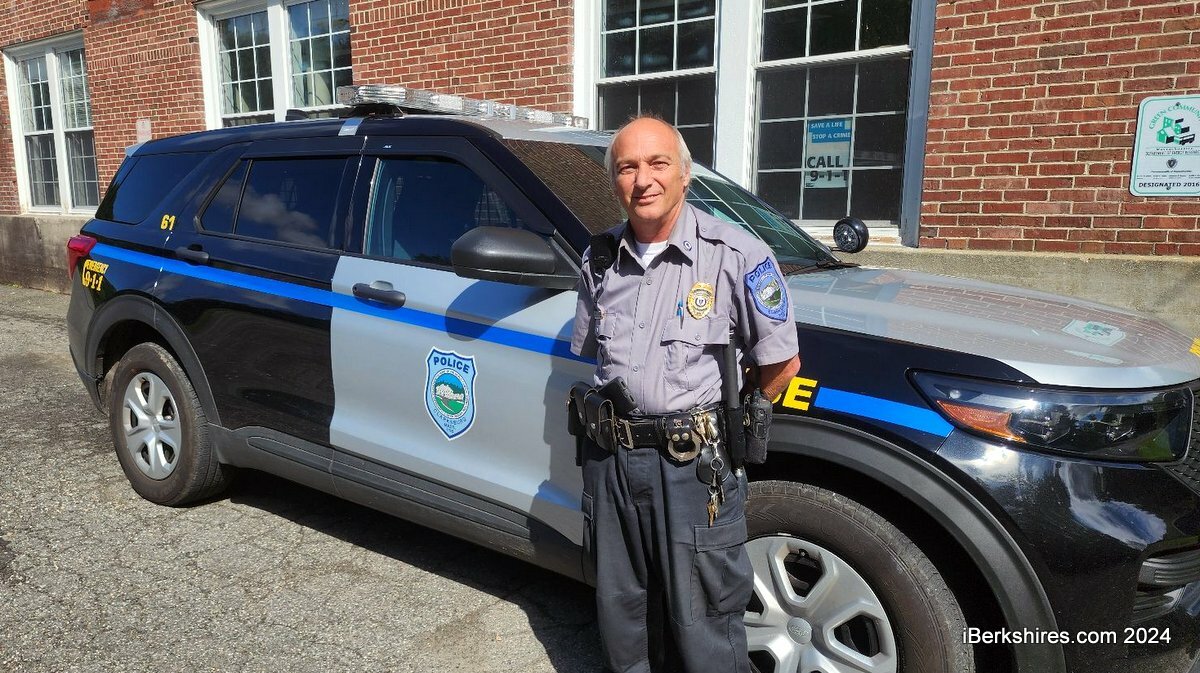
CLARKSBURG, Mass. — Michael Williams signed off shift for the final time on Friday after nearly 40 years as a police officer in Clarksburg.
He retired 100 years after the Police Department was established with the appointment of Police Chief George Warren Hall of Briggsville, a former constable and a selectmen.
Williams joined the force on a "fluke" as a part-time officer in 1985 and became chief in 2003. Like in many small towns, public employees tend to wear many hats and take on outside tasks and the chief gradually took on other duties ranging from emergency management director to backup town treasurer.
During his tenure, he saw the police offices in lower level of Town Hall remodeled to provide safer and more efficient use for officers and the public, the police garage redone and new cruisers put on the road. Williams has also seen changes in policing from mainly catching speeders when he first signed on to issues with domestic abuse and drug use.
The police force itself had dwindled down from six to eight officers and a sergeant to the chief and one part-time officer. With Williams' departure on Friday, the Clarksburg Police Department ceased to exist for the first time in decades.
The Select Board last week voted to suspend operations and rely on the State Police for coverage, but have already asked if Williams could continue in some a part-time capacity.
His last official act as chief was escorting the remains of a World War II casualty missing for 82 years.
Williams shared some of his story prior to his retirement. The responses have been lightly edited for style and clarity.
What interested you in law enforcement?
Williams: I kind of always liked growing up the police shows and I just read in the paper one day that Clarksburg was looking to hire part-time police officers. Dennis Tuper was chief then. I just was like, for the heck of it, I went, 'yeah, that'd be interesting ... I'll just put an application and see what happens.' Then I got a call up, asking me to come in and if I would like the job.
We had to do the brown book test (used as an alternative to the academy). Then when you could do an academy type thing, I went to that for a time. It was actually in Pittsfield. I went into that training, and that was quite interesting. It was similar to what we have now, but a shorter amount of time. ... (Williams had just graduated from McCann Technical School in 1985 when he joined the force.)
How did you end up becoming police chief?
Williams: I worked at Steinerfilm [in Williamstown]. I was in the first round of layoffs. I got laid off, and then there were a couple guys that were out on medical, they had surgeries or whatever, ... so they called me and asked me if I'd come back to fill in. I went back and I was filling in, but there was no promise of going anywhere. ... Then this job came up [when Chief Mark Denault left for another job]. I was actually working full time just about both for since, I think he left around March or April to June, and then I went to the academy July 1.
(Williams had been a sergeant for three years when he was appointed chief on June 11, 2003. Town meeting had considered whether to reduce the force but voted to fund a full-time police chief.)
What has changed in policing since you started?
Williams: In '85, we pretty much, used our personal vehicles with a blue light on the dashboard. You carried the .38 revolver. It was a lot different. And then it was mainly just traffic ... mostly it was stopping speeders. And speeding was, of course, just the $50 ticket no matter how fast you were going.
People were always coming through town. On a Friday night, Billmont's [convenience store] near closing, it was like speeding heaven, because you'd have all the people just over 18 that could buy in Vermont. (Massachusetts had shifted the drinking age higher at the time.)
We had no bulletproof vests, the most you were worried about was a fistfight with somebody. We carried our police coats in the vehicle in case we got a call, you had your firearm on you. If you didn't, you went on the call anyway. You just had your handcuffs or whatever. You never really heard of shootings or anybody being shot, police officers or anything. The big thing was knives. And now we're up to, you know, shootings. From '85 up until 2002-2003, we never had any major shootings, like homicides. After 2003, we've had homicides and one suicide that had to do with a homicide.
From when I started, we went from an office that was stuffed in the basement corner, no room, mildew all over the place because you had no air circulation to a regular police station. From a used Becket cruiser to now two new cruisers. So it's been a big change through the years.
How has it become more difficult to find staffing?
Williams: We functioned on six or seven [officers]. They took care of the evening shifts. We always had somebody on during the evenings. At that time, we were able to staff and have patrol officers out and about, and we covered the weekends, too. Ninety percent of the time we had somebody on. We didn't use State [Police] a lot, you know, kind of for backup a little bit. And we covered everything.
Since COVID, policing kind of dropped down because you weren't arresting anybody, you weren't going to arrest anybody. And then a lot of guys that were part time were in the emergency services and were having to work because of COVID ... so they were working overtime, double shifts to fill in, so it was hard for them to come in at times. And then with the [police] reform, that went through, we couldn't train anybody. So with COVID and that, we weren't getting the people coming through because that intermittent reserve academy shutdown.
What calls were most memorable in your career?
Williams: The one that stands out is the guy who was gored by the bull. I thought, OK, it's farming accident, you know, the these things happen. Then I had State Police detectives that were going, 'I grew up a farm this doesn't just happen.' And [Dr. Benjamin] Glick came to the scene and he was there when we were talking, and he goes, 'I grew up a farm, this isn't a normal.'
The guy was down in the middle of the field, and this bull was mixed in with the other animals. We didn't know which one and they were trying to get emergency personnel down to check on him. ... It that just kind of, you're never going to forget. It's not something normal.
Williams said Clarksburg also saw an increase in drug use, like much of the nation.
Williams: We had a bit of it, you know, like everybody else kind of dealt with it. ... We kind of peaked a little bit. But I think COVID had a lot to do with it. Then it kind of died down a little, down on the overdoses, but that's I think because police have also had to take up more emergency response. Now, like everybody, firefighters and police are sometimes the first responder on the scene and you have to deal with that.
And then we kind of got into domestics, because when domestic laws came in, it was no more just standing there going, well, you can go and follow up with a complaint. And you knew you would be back there probably in a few days arresting people.
What else have you been called on to do? You were emergency management director, backup treasurer and took over the keys and passwords for the security systems.
Willams: If you can't trust person being the police chief, who else can you trust to be the person that kind of keeps security systems? I do some grants. In a small town you step in as the animal control officer. When they started talking about this [suspending operations], I was like, 'Oh yeah, by the way, I did this ... and this.' How it starts out is there's a bunch of people on a list, and then you're the last one standing. It's like when the fire alarm at the Community Center trips, or we have a communication error, I get called from the alarm company. ... It's up to me to go, OK, I gotta check it out.
What are you most looking forward to in retirement?
Williams: Staying home, not answering the phone. It's the worst weather, that's when you're going to have the car accidents. That's when you're going have to be out there and ... it's like this is the last place I want to be. Now I will just sit there and watch it. I'll call a Lumpy and say, 'hey, how's the roads out there? They good? Because it's fine right where I'm sitting. In fact, hey, I'm having a beer.'
Tags: police chief, Q&A, retirement,