Williamstown Business Owner Calls for Action on Economic Development
 |
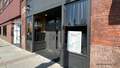
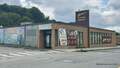
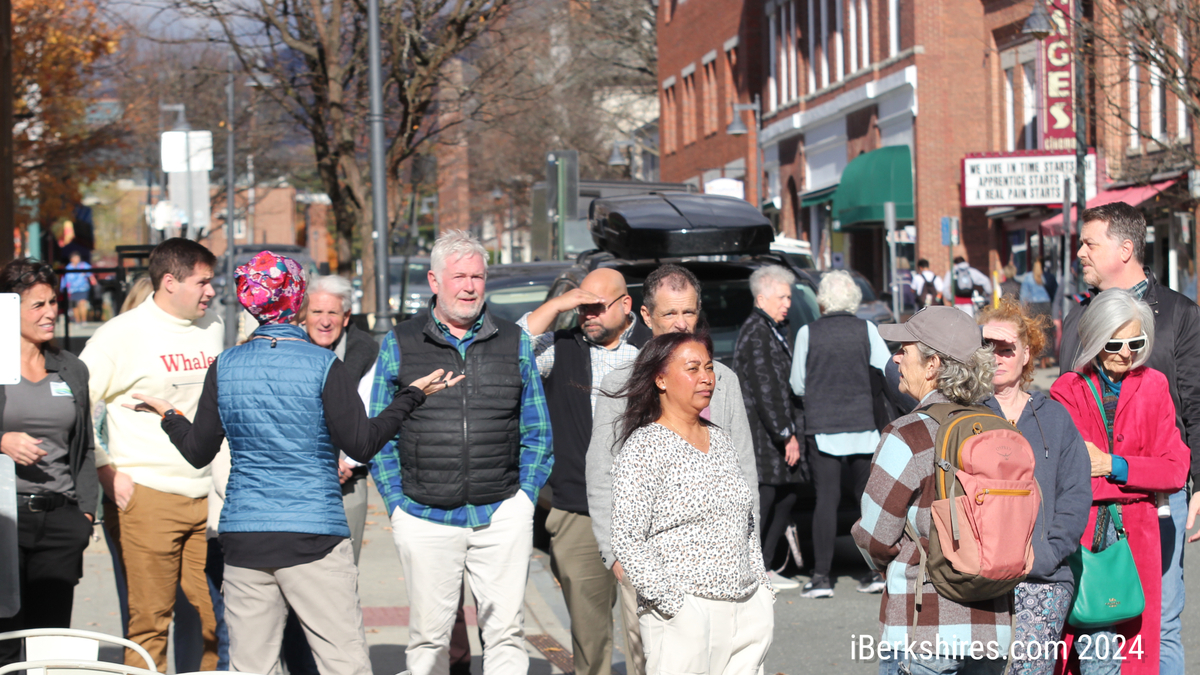
| Amy Jeschawitz leads a walking tour on Spring Street on Thursday. |
WILLIAMSTOWN, Mass. — A Spring Street business owner and former town official is sounding the alarm about the economic health of the Village Business District.
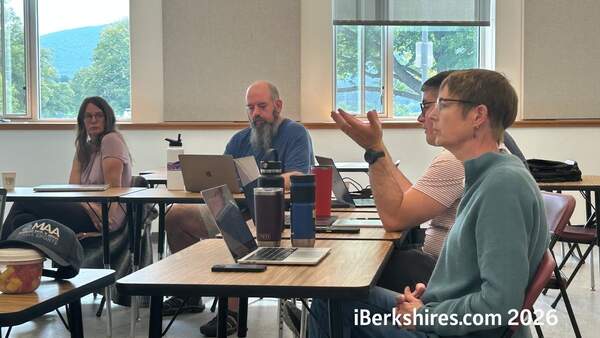
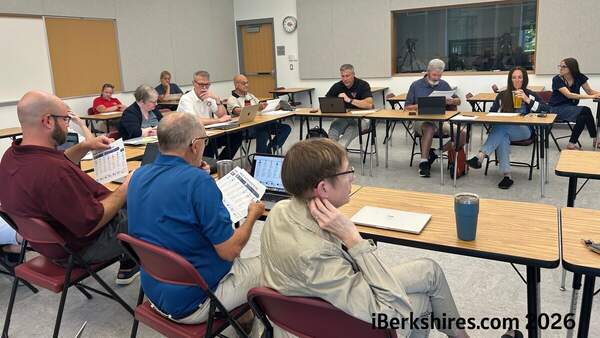
Amy Jeschawitz, who owns Nature's Closet and formerly served on the Planning Board, went to the Finance Committee last week to raise concerns about what she characterized as the lack of an "overall plan" for economic development in the town.
"Economic development, housing, new growth and business all go hand in hand," Jeschawitz said, alluding to the topic that dominated the Fin Comm's meeting before she addressed the body. "I know what a struggle it is for housing in this town."
Jeschawitz sent a letter to both the Fin Comm and the Select Board in which she called on town officials to take action.
"As a community we can no longer sit and pretend we are insulated because we live in Williamstown and have Williams College," Jeschawitz wrote. "We need growth, we need new homes, we need jobs, we need better transportation options and we need to start filling the needs of the tourism industry who come here from NYC and the Boston area.
"We do not need to form a committee to study this – we have done that repeatedly over the years to no action. Reports sitting on shelves. We need you, the Select Board and Finance Committee to start taking actions."
Jeschawitz appearance before the Finance Committee on Oct. 29 was followed by a "Williamstown Business District Walking Tour" on Thursday afternoon that was posted as a public meeting for the Select Board to have what the Williamstown Chamber of Commerce billed as "a constructive conversation … to discuss ways to improve the economic development of Williamstown."
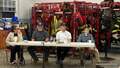
Three Select Board members, two members of the Finance Committee, business owners from Spring Street and Water Street, the town manager and a representative of Williams College participated.
Jeschawitz, who has owned her Spring Street business for five years, painted a bleak picture at the Fin Comm meeting a week earlier.
"If you talk to a lot of downtown business owners, business is down in town," Jeschawitz said. "Foot traffic is down in town. We're getting by, but I feel, as a community, there are things we can start doing better."
She said that Spring Street does not need more places to eat but rather stores where locals and visitors can shop to draw them downtown.
Jeschawitz implied that Williamstown should be recruiting such businesses. She told the committee that in the past year alone, she has been contacted by people doing economic development in Albany, N.Y., and the South County town of Lee encouraging her to open a branch location in those communities.
"Are we doing those things here?" Jeschawitz asked. "Are we curating our street?"
"We hear, as a business owner, from the people who come to the community every day. We have lost a lot of shopping in our main district. That's what I hear. Is there anywhere else to shop? And I don't have an answer. I can send them to Roam and Provisions on Water Street that have opened. We've been talking about developing Water Street ever since I moved her, and that is 17 years ago.
"There are things that are still empty in this town from when I moved here 17 years ago."
She offered a couple of specific examples of where she thinks the town could both maintain and better utilize its land. She told the Fin Comm that Spring Street was "filthy."
"We had Family Weekend at Williams College last weekend," Jeschawitz said. "The street sweeper didn't even come down and clean up the leaves that are on it. It's trashy."
She suggested that the former town garage site on Water Street also could be cleaned up and used as a new home for the Williamstown Farmers Market. The move would put an underutilized asset to work and free up parking spaces in the Spring Street lot on Saturdays in the summer when visitors might be inclined to come downtown.
A private lot on Spring Street also could be put to better use, she said. The town could pursue a grant to create outdoor recreation space on the vacant property owned by her landlord, Mark Paresky, Jeschawitz said.
Jeschawitz said the town could devote resources to promoting its assets, like the Appalachian Trail and the Clark Art Institute, suggesting the town should have a travel and tourism office.
In answer to a question from Fin Comm Chair Fred Puddester, Jeschawitz said such promotion should be a public-private partnership between the town and the Chamber of Commerce.
Chamber Executive Director Susan Briggs told the Fin Comm her group struggles with the question of how to do more economic development given its modest revenue stream.
"It is time for a change," Briggs said. "What that looks like. I don't think any of us has an idea. I think we're all ready to talk about that idea."
Town taxpayers do support the Williamstown Chamber's work through an annual appropriation at town meeting. In the current fiscal year, that outlay is $55,000.
The money supports one part-time employee, Briggs, two annual townwide promotional events, December's Holiday Walk and the Independence Day parade and related activities, the calendar website Destinationwilliamstown.com and brochures that are distributed throughout the region.
Town Manager Robert Menicocci told the Finance Committee that, despite the difficult fiscal climate he laid out earlier in the Oct. 29 meeting, the town may need to spend money to make money.
"What's important to recognize is that everything that has been brought up today is very much on the consciousness of everybody," Menicocci said. "One of the key challenges of all these pieces is it takes money to do some of this.
"One of the things I didn't mention in terms of [fiscal year 2026 budget] possibilities … is a grant writer. … There's funding out there, but it's hard to get your hands on, and you have to have a strong skill set to win those grants.
"If the town can find means to invest in some of the work, we can help kick off some of those efforts."
Tags: Business,