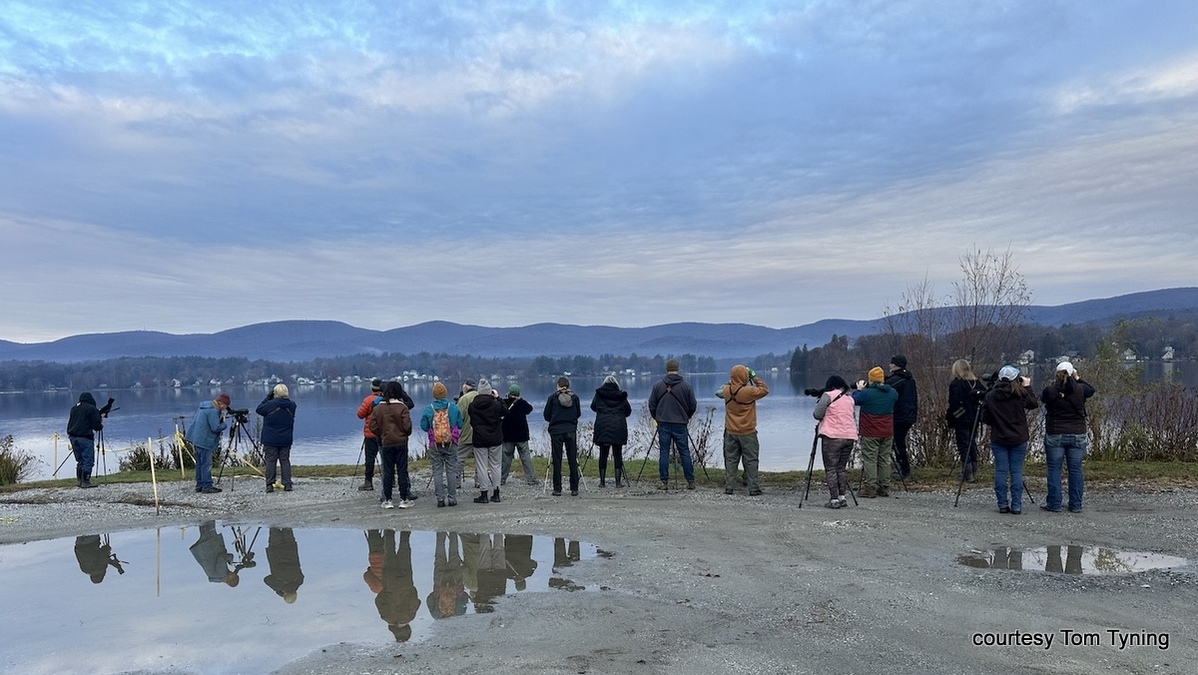
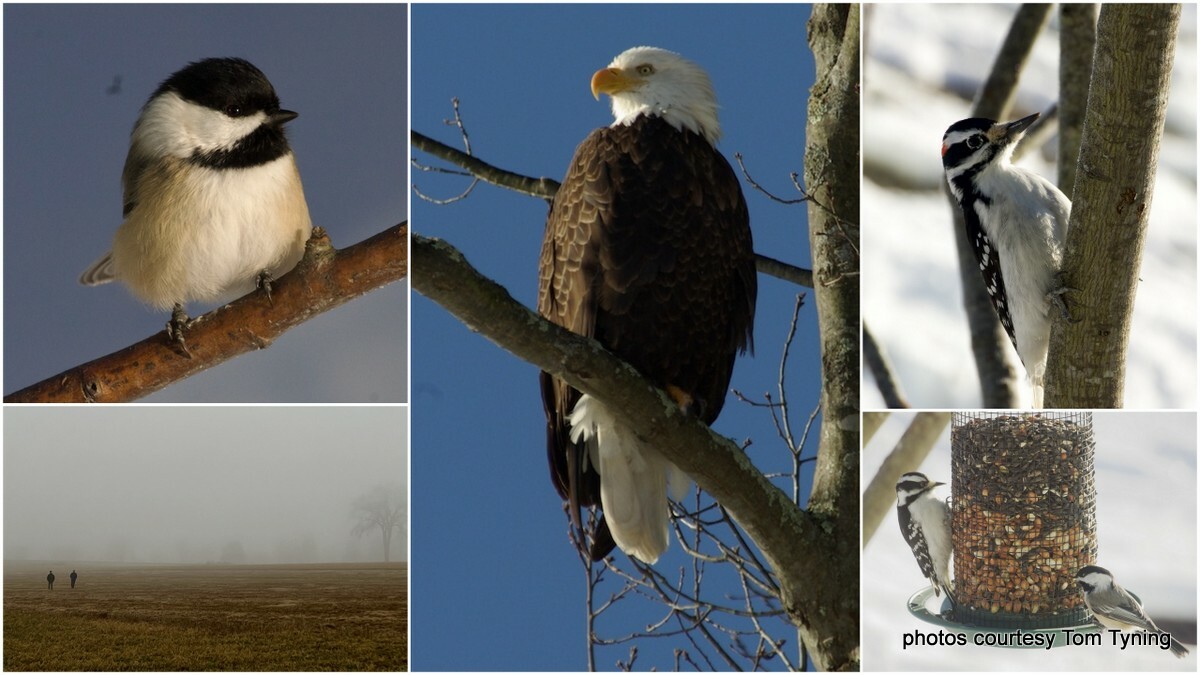
Counting Birds Now a Christmas Tradition
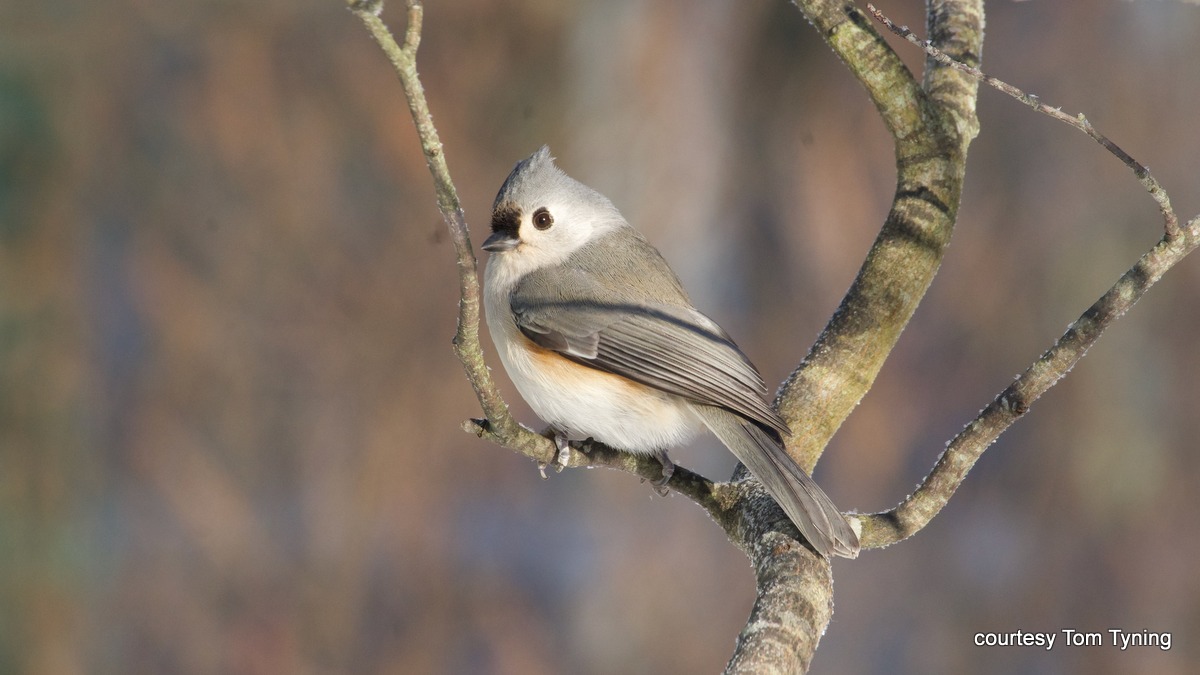
The bird counts are important in collecting data for ornithologists and conservationists.
The count has become a tradition for many over the last 125 years while providing valuable environmental insights for researchers, conservation biologists, wildlife agencies, and others.
Participating in this wildlife census allows people to observe and interact with birds in their local environments directly and can inspire a deeper connection to nature, instilling a desire to protect it, said Tom Tyning, former Hoffmann Bird Club president and longtime Christmas Bird Count participant.
Bird watching is the most popular leisure time activity in the United States, said David Schaller, North County count compiler and a leader of Saturday's team.
"It's a way to be outside. It's a way to connect with nature. It's good exercise. It's good mentally — you're trying to look at a bird and figure out what kind of bird it is," he said.
"For some participants in our group, it's a family tradition that is as important to them as other Christmas traditions."
This one-day activity is far more than that for many. It introduces new participants to a wealth of knowledge in environmental and natural science and can transform into a lifelong hobby because of its vast number of topics, Tyning said.
The data collected by Christmas Bird Count participants has evolved over the past century to provide information on bird population, migration, and the impact of factors such as climate change, he said.
The count occurs from Dec. 14 to Jan. 5 every season and has become one of the only two large pools of information informing ornithologists and conservation biologists, according to the National Audubon.
These national events are free and open to all skill levels. For the Christmas Bird Count, the National Audubon Society, which oversees the count, has established strict protocols that participants must follow to mitigate mistakes such as double counting. The Hoffmann Bird Club participates in the Christmas Bird Count.
The count was spread across three days in the Berkshires, with Central Berkshire on Dec. 14, North Berkshire on Dec. 28 and South Berkshire on New Year's Day. There may be room to participate in the South Berkshire count; more information here.
Another information pool is the Great Backyard Bird Count, which occurs from Feb. 14 through 17 and anyone can spend at least 15 minutes counting for the Great Backyard Bird Count at anytime over the four days. More information on how to participate here.
When combined with other surveys, such as the Breeding Bird Survey, the counts can demonstrate how the continent's bird populations have changed over the past hundred years.
The long-term perspective is vital for conservationists as it informs strategies to protect birds and their habitat and helps identify environmental issues.
Bird watching and the Christmas Bird Count cultivate an opportunity for people to interact with others they otherwise wouldn't because it is accessible to everyone from all social and economic circles, Schaller said.
For the Christmas Bird Count, the National Audubon Society defines a specific 15-mile diameter circle that cannot overlap with other count areas and is divided into sectors.
Each sector has an assigned leader, and participants within that sector are required to record every individual bird they observe carefully.
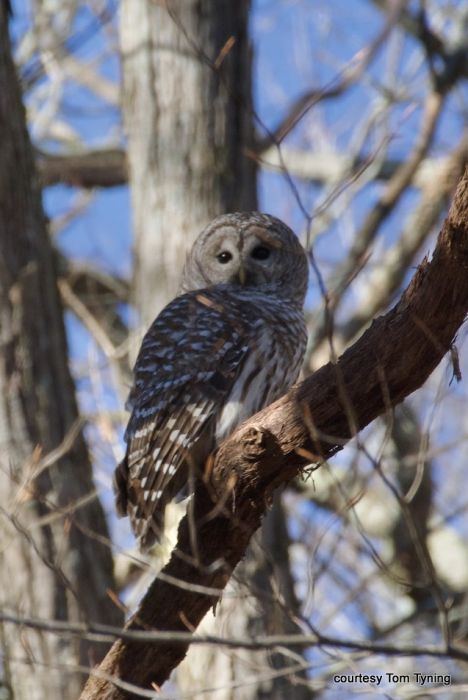
The Christmas count looks for species and numbers to determine changes in bird populations and migration. Some 3 billion birds are estimated to have disappeared since 1970 based on the annual survey.
Participants are required to record not only the number of birds they see but also the time and distance over which they make the observations.
After the count, the data collected by all the teams is compiled and reviewed by the count coordinators. Then, it is sent to the compiler, who identifies any potential discrepancies or outliers that may indicate double counting or other errors.
If there are any questionable sightings, the compiler will ask for more evidence before accepting the report.
"The data from this citizen science project is being used by scientists. For example, [scientists] have said since 1970 three billion birds have disappeared," Schaller said.
"So [the data] goes into scientific papers and recommendations for public policy. So, it's a rigorous procedure to count these birds. It's not an informal thing. It's not a social event. It's an actual survey of the birds."
In 1900, conservation was in its beginning stages, and many observers and scientists were becoming concerned about declining bird populations, the Audubon website states.
Frank Chapman, an ornithologist and early member of the society, proposed an alternative Christmas tradition, the Christmas Bird Count, in which participants would count birds during the holidays rather than hunt them.
It was a twist on the Christmas "side hunt" tradition where people would go out and shoot as many birds as possible, Tyning said.
"Some of those birds were eaten, some were taken to museums, and others were just left out there, and Chapman really thought that was a little bit brutal," he said.
"He also took a walk around Central Park and counted 46 species of birds. All of them were parts of birds or whole birds on people's hats and the millinery trade was a really big, big deal in the mid- to late 1800s, and it continued into the early 1900s."
Thanks to the work of Chapman and 27 dedicated birders, some 25 bird counts were held Christmas Day 1900.
By 2023, the tradition had grown to more 80,000 participants and is now the longest-running bird survey in the world.
In the early 20th century and before, it was also common practice for ornithologists and scientists to shoot and collect bird specimens for study and identification.
These specimens provided valuable data and physical evidence that could not be obtained through simple observation alone.
Technology advancements have improved binoculars and spotting scopes, allowing participants to accurately identify and count birds, lessening the need for killing the birds, Tyning said.
More recently, incorporating digital tools and online platforms has made it easier to coordinate the count, submit data, and share information, he explained.
Tags: audubon, birds,