The governor's bill would 'tweak' the apportionment formula on the extra $100 million she's budgeting to provide more funding for small towns with less population.
Chapter 90 Bond Bill Could Bring $5.3M to Berkshire Communities
NORTH ADAMS, Mass. — The Berkshires could receive more than $5.3 million in additional state Chapter 90 road funds in a new bond bill.
Gov. Maura Healey filed the bill last Friday, authorizing the borrowing of $1.5 billion over the next five years for local transportation networks. The bill includes another $100 million in Chapter 90, a 50 percent increase.
Lt. Gov. Kim Driscoll on Saturday noted the total amount will be $300 million, the highest amount of Chapter 90 that's been proposed.
"That $100 million topper is going to have a slightly different formula that's really more focused on road miles," she said to applause at the Massachusetts Municipal Association's Connect 351 conference in Boston. "Right now, the formula looks at a whole lot of things, including population, and some of our smaller communities that have lots of roads, but maybe not as many people are kind of penalized in that formula.
"Don't worry, everybody's getting a lot of money within the formula. But there's a slight tweak on that top $100 million."
The governor's budget will use Fair Share surtax revenues to expand capital capacity, enabling $300 million in annual Chapter 90 funds, a 50 percent increase over the traditional $200 million.
The current formula for state aid considers local road mileage at 58.33 percent, population and employment at 20.83 percent each to calculate funding awards.
Adams, for example, has 55.84 miles of road with a population of 8,166 and employment is 1,712. Based on the total amount of funding approved for fiscal 2025, the town received $284,946. The bill filed by the governor would give the town another $185,513 for a total of $471,000, a 65 percent increase.
North Adams would see a 57 percent increase in funds for total of $649,273; Pittsfield, which regularly commands the most funding in the Berkshires because of its size, would get $652,000 for a total of nearly $2 million at the lowest percentage increase of 49.
The "tweaked" calculation would greatly benefit smaller towns, almost doubling their funding. Tiny Alford with its 17 miles and population of 486 would see its funding jump from $71,000 to $128,000 and New Ashford, with less than 11 miles, would go from $42,533 to $77,468.
The towns of Mount Washington, Sandisfield, Savoy and Windsor would see the highest percentage increase, at 84 percent. All told, they have 210 miles of road for a population of 2,625. Together, they average 12.5 residents per mile compared to Pittsfield's 224 residents per mile.
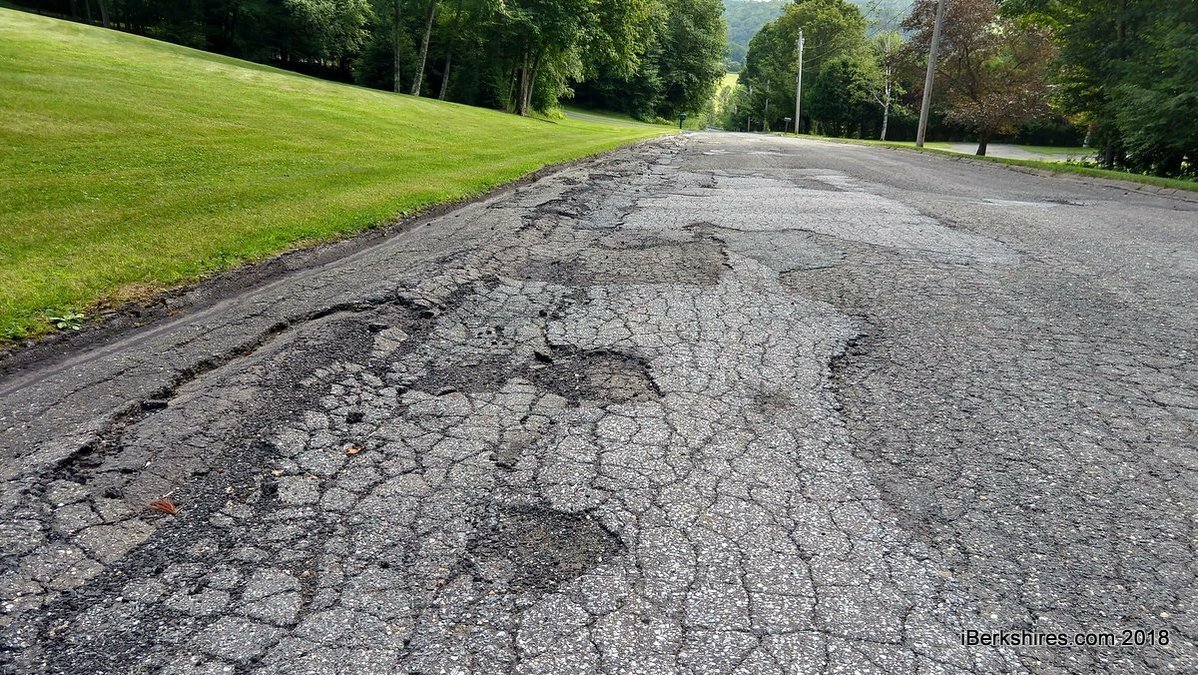
Even with these extra funds, towns are often strapped when it comes to road maintenance and repair — reconstructing a mile of road is upwards of $1 million nowadays.
But the administration is also seeking additional money for culverts, said Driscoll, "things that we know impact roadways and are hard to fund. Those Chapter 90 tend to go to the road, but not the culvert underneath."
If you would like to contribute information on this article, contact us at info@iberkshires.com.
Your Comments
iBerkshires.com welcomes critical, respectful dialogue. Name-calling, personal attacks, libel, slander or foul language is not allowed. All comments are reviewed before posting and will be deleted or edited as necessary.
No Comments
Clarksburg Students Write in Support of Rural School Aid
By Tammy DanielsiBerkshires Staff
Mason Langenback calculated that Clarksburg would get almost $1 million if the $60 million was allocated equally.
CLARKSBURG, Mass. — Eighth-graders at Clarksburg School took a lesson in civic advocacy this week, researching school funding and writing letters to Beacon Hill that call for fully funding rural school aid.
The students focused on the hardships for small rural schools and their importance to the community — that they struggle with limited funding and teacher shortages, but offer safe and supportive spaces for learning and are a hub for community connections.
"They all address the main issue, the funding for rural schools, and how there's a gap, and there's the $4 million gap this year, and then it's about the $40 million next year, and that rural schools need that equitable funding," said social studies teacher Mark Karhan.
A rural schools report in 2022 found smaller school districts cost from nearly 17 percent to 23 percent more to operate, and recommended "at least" $60 million be appropriated annually for rural school aid.
Gov. Maura Healey has filed for more Chapter 70 school aid, but that often is little help to small rural schools with declining or static enrollment. For fiscal 2027, she's budgeted $20 million for rural schools, up from around $13 million this year but still far below the hoped for $60 million.
Karhan said the class was broken into four groups and the students were provided a submission letter from Rural Schools Advocacy. The students used the first paragraph, which laid out the funding facts, and then did research and wrote their own letters.
They will submit those with a school picture to the governor.
Qwanell Bradley scored 33 points, and Adan Wicks added 29 as the Hoosac Valley boys basketball team won a Division 5 State Championship on Sunday. click for more
Thirty portraits are on display at Hotel Downstreet, part of an initiative to use the arts and storytelling to humanize substance abuse disorder. click for more
The students focused on the hardships for small rural schools and their importance to the community — that they struggle with limited funding and teacher shortages, but offer safe and supportive spaces for learning and are a hub for community connections.
click for more
The Drury High graduate had great respect for the library and its service to the city, said his good friend Richard Taskin, and had entrusted him with the check before his death on Sunday at the age of 64.
click for more