Dalton Public Safety Starts Discussion on Draft Needs Assessment
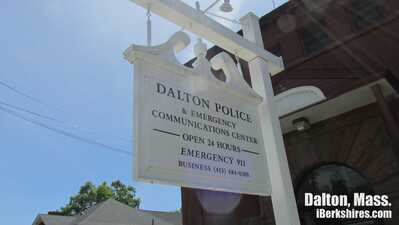 |
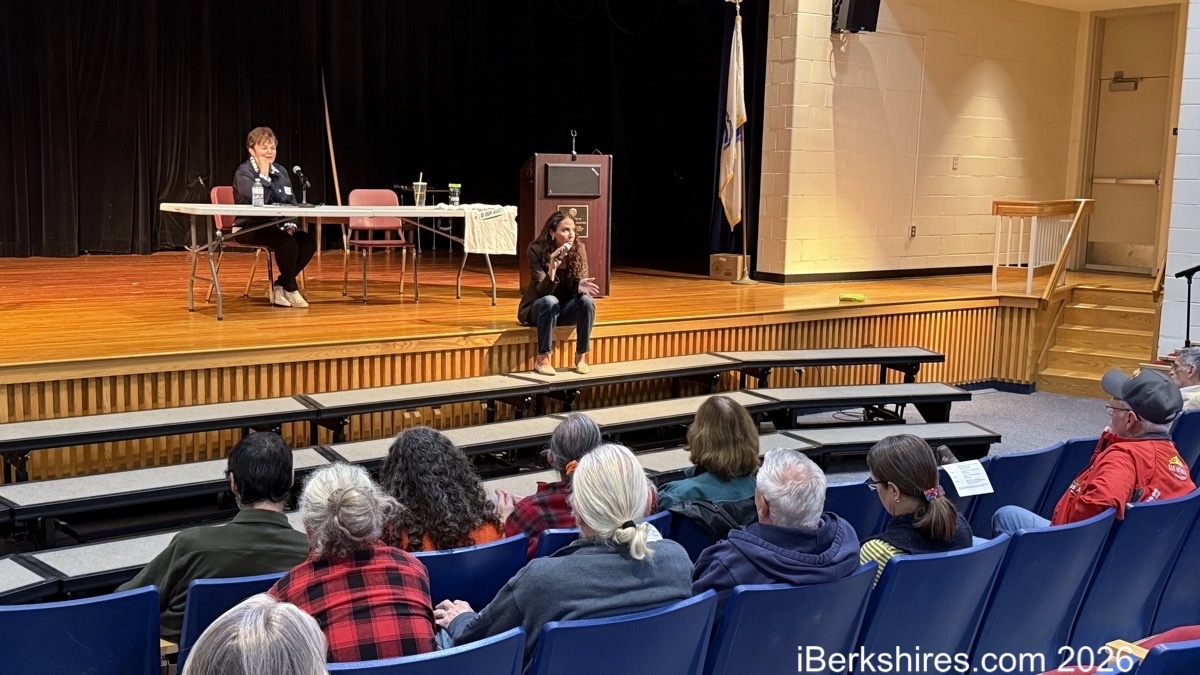
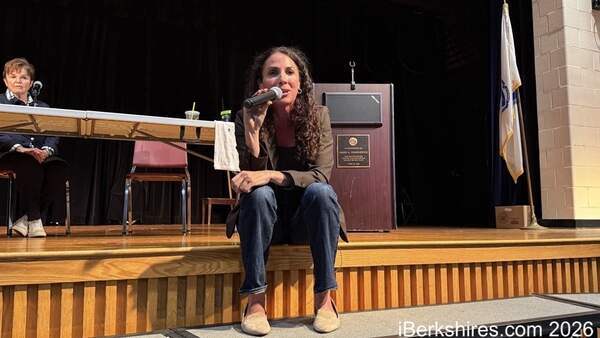
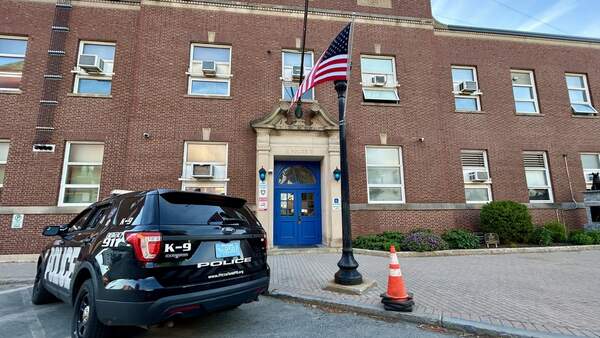
DALTON, Mass. — The Public Safety Advisory Committee has started discussing the draft of the space needs assessment for the town's police department.
"I want to stipulate that this is a draft until everybody in the building committee knows what it says, understands what it says, and understands the requests that are being made have to satisfy both the Police Department and the town of Dalton," said Brian Humes, owner of Jacunski Humes Architects LLC of Berlin, Conn.
The committee will meet again on Wednesday, Feb. 5, at 4:30 in the Senior Center to discuss the document further after fully reviewing its contents and determine whether to approve the document so the next phase of the feasibility study can begin.
Once the document has been approved, Humes can begin evaluating options for a proposed police facility.
This may include scenarios such as building a new facility on a vacant site, remodeling an existing building, or demolishing and rebuilding on potential sites.
The evaluation will utilize four model locations provided by the committee. More information on the ranked properties here.
"We've known all along that you need a new police facility. And boy, it was pretty eye opening when I was there to see it in person and see the existing conditions. And I wholeheartedly agree that you need improvements to what's there," Humes said.
During the development process, Humes worked closely with Police Chief Deanna Strout and department staff to understand their needs.
Strout did point out that the current draft version has a minor error in the 2024 staffing, but she has already emailed Humes, who sent her an updated version.
The descriptions of the various spaces in the assessment came from these discussions with the department and Humes square footage allocations on each space based on industry standards and comparisons to other similar-sized departments.
Additionally, he also took a future-focused approach, anticipating for growth in staffing and departmental functions, to ensure the proposed facility could accommodate the department's needs over the next 20 to 50 years.
The total square footage, referred to at gross square footage, of the proposed one-story building that would be 13,350 square feet, this is not including an additional outbuilding of a total, or gross, square footage of 1,800 square feet.
Committee member asked whether the facility can be divided up into two or three stories to shrink the amount of acreage needed.
A multi-floor building would have more challenges because of the Americans with Disabilities Act requirements.
"It would absolutely reduce the footprint but if you're looking through the space needs assessment, and you look at how many spaces have to be on the ground level for their function, that is going to be probably more than half of your square footage. So, to go to three floors would be very inefficient and not recommended for the department," Humes said.
Each section of the station is broken down to 24 sections, each of which includes square footage allocations for the needs for each area.
Sections include a space for the public, a Communications Dispatch Center, administration space, a sally port, prisoner processing, detention center, an area that would be utilized for training, meetings, and an Emergency Operations Center, another section for interviews and public permitting, a records clerk, a investigation and detectives bureau, general office, animal control officer, a quiet room or lactation room, patrol functions, and more.
The storage outbuilding includes sections for road supply storage, bulk evidence storage, found property storage, and department equipment storage bay. Each of these sections also has square footage allocations based on need.
The reason municipalities choose to build an outbuilding is because they are less expensive to build than the main building.
"For the storage out building, you're typically just heating and ventilating. You're not providing any air conditioning to this space. It's more general storage that could be built at a lower dollars per square foot," Humes said.
"But it does not mean that this storage is not as important as the main building, the needs for the what we're going to put in the outbuilding, the needs are just as important as if they were in the main building."
Each of these spaces don't have a state mandate square footage, aside from the detention cells which needs to be a minimum of 60 square feet.
However, Humes bases his square footage determinations based on what he sees within the department, what the departments, storage requirements are, the amount of space needed for the department to meet accreditation requirements, and basing it on other departments in the commonwealth of similar size.
"In the department that you have right now, their hands are tied. They can't do the procedures in the way that they're being asked in accreditation standards because the physical department, fails them in that aspect," he said.
Committee member Dave Martindale asked what the impact would be if they explored constructing a Net Zero building, highlighting how the town of Marshfield obtained a "significant grant because they had built a building that that had net zero."
There is an increase cost building for net zero. The building has to be build according to building codes and energy codes, which are driving efficiencies in new construction, Humes said.
"Net zero is an additional challenge that brings additional cost and when you're looking at net zero, you may be thinking of doing geothermal heating and cooling systems," he said.
"And those all come with increased costs for installation, and you need a site that would support those things, so you need to actually have look at how you're going to generate the savings to go net zero," he said.
Humes emphasized that any reductions or changes to the space needs assessment should be done in close collaboration with the Police Department to ensure the facility can still adequately support their needs and requirements.
He said he is not saying they should take things off the document but now is the time to do so.
Then the town can move on to endorse it and move forward, because the document determines if the site's appropriate, and determines if the floor plan is correct, and what the budget is going to be at the end of the project, he said.
"I think you're right to look at this as far as there's 13,000 square feet of space, at $800 a square foot. Do we feel the town can support this, because in the end, that's what the ask is going to be. So it's good questions. They're tough questions that I think we need to have, maybe tough conversations," Humes said.
"But I want to do right for the department. I want to do right for the town. And I'm confident, based on the descriptions, you're going to get a facility that's supporting you for the next 20-plus years, won't be overcrowded, supports accreditation, supports the department, supports future growth in the department, and is the right solution. Now I've got to make sure everybody on the committee feels the same."
If the committee were to make trims, Strout said the school resource office could be considered an alternate to save money.
Dalton public schools, under Central Berkshire Regional School District, does not have a school resource officer. It has been previously discussed but was voted down by the School Committee. More information here.
If down the line, the superintendent were the request a school resource officer the department should provide one depending on staffing and funding availability, Strout explained in a follow-up.
If the town has to make cuts, the school resource office could go because the department can have a school resource officer and not need an office space.
However, Strout cautioned the committee to making cuts because Humes is an expert and every space has a function.
"This is why we did this. So it's not a want, it's not a Taj Mahal. It's literally for us to be functional," she said.
There is nothing in the needs assessment is extravagant or included for luxury, Strout said. "This is what a police department should be."
The committee will be developing a presentation to present to the Select Board to make a recommendation and update it on the progress of the proposed police facility.
Strout also emphasized how Humes will also be at the other meeting to answer questions.
"It's not going to be on who to answer those. That is part of what his service is. He knows what those questions are going to be, and he is very well prepared. We've worked on that a lot," Strout said.
The committee also wanted clarification on what was included in the zoning setbacks and landscaping, specifically whether this included parking areas or just green space.
Tags: police station, public safety committee,