Remembering River Street
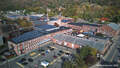
The recently announced plans for the development of an inn on River Street in North Adams is another welcome sign that the city is coming back.
I am especially intrigued by the proposed project having spent my youth, all of the 1950s and '60s with my family at 223 River Street, one of the four apartment buildings to be opened in phase one of the renewal project.
Most residents of North Adams are probably too young to remember when River Street was a busy commercial and residential area of town. It saddened me to see how the neighborhood was left to deteriorate and decay in the last 10-15 years. With all that about to change it brought back memories of how River Street looked, before the factories began to close, when Sprague Electric was the major employer in the city.
On the southwest corner of River and Marshall was Ed Brennan's Texaco service station, a busy corner where attendants still pumped gas, washed windshields and checked oil, all as part of the usual customer service long since gone the way of the buggy whip. Mr. Brennan, and then later, Dave Lewis also sold tires and repaired cars.
I remember Dave calling his regular customers during the gas crisis of '73 whenever he expected another tanker of fuel to be delivered. America's obsession with the behemoth SUVs attests to the fact that, "those who ignore history are doomed to repeat it."
Mauserts ice cream factory was where the car wash now stands. I remember on hot summer days, if the kids in the neighborhood showed up at the back door they would be treated to samples of the flavor of the day.
Mauserts' neighbor through the early '60s was Rowley's Studebaker Packard dealership. Living right across the street, we had the first look at the new cars when they rolled off the trailers every fall.
Hidden behind large billboards between Mauserts and Rowley's was a two-story, single-family house that had been vacant as long as I could remember. Kids in the neighborhood spread the rumor it was haunted.
From Rowley's to Brown Street at one time was a row of factory houses similar to those being remodeled, but they were washed away in a flood before the Hoosic River flood control project prevented another such tragedy.
On the southeast corner of Marshall and River was Dex Moore's Firestone Tire Store, and they also sold bicycles and some toys and sporting goods. Opposite, the corner of River and Houghton streets, where the Goodyear store is now, was an apartment building with several storefronts on River Street. The corner store was originally The River Street Cute Rite, but changed hands several times before becoming Les' Market. Shortly after it was demolished, making way for the present building.
Another brick apartment building was east of this lot. The storefront was a neighborhood bar. There is a free-standing bar and grill there now.
The opposite corner of Houghton and River streets is a similar frame apartment building, also with ground floor storefronts on both streets. I remember a cobbler in the middle, next to the liquor store which has since expanded into both spaces, and today, the corner shop is a store that makes rubber stamps, etcetera. The billboards separate the small parking lot from what was Riverside Auto body in the '50s and '60s, later Pierce Oil and now it has returned to its first use as Blackinton Auto Body.
Behind the auto body shop was a large gravel bed that had been dug away to leave a large flat gravel parking lot once used by Sprague employees, and on Saturdays and Sundays and summer nights we played baseball there every chance we had. It was our own sandlot, and kids from all the neighborhoods converged there daily, so there was never a shortage of players.
I still remember cars belonging to people who occasionally put in overtime being left in the playing field. So we would assign someone to get in the driver's seat, shift the car into neutral and steer while four or five of us pushed it to the far end of the lot, out of the way. Back then, especially in the '50s, few people locked their cars and most had manual shifts. Seldom did anyone complain, and I can't recall any vehicle ever being damaged. Some of the employees even thanked us for removing their cars from danger.
Mr. and Mrs. Breda lived in the single-family house immediately to the east of the four mill houses, and then there was a large white house with a white fence to the west. There was another apartment building between that house and the corner building, but it was demolished as part of Mayor Barrett's efforts to clear the city of eyesores.
During those years kids were in almost every apartment, and most families stayed for years. Chief of Police Jack Flaherty lived in the house to the west of ours for even longer than we did. Downstairs from us lived Mr. and Mrs. Roberts, and I remember her telling us that they moved in just after World War I as newlyweds.
Our neighbors seldom changed so I can still recall most of their names. My best friend, Billy Lanoue, lived in the upstairs apartment in the last house in that row, the floor plan was like a mirror image of ours, and I always found that interesting.
When one apartment became vacant it would be quickly re-rented, and the tenants took pride in keeping the neighborhood clean and their apartments pleasant and livable. Mrs. Craven was our landlord for most of the years we were there, and she gladly paid for repairs, and allowed the tenants, like my father, to paint and paper, sand floors and install storm windows to maintain the apartment, and she always paid for materials.
The apartments were heated by free-standing stoves. We had a coal/wood stove in the dining room and an oil/gas stove in the kitchen. The dining room stove was replaced by an oil stove in 1958, and this require filling two 10-gallon oil tanks twice daily in the winter. That became my responsibility by the time I was in high school. The barrels of oil were in the cellar, and the tanks had to be refilled down there.
In 1970, the landlord had gas stoves put in and the tanks were gone for good. The hot water heater was moved from the bathroom to the cellar at the same time. All the other apartments had similar stove heat.
Behind the row of buildings were two smaller single-family houses, now long gone also. But there were no fences so we could walk all the way to Veazie Street and never leave the back yards.
Mativi Plumbing occupied the corner of Veazie and River, and there were also apartments upstairs. Across Veazie was another house and then there was a four-story brick building with Marty Taylor's variety store. Mr. Taylor also had an old-fashioned soda fountain in the front of the store. He was friendly and generous to all the kids in the neighborhood, and never seemed to mind when we hung out too long.
In 1955, this building was the scene of a terrible early morning fire that took the lives of several people. One of them was in my first-grade class, Billy Gray. He died when he jumped from the fourth-floor window. My dad was there and said a policeman tried to catch him, but it was too late. Later the top two stories were removed. Next to the building was a narrow street called Magnolia Terrace but it was eliminated when several other apartment buildings were demolished over the last several years.
After my sister and I left home, dad decided it was time to stop the long commute to General Electric every day, so he and my mother bought a duplex in Pittsfield and moved after 25 years on River Street.
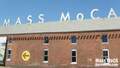
Growing up on River Street is full of memories, most of them good. There was always something to do, plenty of kids to play with, and constant activity. Now is the time for change, and that change has slowly begun. It will be interesting to see what the neighborhood will become in the future. River Street is full of opportunities for development, and its proximity to Mass MoCA gives it a leg up on future projects, but I will remember fondly the years I lived there with my family.