CHP Suspends Mobile Health Unit and Cuts Staff
GREAT BARRINGTON, Mass. — Community Health Programs laid off some of its staff, reduced some staff hours, and suspended its mobile health unit in response to a looming deficit.
CHP CEO Bethany Kieley said the nonprofit was forced to cut back because pandemic-related funding was running out. CHP gets most of its revenue from grants, federal support and donations.
"Our payments from third parties is the bulk of our revenue. We get about 12 percent of our revenue from the federal government in the form of a grant that is intended to support primarily payroll expenses. And then we do get funding for other types of grants, usually those are very program specific," she said.
"It was significant dollars, because there were different programs. So there were some programs that helped to fund our provision of vaccines, COVID vaccines, and that was from multiple sources. There were some state sources, there were some private sources, there were some federal sources. We were able to get funding through the Payroll [Paycheck] Protection Program, which was the PPP program. We are still expecting payment from the IRS for the employee retention tax credit."
Employees were informed by email on Feb. 25 of the impending changes. The email, obtained by iBerkshires, stated that CHP eliminated three positions — director of quality and patient experience, senior director of marketing and communications (and the marketing department), and the web and visual design manager.
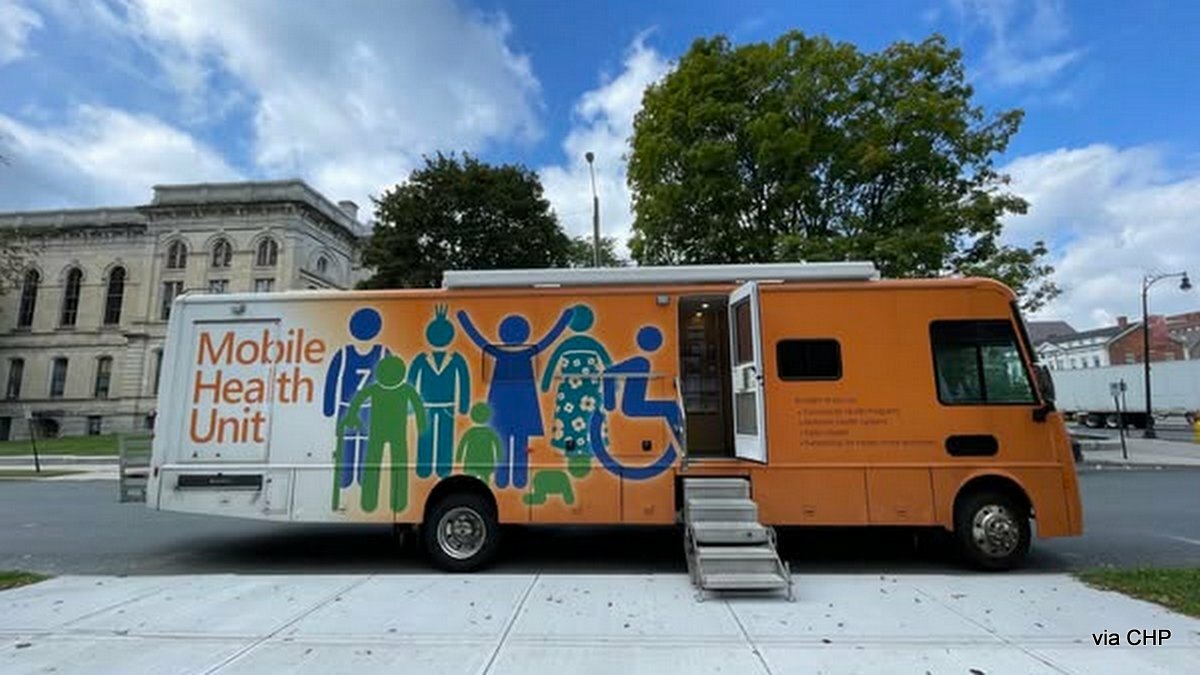
Another cost-saving measure is the suspension of the mobile health unit which provided primary care and typical urgent care, making it an alternative for people with transportation challenges. The medical staff will be repositioned but the receptionist post eliminated.
Kieley wrote in the email that the reductions had been "incredibly difficult and disruptive."
"As you know, we continue to work through a period of serious financial challenges. As part of our ongoing efforts to move CHP to strong financial footing, we continue to look very strategically for areas where we can reduce costs while minimizing disruption to patient care and service to our community," she wrote.
This week, Kieley said CHP had expected there to be an increase in revenue as pandemic money dwindled but that had not happened. The organization, like many others, has also been dealing with rising costs.
"We through the COVID period, had a number of one-time funding investments, and we also had some significant grant funding come in related to some capital projects. And during that time, when we were receiving a lot of that one-time funding, we made some investments in the organization with the intent that by the time those one-time funding sources would have increased revenue to support those investments," she said. "Unfortunately, for a whole host of reasons that just simply hasn't happened ...
"We find ourselves needing to reduce cost in order to reduce a significant deficit that we have during this fiscal year."
Keiley said the mobile health unit could be restored if funding sources change because the demand hasn't been enough to support it.
"We simply haven't had demand enough to sustain that service. You know, on a typical day, we might get anywhere from five to six patients per day visiting the Mobile Health Unit," she said.
Established as the Children's Health Program in 1975, the organization became a federally qualified health center and expanded to provide care to adults in 2000. It has since merged or acquired Barrington OB/GYN, Pittsfield's Neighborhood Health Center, Lee Family Practice, Berkshire Pediatrics, Adams Internists and North Adams Family Medicine, and operates several dental offices.
Kieley said CHP and other health centers may have turbulent times ahead because of their reliance on federal grants and the federally funded Medicaid program.
"Given the uncertainty of some of the budgetary decisions and executive orders that are coming out, in addition to the concerns we've been having about our financial position up til now, you know the future doesn't look very stable for us and for other health centers like ours throughout the state and the country," she said.
"So we really have to be very thoughtful about what services we're offering, how we're supporting them, and how we're sustaining the organization."
But CHP wants to make sure people know it is still there for people.
"It's really important that folks know we are still here. All of our doors are still open to take care of the community," she said. "That's what we're here to do, and we're here to stay."
Tags: CHP,