Pittsfield School District Says No Personnel Layoffs Planned
PITTSFIELD, Mass. — The district says that no school employees will lose their jobs because of reductions in the fiscal year 2026 budget.
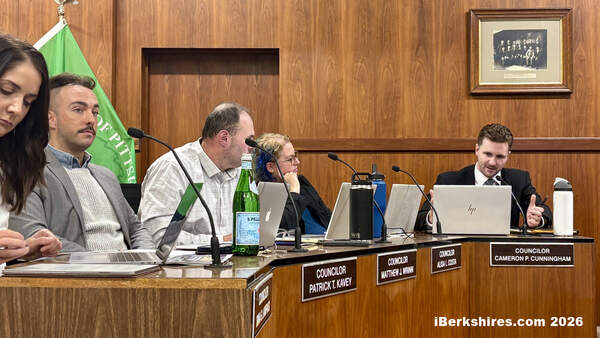
On Wednesday, the School Committee got a first look at the proposed $86,450,361 spending plan that has $1,238,000 in payroll reductions. District officials anticipate cuts will be made through job movement, attrition, retirements, etc.
"I want to be very clear that the reductions you see here, we don't anticipate anyone actually losing a job through budget reductions," Superintendent Joseph Curtis said.
"… We always think of pink slips or some kind of layoff slips that will make the headlines. We don't anticipate that will happen. Of course, the federal situation we don't know."
The proposed $87 million budget includes an $18 million city contribution and more than $68 million of anticipated Chapter 70 funding. It is a $3,765,084 increase from FY25.
For this budget cycle, the district put the staff reduction and addition decisions on principals. After Mayor Peter Marchetti committed the city money, the staff reduction was adjusted from 6.65 percent to 2.15 percent, a net loss of nearly 17 positions.
"We actually did the budget process much differently than we've ever done before and I've asked myself, 'Why didn't we do this many years ago?'" Curtis said.
He noted that it is "certainly possible" to handle this number without layoffs but if it were 70 positions with the higher percentage, it would be "very challenging."
Contractual increases and additional obligations are anticipated to exceed $5 million and $1,294,916 must be reduced to meet the FY26 city appropriation. Contractual obligations account for $3.35 million alone.
The district has settled on a contract with the Pittsfield Educational Administrators Association and hopes to settle a contract with the United Educators of Pittsfield soon. This is the last year of settled contracts with the five American Federation of Teachers groups.
Other budget drivers include $820,000 of special education out-of-district tuition, $120,000 in utility cost increases, and $870,000 in transportation costs. Utility projections are based on the $15 percent rate increase in January.
"I woke up this morning to the story about President Trump doubling the tariff rates to Canada and thought, 'Well, there goes my utility cost projections.' I’m not really sure where we're going to land. The tariffs are on, the tariffs are off. They're back on again, they're doubled," Assistant Superintendent for Business and Finance Kristen Behnke said.
"We are in the fortunate position that last year, just based on timing, every one year, two, three years, we kind of look at the market and do our best to kind of foretell what's going to happen in the future and we went out for three years on supply for electricity and natural gas. And so the information that I've gotten from the people that we work with in bidding this out on the market, is that the supply rates, because those are set in stone, that those should not be subject to tariffs, however, that speaks nothing to our distribution rates."
On March 26 there will be an overview of the line item budget and on April 2, a second budget workshop. For the first budget exercise, principals and central office members were provided with their total current staffing budget and asked to reduce it by 6.65 percent by identifying instructional and operational staff that could be reduced.’
"I just want to thank you for creating a budget where people will not be losing their jobs because of financial reasons," Committee member Sara Hathaway said.
"That you plan around the retirements and the resignation, attrition. So that, I think, creates a much happier morale situation for your employees and that's wonderful."
Tags: fiscal 2026, Pittsfield Public Schools, school budget,