Over 70 Percent of Pittsfield Students Are in Poverty
"Our enrollment has increased slightly but so has our students living in poverty," Superintendent Joseph Curtis said.
"So we are very close to 71 percent of our attending students living in poverty. This is a very close number to our other urban counterparts, Worcester being an example, and so as our poverty rate continues to grow, it did solidify us being in Group 11."
Earlier this month, Jennifer Stokes, assistant superintendent for school transformation and accountability, reported that there have been 70 unhoused students in the district since September. This is 20 more than the previous year.
"The numbers, in my opinion, are quite high," she told the Homelessness Advisory Committee.
Twenty-two of those students are in a shelter, six are in a motel or hotel, 30 are doubled up with friends and family, and 16 of those students were also homeless last year. Seven of the unhoused students are immigrants from the state emergency shelter housed at the Hilton Garden Inn and 24 are new to the district and have moved to Pittsfield in shelters or as part of an unhoused family.
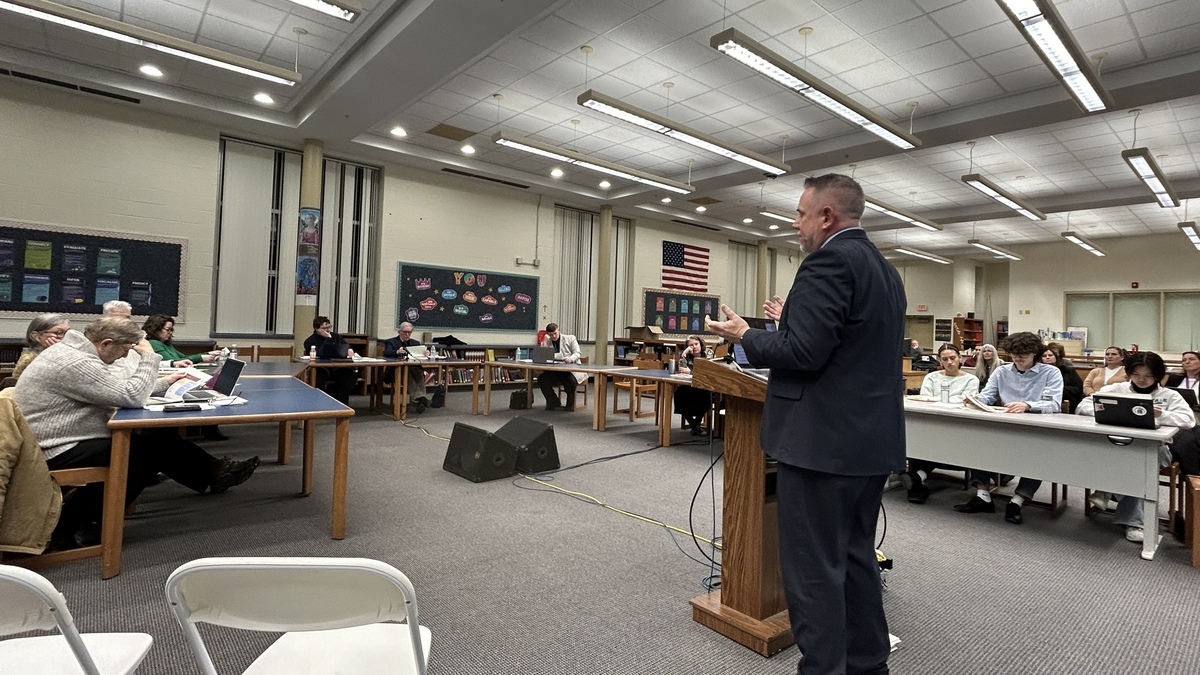
Wednesday's workshop kicked off the FY26 budget discussion.
"This is critically important that we are introducing you to a budget exercise. We begin to prepare for our budget typically at the end of October, early November, and at that time, as you can well imagine because we just found out today, we don't have any idea of what our Chapter 70 allocation will be in October, November," Curtis explained.
"But we also recognize that we can't start thinking about the next year's budget in January, right? We need to start having discussions, having our principals start to think about resources and allocations for the next year."
The school budget adoption is set for April 9 and the School Committee will meet with the City Council no later than June 1.
The budget exercise assumed a level-funded budget as a baseline with an estimated $4 million in contractual obligations. Curtis stressed that this is an exercise and not a proposal.
Principals and central office members were provided with their total current staffing budget and asked to reduce it by 6.65 percent by identifying instructional and operational staff that could be reduced.
"This was important because we wanted them to start discussions, not only amongst themselves but with their colleagues, their school councils, really having those discussions related to the possibility of a level-funded budget," Curtis said.
"But as you know, even when a budget is level funded, we have to account for the upcoming year's contractual obligations and again, I want to stress that we're estimating."
In three groups, School Committee members, staff, and students reviewed student demographics, building administrations, school improvement plan key focus areas, and FY25 reductions for each school and the central office.
Last year, local and statewide advocacy led to a correction in Chapter 70 funding, adding another $2.4 million in aid for fiscal year 2025.
The state Department of Secondary and Elementary Education recognized 11 more low-income students in the district, bumping the district back into a higher reimbursement group. The district had missed the cut by 0.04 percent, or two students, costing the district millions in state education aid but this was found to be a technical error.
Tags: budget, Pittsfield Public Schools,