Lever Partnering Two Companies to Use Local Wood in Berkshire Projects
 |
CHARLEMONT, Mass – Lever worked with Northern Berkshire Habitat for Humanity to partner them with a local mill to provide wood for the four homes they plan to build in Williamstown.
"We're working with them on subsidizing local lumber from Hall Tavern Farm specifically to be used in affordable housing projects," said Lever communications manager, Avril Levesque.
Lever recently received a grant from the Massachusetts Executive Office of Energy and Environmental Affairs to help support this project.
"We have a grant from them that supports this work that we're doing, and with that, we're able to subsidize the cost of using local lumber. Outsourced lumber is cheaper, but it's coming from South America or overseas somewhere. It's not usually the best product available. So this is a little way to make sure that those housing projects that habitat is working on get locally sourced, sustainably sourced lumber in their products," Levesque said.
Hall Tavern Farm feels grateful for the opportunity to partner with Habitat for Humanity locally.
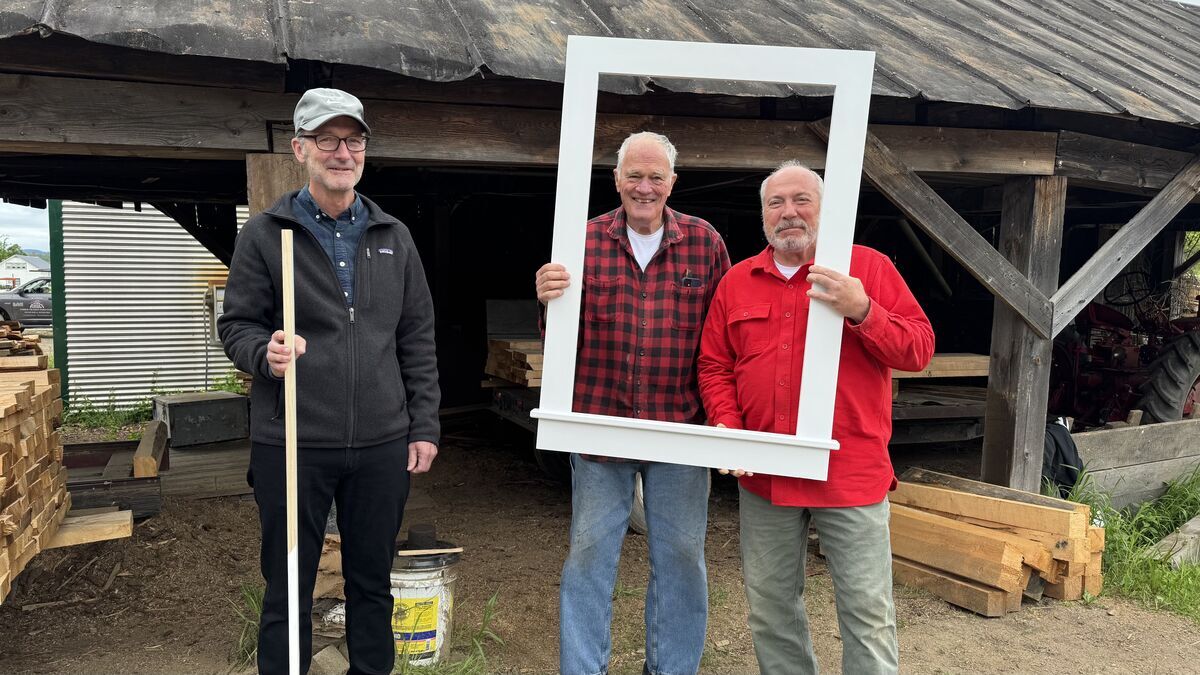
"It means a lot to me. Most of the business that we do is local. That's kind of why we do what we do here is to try to keep local timber being used locally, instead of being shipped off to Canada and so on. To know that it's going right over the hill for a good cause like that feels great," said Hall Tavern Farm partner Jared Bellows.
Northern Habitat for Humanity president and project manager, Keith Davis, said the wood usually used is imported and is used with many different pieces of wood put together instead of all one piece.
"Typically, in the past, we've been using what's called three pine fingerboard, which looks great. It's painted on all six edges to both faces, both edges and both ends...But it's not one piece of wood, it's several," he said.
He said it's not waterproof which makes the joints easier to break apart and the wood from the mill may last a little longer than the ones imported from South America.
The wood will be used strictly for wood trim for windows, doors, and baseboards which is about 4,500 feet of lumber that will now be local instead of imported.
Another project Lever used the grant for is for Revvit, CEO Ross Bloom was at Hall tavern working with Cruckfather on his project for EV chargers.
"What we do is we're building out very low cost electric vehicle charging infrastructure to enable more types of locations to put in an EV charger. And part of that is to make it so that those are very scalable, but that they also really look nice when you install them at an apartment building or at a hotel," he said.
Cruckfather, a timber-framing business leasing a space at Hall Tavern Farm, will build the EV charging stations for Revvit.
"I've been collaborating with Cruckfather over the past few months to develop a first of its kind, sustainable wooden structure for the EV charger that can enable it to be sort of mounted and durable in these outdoor or indoor locations, but which also looks really nice and kind of helps people when they use the chargers, sort of think about that sustainability aspect even more," Bloom said.
Bloom's company participated in the Berkshire Innovation Centers stage two accelerator program.Cruckfather along with other organizations, created a campaign to expand EV chargers in the 413 region.
"Our goal is to actually hit 413 chargers in the 413 region. And we're focusing on a number of different areas where that could be, first and foremost, apartment buildings. Because we know that apartment sellers are having a harder time adopting electric vehicles because they don't have a place to charge at home and apartment buildings typically don't have an easy way to put in charging infrastructure for their tenants. So we're really focusing on that, since that's sort of a really core need. And then we're also looking at how can we use this as a way to brand the Berkshires as a really great place for EV based tourism," Bloom said.
These chargers are the first of its kind EV charging company to collaborate with wood producers.
Lever executive director, Jeffrey Thomas, said in an email Lever is proud to have helped bring these partnerships together.
"The Lever team is delighted to have played a role in replacing imported lumber with locally sourced material. We're grateful to the state's Office of Energy and Environmental Affairs for funding to support our work,” he said, “We hope this is just the first of many opportunities to utilize wood products from northwestern Massachusetts in affordable housing projects in our region."
Tags: lever,