Dalton Planning Board Denies Berkshire Concrete's Special Permit
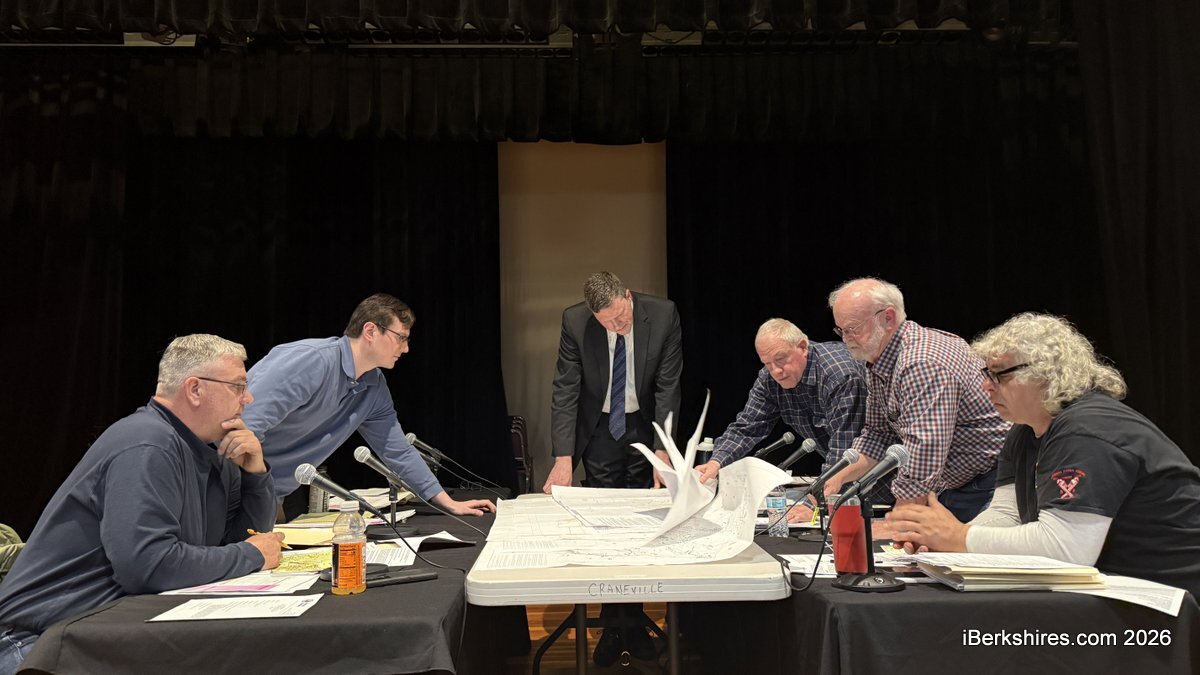
DALTON, Mass. — After five meetings, the Planning Board voted to deny Berkshire Concrete's special permit, however, the company can still reapply before its current permit expires.
After about 40 minutes of deliberation, board members reiterated recurring concerns raised in previous meetings: the company's lack of clear mitigation plans and ambiguous documentation outlining its work plans.
"I really have no confidence in their proposal so far," said Chair Zack McCain III.
The board denied the permit without prejudice, meaning Berkshire Concrete, a subsidiary of Petricca Industries, can reapply before its current permit expires in December 2027.
According to the current permit, earth removal, such as excavation, processing, and reclamation is allowed on lots 217-3 and 106-55.1, but is subject to several conditions set forth in 1992, 1994, and 2000.
Conditions include hours of operations, traffic regulations, restoration requirements, and other stipulations.
This decision indicates the board's belief, based on testimony and provided evidence that the excavation activities in the areas cannot occur without having a negative impact on the abutting neighborhood.
Prior to the decision, the board continued the public hearing three times urging that Berkshire Concrete provide updated documents that are accurate and clear, including a sufficient dust mitigation plan.
"They should modify it for some of the things we've suggested or we've talked about, they also should provide better information than what they have over the past two years," McCain said.
The plan set forth previously was deemed insufficient by the town's consultant Berkshire Environmental Consultant.
On March 2, the Board of Health issued a $5,000 fine to Berkshire Concrete, for creating a public nuisance by allowing sand and dust to leave the property and for failing to submit an adequate dust mitigation plan despite numerous orders. Future violations may result in fines of up to $10,000 per infraction.
Updated plans maintained Berkshire Concrete's request to continue excavation on the unauthorized dig site on parcel 105-16, part of which has since been partially mitigated, and continues the work up towards Renee Drive, on parcels 101-25 and 105-12.
McCain said the documents provided by Berkshire Concrete's legal counsel on how to address the sand leaving its property do not align with what has actually been done.
Additionally, it has been observed that the trucks leaving the site have been overloaded and although covered, the sand falls out of the vehicle as a result of the truck's vibrations, he said.
"We really have not gotten sufficient information from them on the policies and procedures and activities… [and] things they would do to stop the dust," McCain said.
"Their dust mitigation plan is just a half a page of verbiage and no real specifics on how that's going to happen.
Another concern raised was Berkshire Concrete's proposal to continue excavation closer the the neighborhoods.
The town's bylaws restrict excavation in a 100 ft buffer; however this does not include vegetation. Future permits should restrict vegetation from being removed in the buffer zone, McCain said.
Residents have previously criticized the trees removed from the unauthorized dig site on parcel 105-16 for exacerbating the dust left on the site, as they removed a natural barrier.
Tags: berkshire concrete, dust, debris, permitting, Planning Board,