HVA Selects Next Executive Director
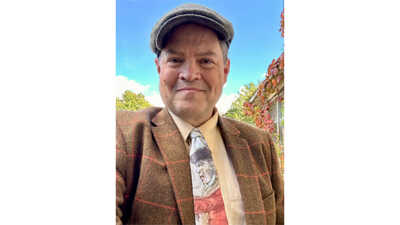 |
PITTSFIELD, Mass. — After conducting a national search, the Board of Directors of The Housatonic Valley Association (HVA) announces that Timothy B. Abbott will be HVA's new Executive Director.
He succeeds Lynn Werner, who retired on July 1, 2025, after 42 years with the organization and 30 years as its Executive Director. Abbott has 27 years of conservation leadership experience in western Connecticut and eastern New York with national and regional conservation nonprofits, including 17 years at HVA, where he most recently served as Conservation Director.
In making the announcement, James H. Maloney, Search Committee Chair and President of the Board of Directors of HVA said:
"Tim Abbott is an outstanding environmental leader who has both high-quality experience and very notable success," he said "The HVA Board of Directors is highly confident that Tim will make a dramatic and substantial contribution to the wellbeing of the tri-state Housatonic River watershed as our new Executive Director. We are delighted with Tim's selection to this organization role."
Abbott is a well-known and respected conservation leader who grew up in Dutchess County, New York, and began his land protection work with The Nature Conservancy in the Berkshires of western Massachusetts. He is an appointed member of Connecticut's Natural Heritage, Open Space and Land Acquisition Review Board and a member of the Steering Committee of The Nature Conservancy's Staying Connected Initiative. During his long tenure with HVA, he has championed the federal Highlands Conservation Act, and he represents HVA as Connecticut's nonprofit member of the four-state Highlands Steering Committee. A skilled fundraiser, effective advocate and creative problem solver, he created and led HVA's Litchfield Hills Greenprint Collaborative, an innovative regional conservation partnership among northwest Connecticut's land trust community. He holds an M.A. in International Development from Clark University and a B.A. in English from Haverford College. He was the winner of a J. William Fulbright Scholarship in 1997.
"This is a time of tremendous opportunity for HVA and conservation urgency for our region," says Abbott. "The climate crisis is a paramount concern, and HVA's Follow the Forest and Clean, Cold & Connected conservation programs represent vital and effective ways to make an impact at local and regional scales. I'm excited to work closely with my HVA colleagues, our Board, supporters and conservation partners to advance these and other conservation initiatives across the watershed and beyond."
The 1.248-million-acre Housatonic River watershed encompasses parts of 83 communities in Connecticut, Massachusetts and New York and contributes 11 percent of the fresh water that enters Long Island Sound. It includes habitats as ecologically diverse as fens and seepage swamps, extensively forested uplands and a tidal estuary. Some of its villages have fewer than 2,000 people, while more densely populated areas and significant cities include Danbury, Waterbury and Pittsfield. The intersection of human communities with natural ones is at the core of HVA's work, and the organization specializes in strategic, collaborative conservation action with a wide range of partners.
"HVA's strategic plan for climate adaptation and resilience," says Abbott, "recognizes the need to adapt bridges and culverts to accommodate both increased water flow and wildlife, to protect and connect forest habitat and allow for safer wildlife passage between them, to enhance riparian area and wetland conservation and to ensure that everyone has access to nature, wherever they live in the watershed. This work must continue regardless of fiscal headwinds or volatile public policy frameworks. HVA has always been solution-oriented, and that will serve us well as we and our conservation partners advance this vital work."