How Tea Shaped the Women's Suffrage Movement

Print Story | Email Story
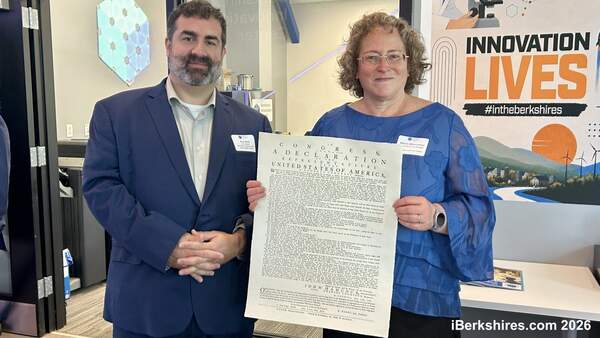
LENOX, Mass. — Join Susan B. Anthony Birthplace Museum Director James Capuzzi as he tells the story of how tea shaped the women's suffrage movement at Ventfort Hall on Tuesday, July 29, at 4 pm. 
 
A tea will be served after his presentation.
 
Accodring to a press release:
 
"I don't believe in individual work in any case. All the work for a cause must be collective..." Alva Belmont's comments in the August 13th, 1909 New York Times article Suffrage Armory at Mrs. Belmont's highlight the nature of the Women's suffrage movement as collaborative and in community. Building on what Susan B. Anthony and the first wave of suffrage leaders had started, Alva used her influence and resources to attract wealthy supporters and connect the women's suffrage cause with the New York elite living in Newport, Rhode Island. Her Conference of Great Women and famous "Votes for Women" tea set combined the elegance of high society with the revolutionary idea of women's equality under the law. Join Susan B. Anthony Birthplace Museum director James Capuzzi as he tells the story of how tea shaped the suffrage movement. 
 
James Capuzzi has an M.A. degree in Sustainable Cultural Heritage Management from the American University of Rome and a B.A. degree in Classical Studies & Italian Language from Tulane University in New Orleans. James served as Community Relations Fellow and then Director of Communications and Marketing at the Abigail Adams Institute in Harvard Square before moving to the Berkshires to direct the Susan B. Anthony Birthplace Museum in the summer of 2023. The museum has reengaged the local community with programming, exhibits, and outreach events
 
Tickets are $45. Members receive a discount code for $5 off all ticket prices. Students 22 and under are $22. Ticket pricing includes access to the mansion throughout the day of this event from 10 am to 4 pm. Reservations are strongly encouraged as seats are limited. Walk-ins accommodated as space allows. For reservations visit https://gildedage.org/pages/calendar or call (413) 637-3206. Note that all tickets are nonrefundable and non-exchangeable. The historical mansion is located at 104 Walker St. in Lenox.

If you would like to contribute information on this article, contact us at info@iberkshires.com.

Pittsfield FY27 Budget Up Only 2.9%

By Brittany PolitoiBerkshires Staff

PITTSFIELD, Mass.— On Tuesday, the City Council will refer the proposed fiscal year 2027 budget of $232,782,090. 

It is about 2.9 percent, or a $6.5 million increase from the previous year. The budget public hearing will be held on May 19.

The FY26 spending plan, which was described as "best that they could," was a nearly 4.8 percent increase from the previous year. 

Budget line items were separated by personnel and non-personnel costs to show the impact of salaries on the operating budget.  For example, $1,335,684 of the finance and administration budget goes to personnel, $207,500 to non-personnel, and $14,565,313 of the police budget is for salaries, $1,874,108 for non-personnel costs. 

The DPU water treatment enterprise has been budgeted $6,738,952, $1,255,584 for the sewer enterprise, and $11,796,683 for the DPU wastewater enterprise. 

Also on the agenda for Tuesday is a request to use $2,000,000 to reduce the Fiscal Year 2027 tax rate, and a 5-year Capital Improvement Plan for Fiscal Years 2027-2031. 

The School Committee has approved an $87,200,061 school budget for FY27 that includes $68,886,061 in state Chapter 70 funding, $18 million from the city, and $345,000 in school choice and Richmond tuition revenues.  It is an approximately $300,000 increase from the Pittsfield Public Schools' FY26 budget of $86.9 million. 

Pittsfield's proposed 5-year improvement plan invests more than $455 million in important capital projects with a focus on roadway quality, parks and recreational opportunities, facility improvements, safe and functional vehicles and equipment for staff, and modern information technology.

"The proposed General Fund (GF) Capital Investment Strategy recommends a commitment of 6.5% of GF revenues for capital projects," the document reads. 

"The plan also includes funds for all water and wastewater capital projects from enterprise fund revenues (i.e. water/sewer rates and retained earnings) and reflects the City's substantial efforts to seek State grant funds and other funding sources for capital projects." 

View Full Story

More Lenox Stories