The Bidwell House Museum: Plan, Form and Construction

Print Story | Email Story
SHEFFIELD, Mass. — Architectural historian Eric Gradoia will discuss the Bidwell House Museum as an example of 18th century New England domestic architecture.
 
The talk will be held on July 26 at 11 am at the Bidwell House Museam.
 
This in-Person event costs $15 for members and $25 for Non-Members $25. Via zoom the event is free for members and $15 for non members.
 
According to a press release:
 
The Bidwell house is a fascinating example of New England vernacular architecture. A product of several building campaigns, the core of the house was built c.1760, with additions made to it at different times throughout the 19th century. This talk will look at the Bidwell house as a regional example of eighteenth century domestic architecture, using it to explore common house types and floor plans of the period, along with the materials and technology used in the construction of these homes. 
 
Eric Gradoia is an Architectural Historian with the Albany firm of Mesick, Cohen, Wilson, Baker Architects. Prior to his current position, Mr. Gradoia was the Director of Historic Preservation at Historic Deerfield, where he was responsible for the repair and restoration of the museum's fifty-five buildings which range in age from the early eighteenth-century to the late twentieth-century. Mr. Gradoia has worked as an adjunct faculty member in the Historic Preservation Program at Roger Williams University, Bristol, Rhode Island and the Boston Architectural College (BAC). Early in his career, Mr. Gradoia worked as project manager for the Massachusetts Preservation Projects Fund (MPPF), administered by the Massachusetts State Preservation Office.
 
Gradoia has his undergraduate degree in Historic Preservation from Roger Williams University and his M.S in Historic Preservation from the University of Vermont. As a graduate student, Gradoia participated in the US/ICOMOS International Exchange Program as an intern with the National Trust in North Yorkshire, England at Fountains Abbey. Gradoia's primary expertise is in 17th, 18th, and 19th century vernacular architecture, construction technology, and domestic conveniences.
 
This lecture will be in-person at the Bidwell House Museum and will also be viewable via Zoom. Zoom attendees must register in advance in order to receive the Zoom link and due to limited space at the Museum, we do ask in-person attendees to also register in advance.
 
 
If you would like to contribute information on this article, contact us at info@iberkshires.com.

Becket Looks to Wind Power for Energy Savings

By Breanna SteeleiBerkshires Staff

The single turbine is a low maintenance and has a 50-year life. The town went with wind power after finding a solar installation would be too difficult. 

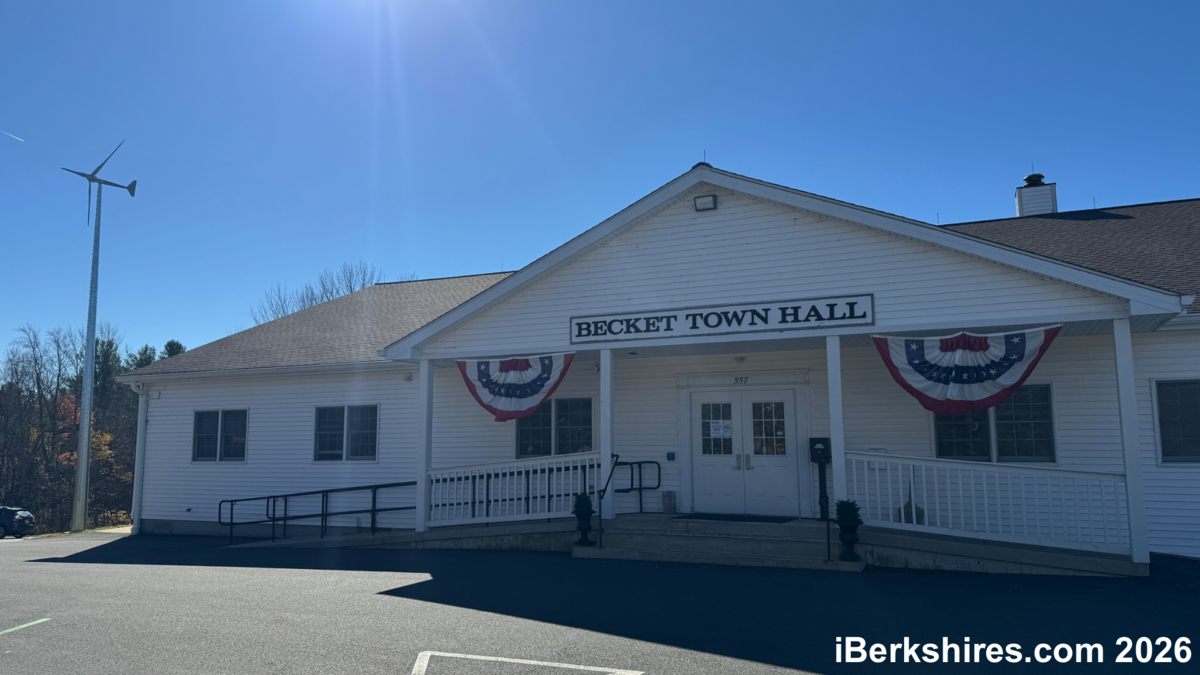
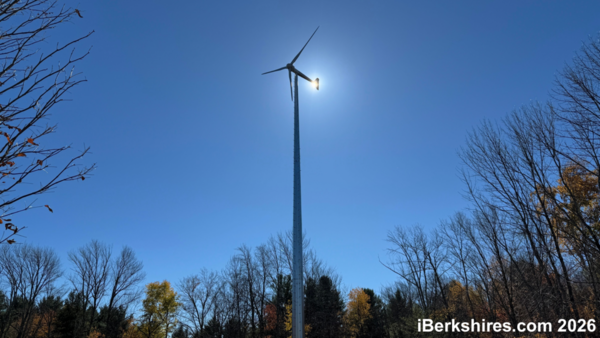
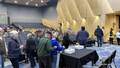
BECKET, Mass. — The town unveiled a wind turbine Monday that will reduce electricity costs and show the benefits of renewable energy produced by wind.

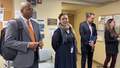
Residents, town and state officials gathered outside the Town Hall for the ribbon cutting on a project first conceived nearly a dozen years ago.

The wind turbine stands 100-feet tall next to Town Hall and is from Oklahoma manufacturer Bergey Wind Power. It has a 50-year life and is a direct-drive permanent-magnet design, meaning it has no gearbox, making it low maintenance.

According to Garth Klimchuk, chair of the Becket Energy Committee, the town started discussions about a wind turbine in 2014. The turbine is expected to generate about 36,000 kilowatt-hours. Klimchuk said Town Hall uses about 24,000 kilowatt-hours, with excess power expected to go to the Highway Department. This is expected to save $9,000 annually from the electricity cost.

"This turbine is just going to be such a good thing for the town. It is really incredible. Zero-cost electricity. Zero cost to the town. Carbon free. Just a huge, huge milestone for us," he said.

The town received a grant from the state Department of Energy Resources totaling $139,500. The remaining funding for the project will come from a direct-pay investment tax credit under the federal Inflation Reduction Act. If the town does not receive the funding, voters at the annual town allocated $100,000 just in case, but Klimchuk said the town will only need about $60,000 to $70,000 if necessary.

"It's going to help the community. Hopefully, it'll lower our tax bills. And as we look at everything going around around the world right now, energy volatility has been with us for a long time. It's going to stay with us for a long time," said state Sen. Paul Mark. "So any move we can make as a community, whether as Becket specifically, as Berkshire County as a whole, but anything we can do to bring some of the reliability into our own hands, to produce a bit on our own, and just guarantee that in a renewable, safe way moving into the future, I think is going to pay off dividends."

The town has spent more than a decade reducing municipal energy consumption in a variety of ways including HVAC upgrades and LED street light conversions, bringing it to a Level 2 Green Community status.

While solar had been considered, interconnection constraints and limited grant opportunities made it harder to achieve. But the high elevation of Town Hall and a Small Wind Site evaluation done in 2023 and 2024 found the site was perfect for a turbine with favorably high winds.

State Rep. Leigh Davis praised the project as an example of a small town addressing a larger energy challenge through persistence and collaboration. She stressed that the single turbine represents a practical step toward reducing reliance on fossil fuels and said Becket's effort could serve as a model for communities across the commonwealth. 

"You hear about all these kind of big wind farms and solar farms and all these ways that we're gonna you know create green energy, but at the same time what we're not being sensitive to the landscape, and what I appreciate about this is that this is it's a single turbine, but it represents so much more," she said. "You're right. It's really adding to the ability for this town to contribute to green energy and to bringing our reliance on gasoline fuels back down to solving big problems."

Mark Rabinsky, deputy director of DOER's Green Communities Division, said the state supports municipalities with technical assistance and grants, and that reducing municipal energy costs can leave more resources for other local priorities. He presented the turbine as an example of state support working alongside local knowledge and decision-making. 

"I think that this is a really a great example of what green communities can do," he said. "I'm obviously a really big fan of the green communities program, but I think that connection between the state, what we're doing at the state, and that local level, and relying on the local knowledge here with Becket is a true testament to what we're doing."

Select Board Chair William Elovirta thanked everyone for being here and shared his memories of first coming tp Becket in 1946 before utility electricity arrived. His family and neighbors used small 32-volt generating plants and batteries. He recalled utility workers installing poles and wires by hand around 1947.  

View Full Story

More South Berkshire Stories