Students Have a Blast at Rocket Camp
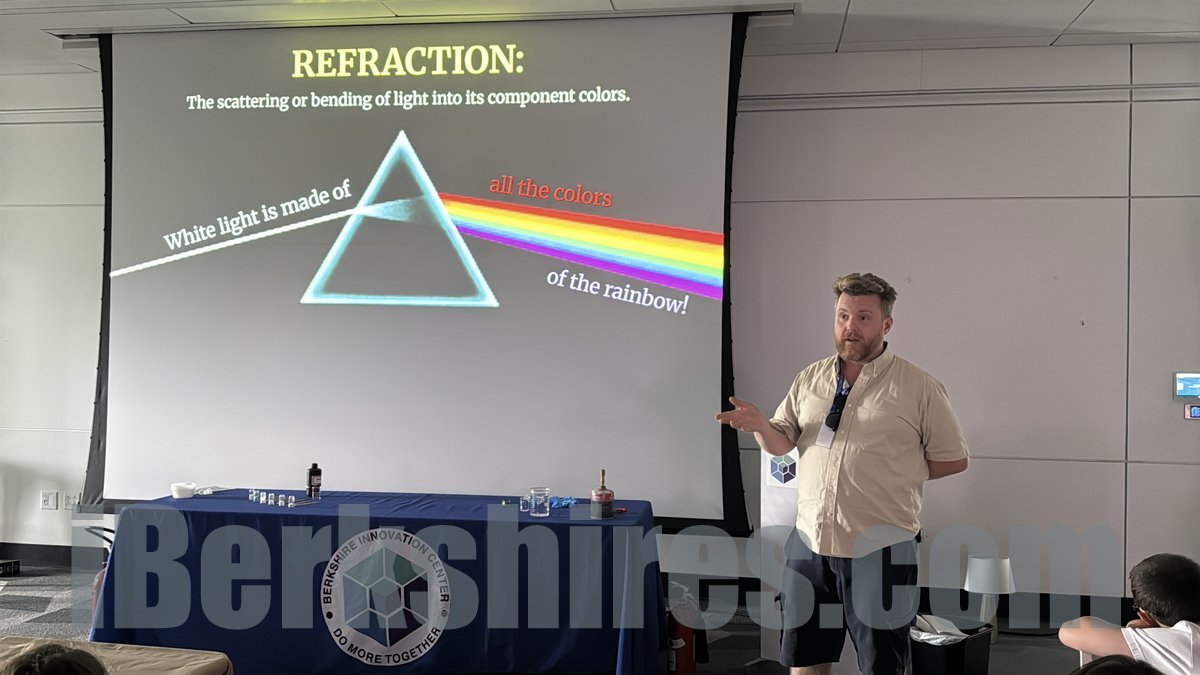
Flying Cloud education coordinator Christian Drake leads the camp through some engineering and scientific principles on Wednesday at the Berkshire Innovation Center. More photos here.
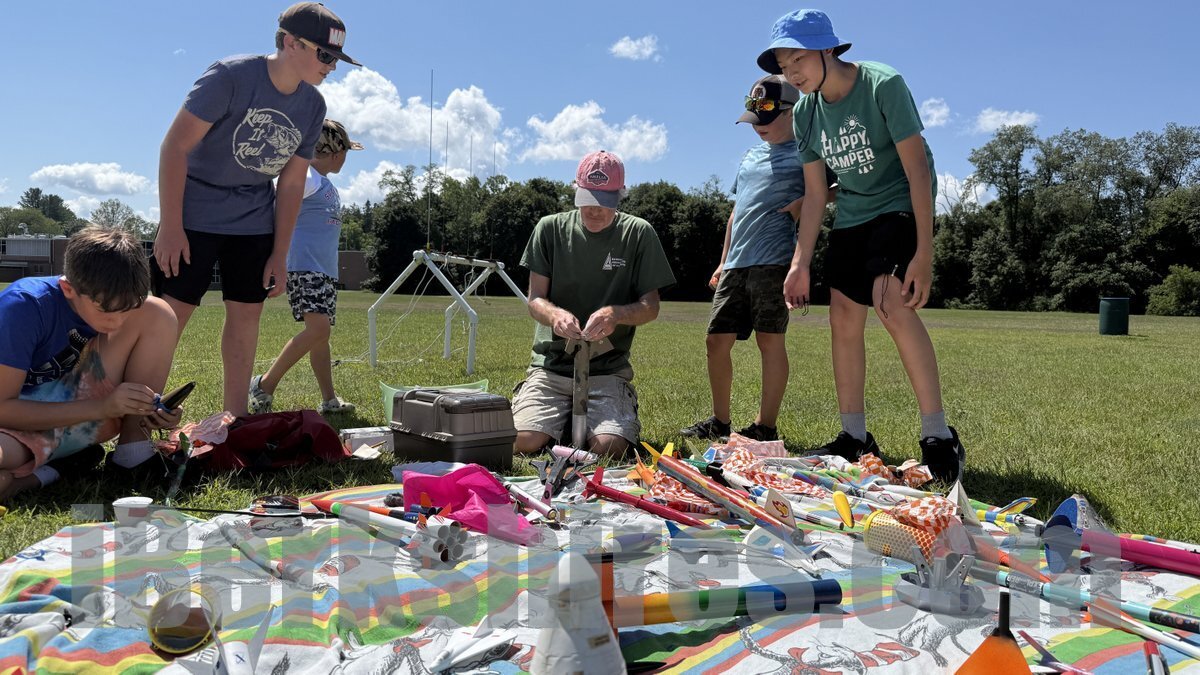
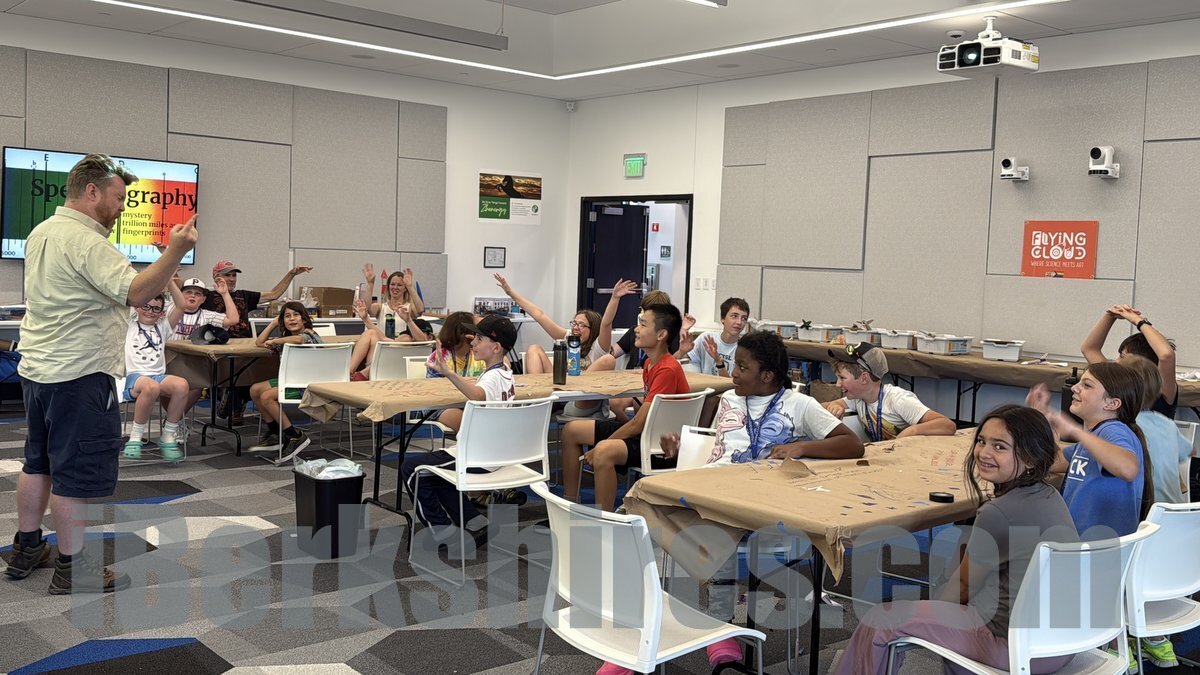
During a four-day workshop, students collaborated with volunteer David Doyle and education coordinator Christian Drake to explore scientific concepts and, of course, build rockets.
In three days, the students learned about the engineering behind rockets, propulsion, aerodynamics, space, and more.
"I believe rocketry is an excellent way to teach kids about basic physics and aerodynamics. Our goal this year was to have teams of two build seven very different rockets, and think about and discuss how their different shapes, sizes and weights contribute to different flight characteristics," Doyle said.
"They learn about basic forces, such as gravity, drag, rotation and thrust; they learn about the basic tools and materials typically used to build model rockets."
Each of the rockets was designed to meet a different purpose, Drake said.
"I invented some backstory lore where every team was designing a different prototype rocket for a different exoplanet and these are all based on real exoplanets that we've discovered," he said.
Each of the seven rockets that the teams built had its own mission, such as launching an egg without it cracking upon landing, or a payload, including a paratrooper and maple tree seeds.
Some were also designed to spin on the way up, say aloft as long as possible, and fly with tubes rather than fins for stability
Additionally, students learned other scientific subjects, including how different elements change the color of fire when burning.
It was demonstrated how the experience instills more than academic knowledge, but also nurtures their creativity and curiosity while fostering teamwork, communication, and collaboration through group projects.
"Kids who attend Rocket Camp learn about cooperation and teamwork; they learn how to incorporate creativity into their creations … and they also experience how much fun, and how rewarding, science can be," Doyle said.
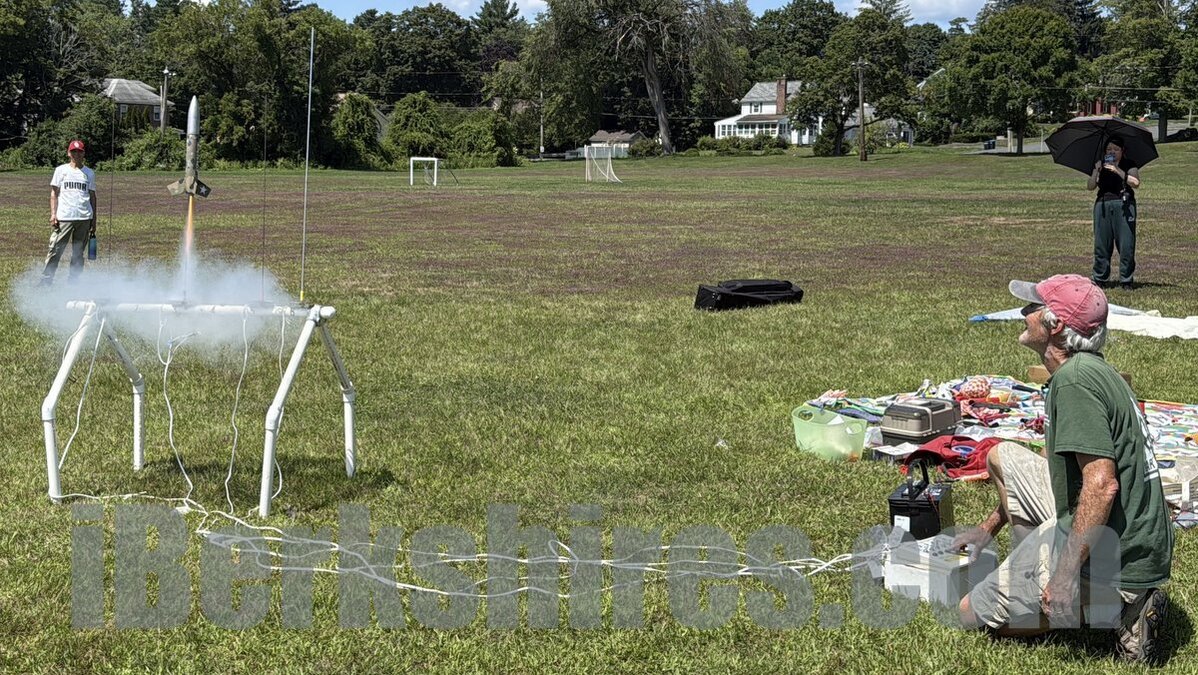
On Thursday, the students gathered at Herberg Middle school to launch their creations. They trembled in excitement as they watched each of the uniquely designed rockets fly into the air carrying precious cargo.
Students said setting off their rockets felt "exhilarating."
"It felt like powerful," Luke Saupe said. "It felt super satisfying," Igor Shimelonis agreed.
Igor's mother, Rebecca Sheir, said he participated in the camp last year and counted down the days to participate again.
"Creativity, curiosity, I think this program sparks so many things in kids because of what it offers. I think the curiosity factor will make him curious about all the things that he's learning. I mean, on the surface, building a racket is just maybe science, but there's so much more to it than that," Sheir said.
"And so I think with any subject, you can see that on the surface, it's about one thing, but can be applied in so many ways that are really exciting, interesting and fun."
Families attended the launch, watching the excitement in their children's eyes as Doyle instructed them on how to use the controls and position the stand for a safe launch, taking into account Thursday's ever-changing wind conditions.
"I absolutely love this camp. This is the coolest camp I think I've ever gone and attended. And just very happy it exists, and very grateful," said Daniel Sala, parent.
Sala said his son, Andrik Lenski-Sala, "has come home every day excited … When I picked him up yesterday, he had a cool little light reflector thing that he took everywhere, looking through to see the rainbows. Just ultimate excitement.
"One of the best camps we've ever signed him up for. He's come home excited every day. Every day has been great. Love this camp."
Student Nevaeh Taliaferro said it was worth getting up early in the morning to attend.
"Making the rockets was definitely one of the best parts, especially when we got to, like, fly them," said Joaquin "Kiki" Vacarr. "And then it fell in a tree."
The project instilled in the kids a sense of pride for building an actual flying rocket and seeing it successfully fly, Doyle said.
"It's fun, a little chaotic at times, but that's normal for any camp," said Kiara Moyer. Shane Chen said they also learned a lot about teamwork and working together."
Flying Cloud established Rocket Camp in Pittsfield in 2023, after Doyle presented the educational nonprofit with the concept.
The program was founded more than 40 years ago by Jane and Lawrence Burke with a focus on environmental education and greatly expanded over the years to include science, technology, math and the arts. It works primarily with schools to provide programming in the classroom, after school, and in the summer, Flying Cloud Executive Director Maria Rundle said.
"We're meeting the needs of the schools to bring in the authentic practices of scientists, engineers and technology designers, but we're doing it in a way that we can have creative hands-on experience," she said.
The partnerships with the schools allows the organization to be embedded in the districts and work on addressing the state science, technology and engineering standards, Rundle said. Flying Cloud benefits from its teachers and volunteers such as artists, scientists and engineers who share their expertise with children through hands-on projects.
"One of the things that's very important at Flying Cloud is that we walk alongside our students, as fellow co-creators, as artists and as scientists, making meaning out of our world together," she said.
"So, I think that one of the things that's really important is that we're able to bring these very dynamic and engaged, hands-on experiences to all of our Berkshire County youth."
Tags: STEAM, summer camp,