Pittsfield Council Continues Fiber Network Hearing
PITTSFIELD, Mass. — The City Council continued a fiber-optic company's request to build a network in the city's right-of-way after a "confusing" permitting process and complaints from residents.
Archtop Fiber's request to install a fiber-optic network in Pittsfield will be discussed again on Sept. 23. Councilors expect more information from the company and more public outreach to ensure that residents are aware of utility work.
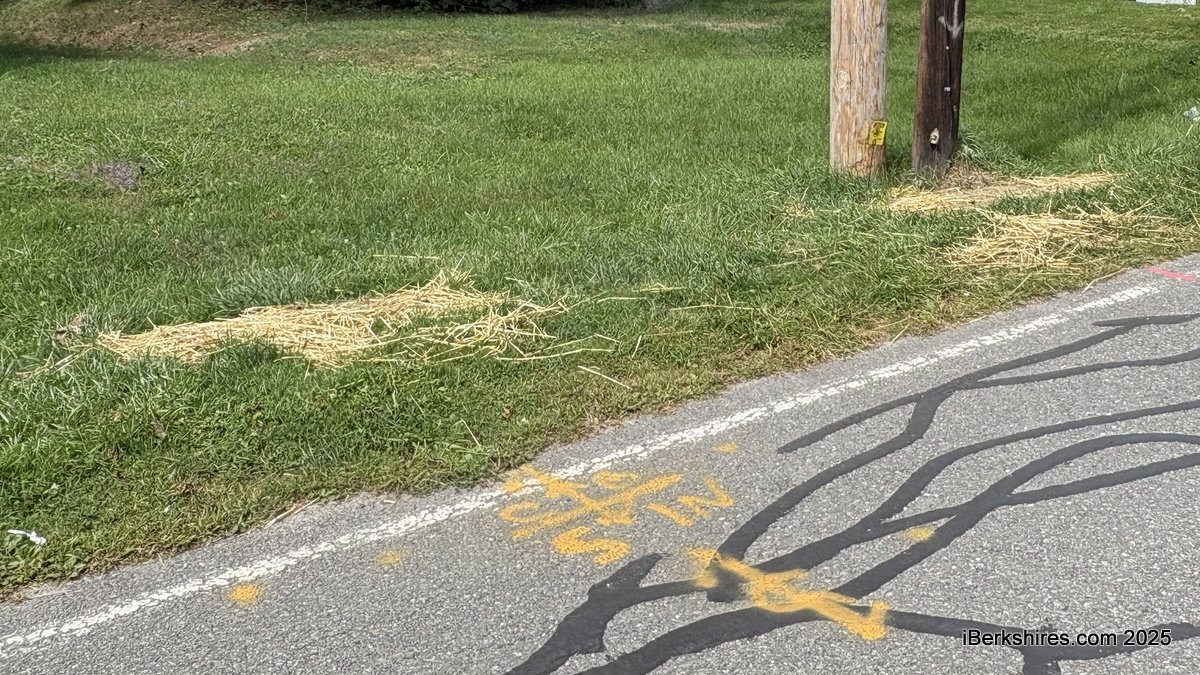
"You did work on [Oswald Avenue] in my ward, tore up a bunch of lawns. The residents were extremely unhappy with the work that was done," Ward 5 Patrick Kavey told the project representative at last Tuesday's meeting.
"They were unhappy with the way it was left, basically, and now I'm getting calls and complaints where they're going out and buying grass seed to clean up the mess, and that's the first thing that you guys did in the city, so I'm concerned about this."
Officials say the permit process for this type of work is new and unclear. Archtop was given a permit for construction, but work started before City Council approval. Councilors have fielded calls from residents upset about the company digging up the right of way and alleged that there was no proper notification.
It was described as a "cart before the horse" situation.
"We work really, really hard to engage proactively with the residents of every community that we build in," said Vice President Kevin DeLouise, who oversees outside plant design and construction, speaking apologetically on behalf of Archtop Fiber.
"All I can do here again is apologize to this council for the manner of this communication. I do not want to leave here with the impression that Archtop showed up a month ago and started digging in the street.
"We've been engaged with the DPW for many months. We did put in and received permits and met with the team to work out a communications plan and what was required. We work in many communities that are equally as passionate and equally as engaged with their councils, so this, as uncomfortable as this is, it is a set of concerns with residents that we have dealt with before, and in our business model, it is in our interest to address upfront."
This is the third fiber optic internet company that has decided to expand to Pittsfield recently. DeLouise acknowledged that, in a scramble to be prepared for the meeting and because they had already begun work, "This did not go in the same order as potentially the previous competitor that was here."
"Word of mouth is a killer for us, worse than just about anything else I can think of in terms of trying to win new subscribers for our service," he said
Commissioner of Public Services and Utilities Ricardo Morales said the city had a permitting meeting with Archtop, "and this process was not clear, as it's not something that we were conducting on a regular basis." Very quickly, the city learned through its solicitor what the full process was, and at that point, the permit had been issued, and work started.
City Solicitor Devon Grierson reported that there was confusion initially.
"A lot of cities and towns in Massachusetts don't seem to be following this rule that requires legislative approval to issue these permits. When it was brought to my attention, I advised Commissioner Morales and [City Engineer Tyler Shedd] about this requirement, conferred with the city clerk to make sure that we sent out notices, and then we would require city council approval," he explained.
"Since the permits had already been issued, I advised that until the City Council had an opportunity to review this, that it would be inappropriate to stop work, only if the City Council did not approve this petition that the work should stop."
Morales pointed out that AccessPlus had citywide communication because the request was to deploy a fiber network across the entire city.
"The public hearing is the first step in terms of notifying, not the permit," he explained. "And that's where the cart before the horse occurred."
DeLouise said they had somewhat of an abbreviated timeline to respond, not knowing that these permitting requirements were there. He reported that Archtop sent mailers to every resident on the route of the build on a shorter window, about 700 addresses.
He added that the company is placing door hangers as well, "However, that we did miss some, I do not dispute whatsoever."
Ward 4 Councilor James Conant said people are calling him "constantly" on the issue and want to know what's going on. He would like to see at least three public meetings before they go any further
"I don't like this whole process," Conant said.
"I don't know why there wasn't a public informative session before this. This is a big, big change for Pittsfield, and you didn't do it right, so make it right this time. I'm watching you."
Ward 6 Councilor Dina Lampiasi had concerns about the company starting work amid the confusion and the lack of information on which streets they had covered.
"I don't want this to be a pile on because you are one person within a machine that's here, and I get that, and I'm empathetic to that," she said.
"… Right now, I think competition is good, but I don't have a lot of faith because what we have seen has not been good."
Councilor at Large Earl Persip III made the motion to continue. He warned that there is so much pushback because residents do contact their councilors for answers, and bad communication makes everyone's experience "miserable."
"The reason I offered to continue so they could continue to work is because I thought some of it is our fault. There was some miscommunication," he said.
"I do not want to penalize them, but I know everyone wants answers to some of the things we brought up. I thought that was the good middle ground."
Kavey clarified that he has wanted fiber optic here for a while.
"I think this is the infrastructure that we need in this city, but I'm very, very concerned with the way that you started doing work in my ward."
Ward 1 Councilor Kenneth Warren recognized that it was said multiple times that the situation wasn't in bad faith, and that this is not a way to treat business. He pointed out that Archtop needs permits to expand into different areas of the city.
"I understand there were some problems. I will be the first person to beat up on that company and vote against them if the next time they come in for a permit and there's been some mistakes made, but I think there's been some problems on both parties, and I don't think we should keep beating up on a business for things, and I'm not going to beat up on any city employee," he said.
"You've heard there's confusion in the state of Massachusetts, so I think we got to understand that we can understand how there's some problems in Pittsfield."
Morales said if there are specific regulations that the City Council wants to enact around this, he is happy to discuss.
"Right now, the regulations are to get a permit to make a trench, small as it may be, in the right of way with the city, and the regulation for communicating, for holding this public hearing with the City Council, that is it in terms of regulation. That is what a company doing this would have to do. Beyond that, any company is welcome to do more above and beyond," he said.
"Again, beyond that, I think it may be time for Pittsfield to start regulating something like this in a different way. I'm just saying that out loud. It is currently not something that's regulated in that way."
Tags: Internet,