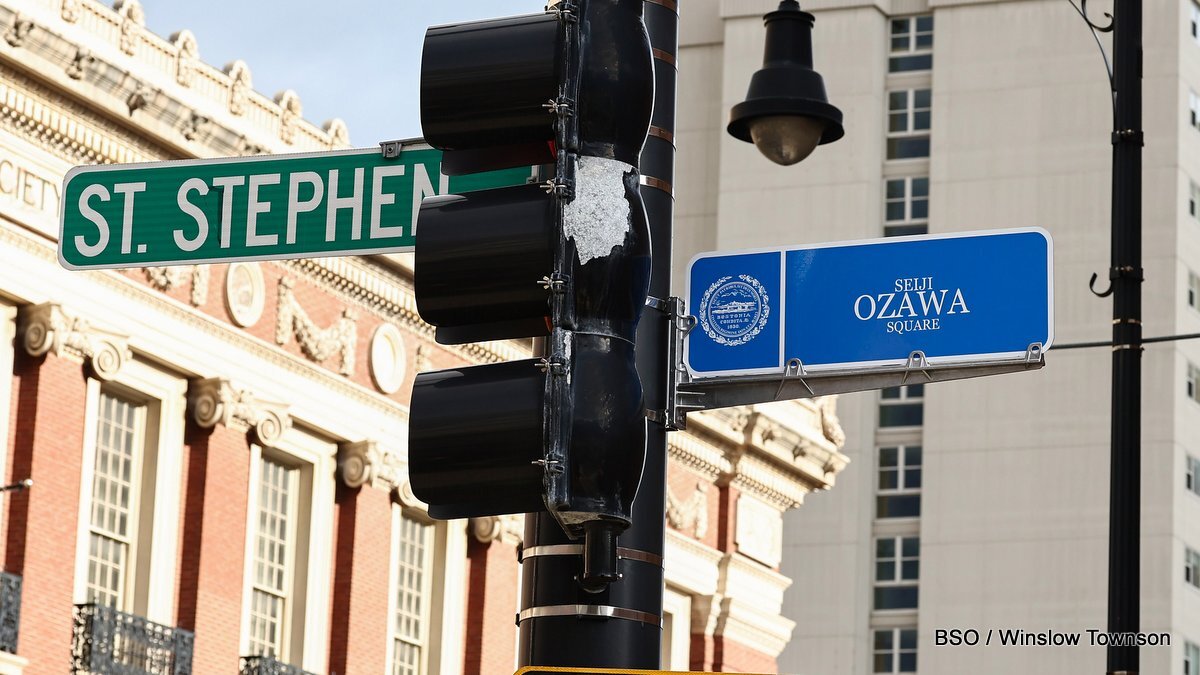
BSO, Boston Dedicate 'Seiji Ozawa Square'
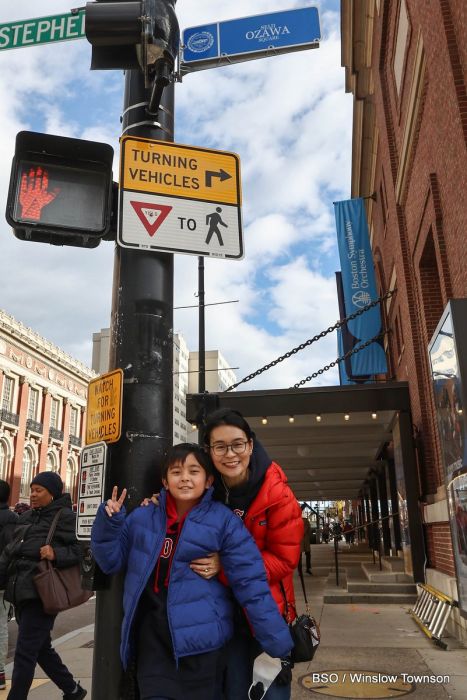
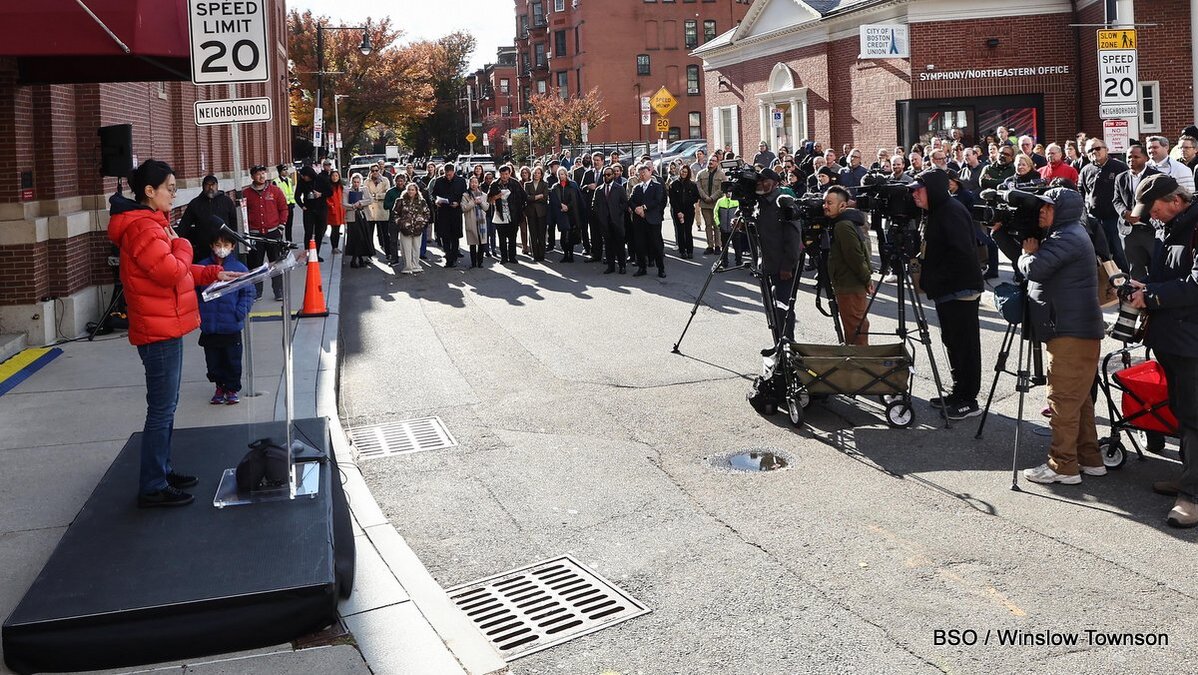
Seira Ozawa and her son, Masaki, stand under the Ozawa sign dedicated to her father, Seiki Ozawa, on Thursday.
Ozawa was the BSO's esteemed music director for 29 years, from 1973 to 2002. He died in February 2024 at the age of 88.
Among the speakers at the unveiling were Kenny Mascary, Boston's interim director of the arts and culture; BSO President and CEO Chad Smith, and Ozawa's daughter, Seira Ozawa.
"Seiji left a legacy of passionate music-making, innovation, and mentorship that continues to inspire musicians and audiences worldwide," said Smith. "The Square is a symbol of how his contributions continue to resonate: the extraordinary players he hired, the audiences he inspired, and the shared memories that connect us across generations."
The ceremony coincides with BSO performances this week, Nov. 6-8, featuring artists and repertoire strongly associated with Ozawa. A conducting protégée of the maestro, Nodoka Okisawa makes her BSO and U.S. debuts with violin soloist Midori, a longtime Ozawa collaborator, in Dvo?ák’s Seventh Symphony and Violin Concerto — works Ozawa especially loved. The program also includes T?ru Takemitsu's "Requiem for strings," which the BSO has performed only once before, with Ozawa conducting it at Tanglewood in 1967.
Okisawa and Midori were among the attendees at Thursday's ceremony, which also included BSO musicians and staff, BSO Board Chair Barbara Hostetter, Consul General of Japan Seiichiro Takahashi, and Chieko Yoshida, the consul for cultural affairs at the Consulate General of Japan in Boston.
The maestro was well known in the Berkshires and Seiji Ozawa Hall was named for him when it was constructed in 1994 at Tanglewood, summer home of the BSO. The annual Tanglewood on Parade was dedicated to his memory in 2024 and a bust of him was installed outside the hall this past July in a private ceremony to commemorate his legacy. A timeline of his life and relationship with the BSO and Tanglewood can be found here.
Ozawa's last public performance was in 2022, when he conducted the Saito Kinen Orchestra to mark the 30th anniversary of his founding the festival (now the Seiji Ozawa Matsumoto Festival) in Japan. In a separate event around the same time, he conducted the SKO in Beethoven's "Egmont" overture in a performance that was broadcast live to the International Space Station and Japanese astronaut Koichi Wakata, in a collaboration with the Japan Aerospace Exploration Agency (JAXA).
"Dad believed in connecting with people, through music that came from his heart," said Seira Ozawa. "He believed that we can go beyond nationalities, races, genders, or age, over any occupation, politics, or religion. He believed in the goodness of human beings."
Tags: Boston, BSO, dedication,