Festival of Trees at Hancock Shaker Village
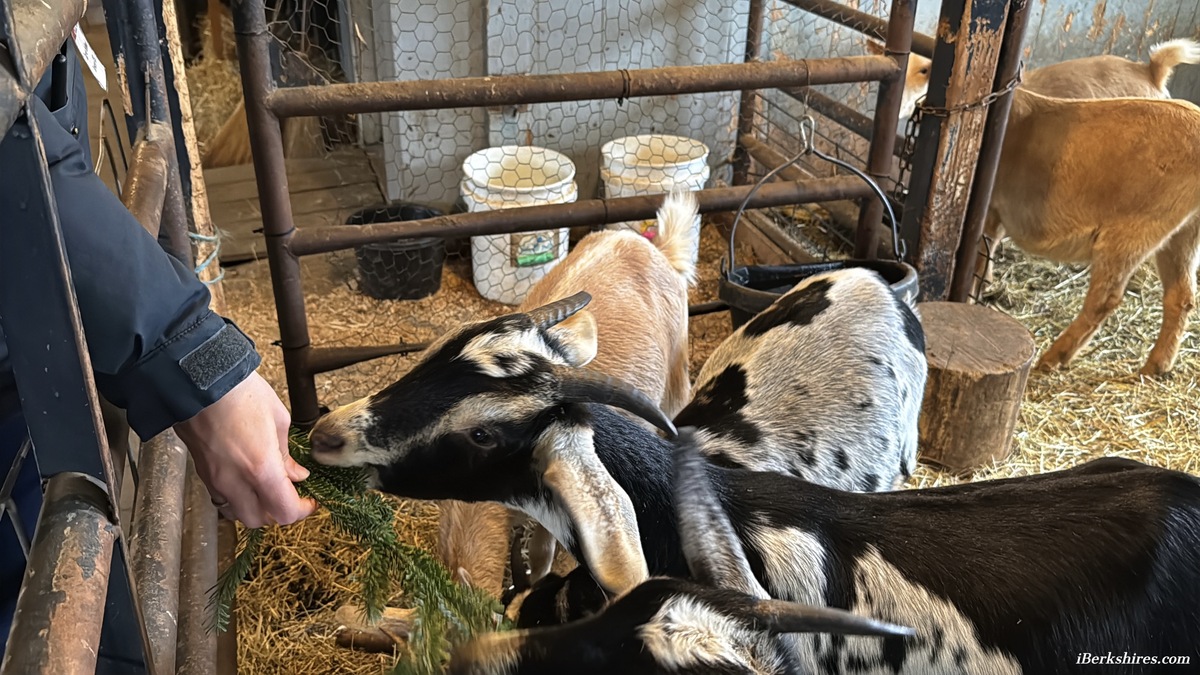
The village is a living history museum, which includes raising animals like the Shakers did. Above, some goats get a treat of leftover pine from making wreaths.
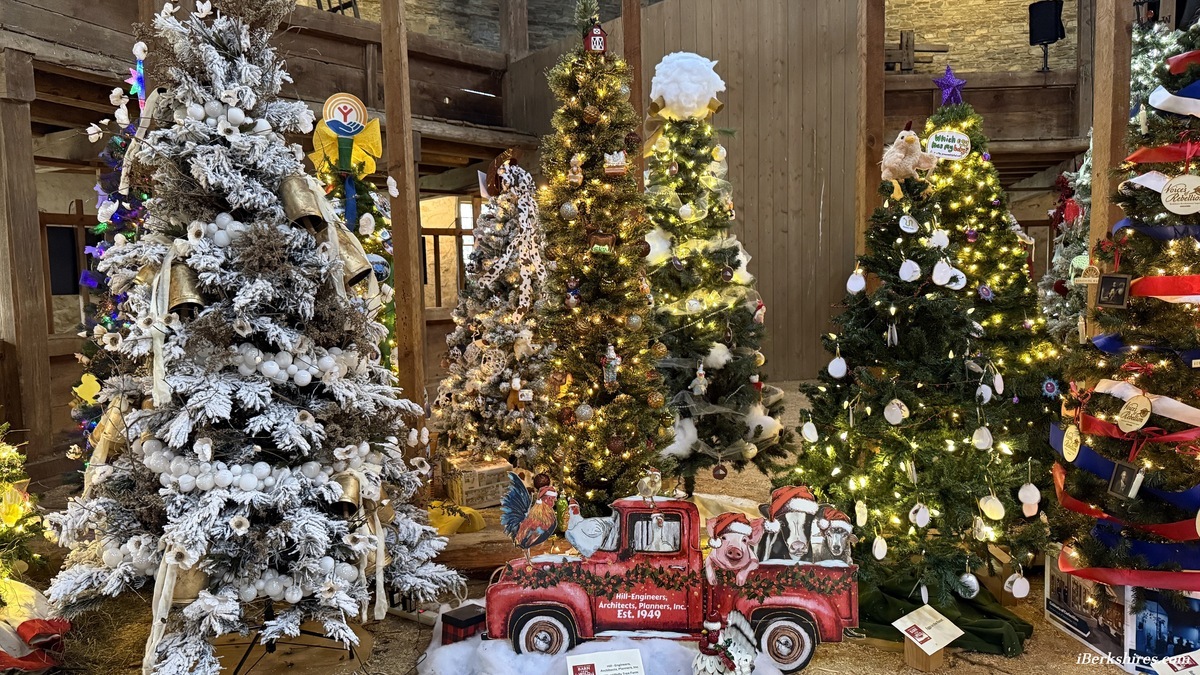
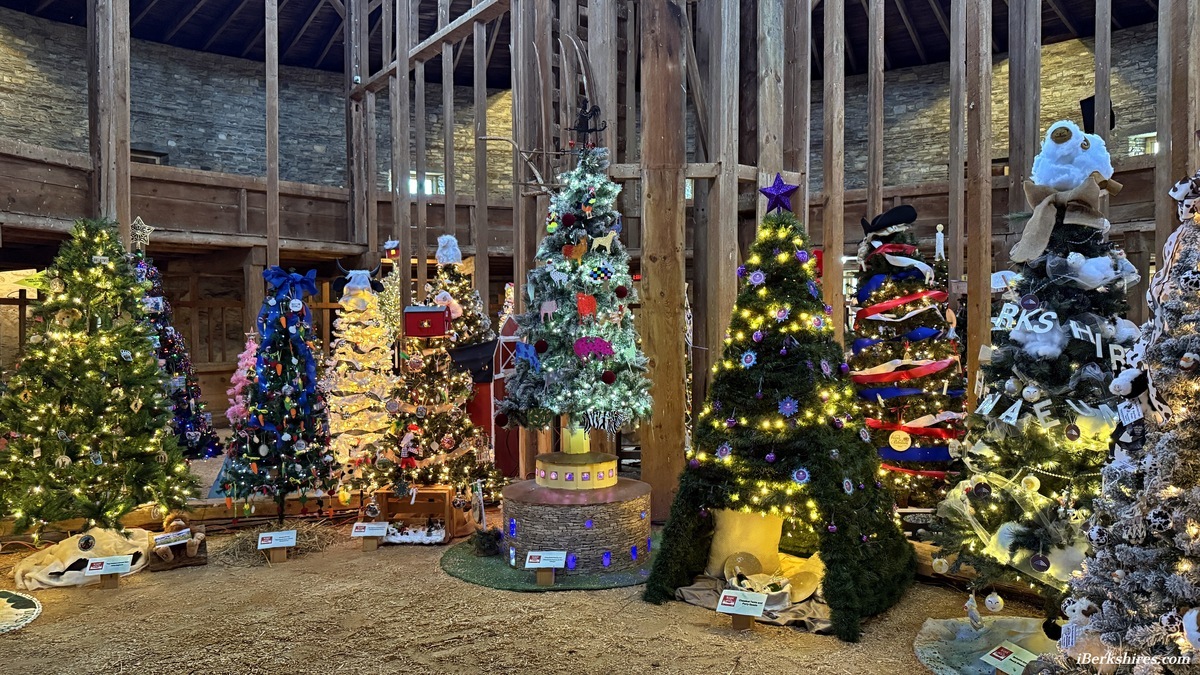
Every Friday, Saturday, and Sunday until Dec. 28, the historic Hancock Shaker Village will welcome visitors to gaze at more than 75 trees throughout the museum, culminating in a magical display in the Round Stone Barn.
"The iconic Round Stone Barn is always a hit with people who want to come and visit, and it's a special year — it's celebrating its 200th birthday next year," Village Director and CEO Carrie Holland said.
"So, this is a nice way to jump-start that celebration with lights and merriment. We have the animals, our discovery barn, there's a lot of daytime activations that we're excited to layer into the experience of going and seeing the trees as well."
The Berkshire Museum's Festival of Trees started in 1985 as a collaboration with the Lenox Garden Club and the Berkshire Museum auxiliary, said William Demick, the museum's membership and development manager.
"I think the community has been really excited to experience a tradition in a new place. It's something fresh," Holland said.
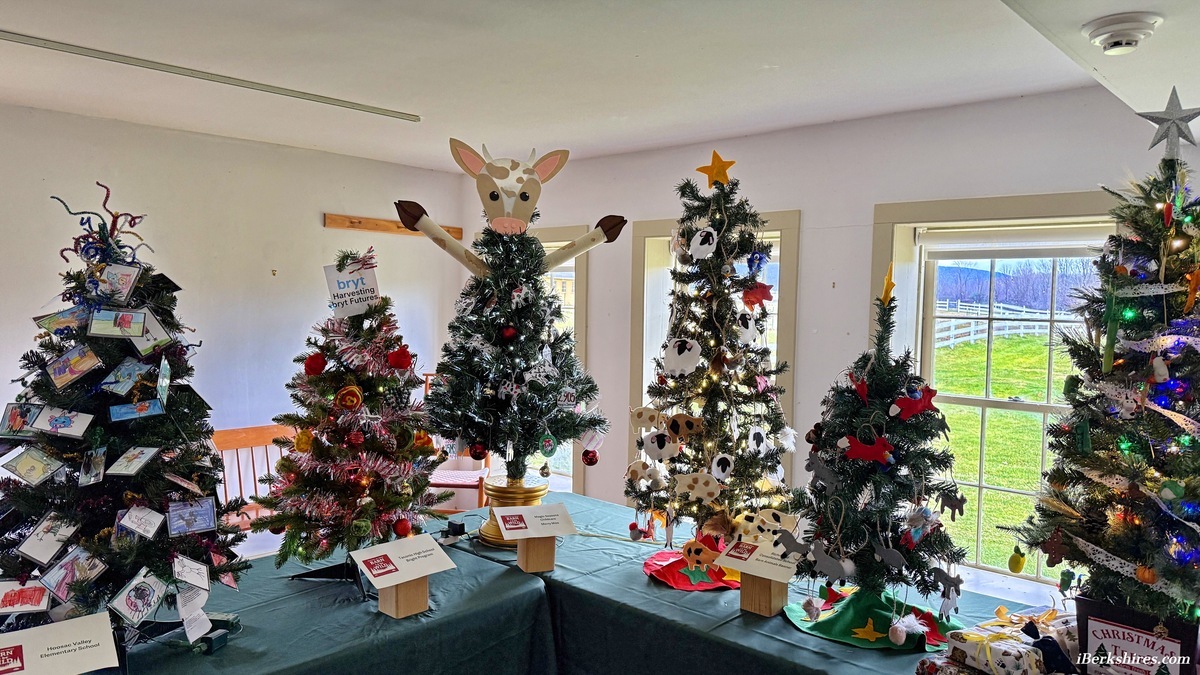
This year there are more than 75 trees on display, 23 decorated by schools and 52 main entries across 42 organizations including banks, businesses, and nonprofits.
"It's a really nice cross section of the community. It's a really nice representation of the community … it's been fun to see just a whole cross section of our community represented in their creative output with their tree," Holland said.
"It's so fun to see everyone's interpretation of the theme ['Barn to be Wild.'] There have been some really impressive trees come together. I am just so impressed with the depth and breadth of community participation."
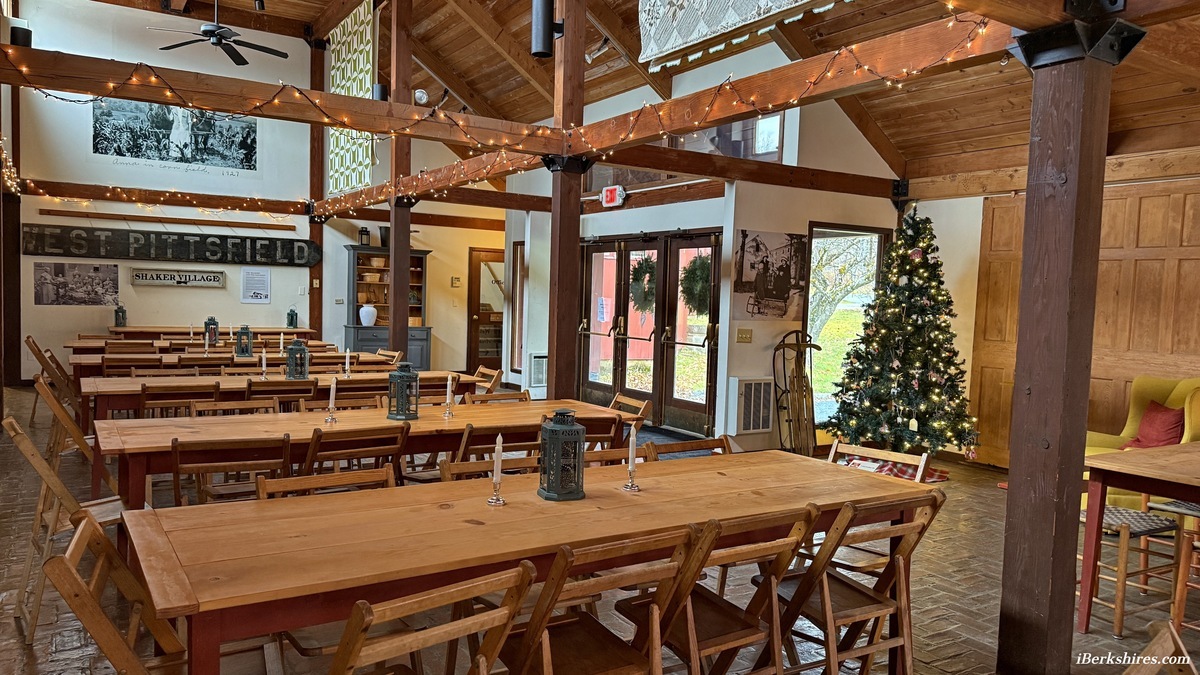
Holland was initially worried that the large barn would feel empty, but once the trees were added, the space transformed into a vibrant and full environment.
It feels like a glowy, decorated forest of creativity, she said.
As you walk around the Round Stone Barn you can hear the animals in the dairy ell that extends off one side.
Both the Berkshire Museum and the visitor center at Hancock Shaker Village are under construction, so the partnership between the organizations was practical for a number of reasons.
Because of construction, the South Street museum does not have a venue to host its beloved Christmas event, and Hancock Shaker Village cannot hold its usual "Radiant Nights," a festival of lights, music and projections.
Having the Festival of Trees at Hancock Shaker Village fills the gap both venues have — Berkshire Museum's need for a venue and Shaker Village's desire for winter programming.
"This year, we are not doing a night program. We're all in on the Festival of Trees. There's also some additional programming that we've both been collaborating on," Holland said.
The season will feature a handbell choir and other musical programs, a pop-up café, and workshops.
"We're just focusing on daytime activations and the Festival of Trees is really a great way for us to highlight some of our unique features at the Village as well," Holland said.
Collaboration is important not just for practical reasons, such as cost savings and operational efficiencies, but also because it nurtures a deeper connection, she said
For example, at a recent opening party, the excitement and care for both organizations created a unique atmosphere, Holland said.
During and following the pandemic, resiliency has been a concern, "and collaboration builds resiliency," Demick said, as well as helping people navigate challenges collectively.
Hancock Shaker Village is the perfect setting for the Festival of Trees, he added.
At the museum, the trees would be spread out to make sure people go through each of the galleries and see what else is going on at the museum, he said.
"We're still able to do that, but with more of a focal point in the Round Stone Barn, which is itself an incredible piece of architecture. Just looking up and seeing the beams and all that is incredible," Demick said.
"Then you have that added literal glow of the trees coming from the center of it. I couldn't have worked out better as far as the setting."
While exploring the Shaker museum, visitors can also experience some of its exhibitions on display including works by Maria Molteni in the immersive installation "All Around the Room" or pieces by artist-in-residence Katie Rubright in the cafe.
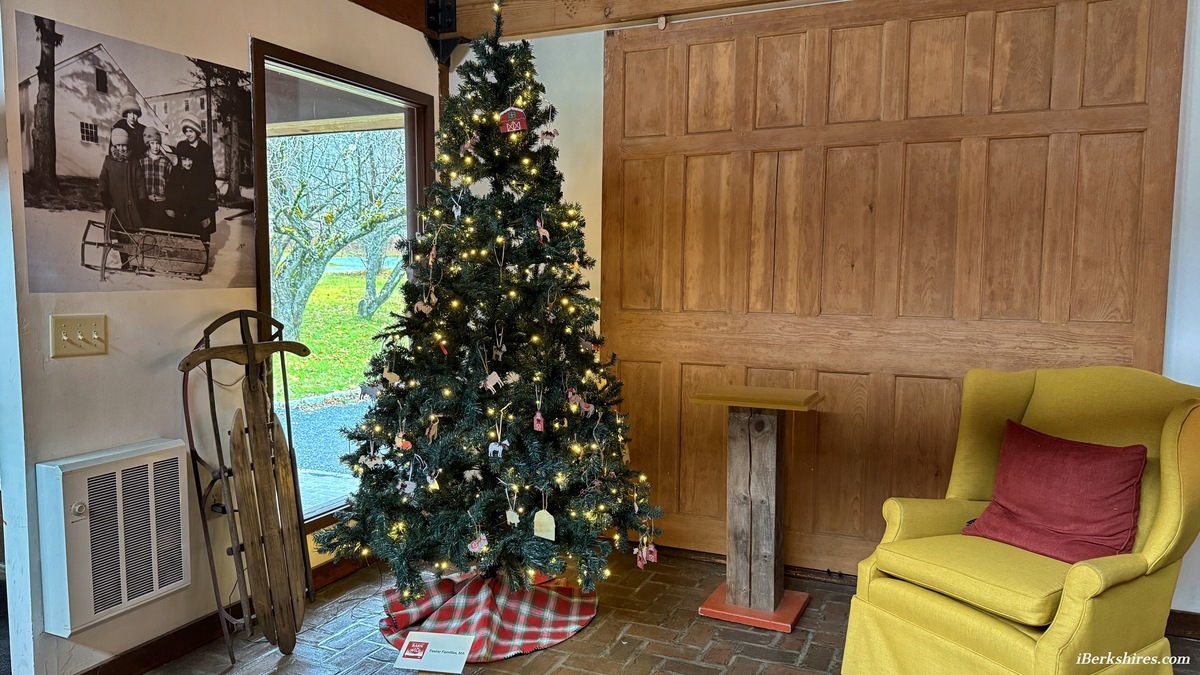
The Village put together a tree showcasing the history of the Shakers through the decades in the kitchen dwelling, which fits so well in the space, Demick said.
"We had some folks comment that it feels 'magical.' The phrase 'Hallmark movie' was thrown out a few times … I pictured it coming together well, but it has surpassed expectations. I think it looks great."
Tags: Berkshire Museum, festival of trees, Hancock Shaker Village,