
South County Celebrates 250th Anniversary of the Knox Trail
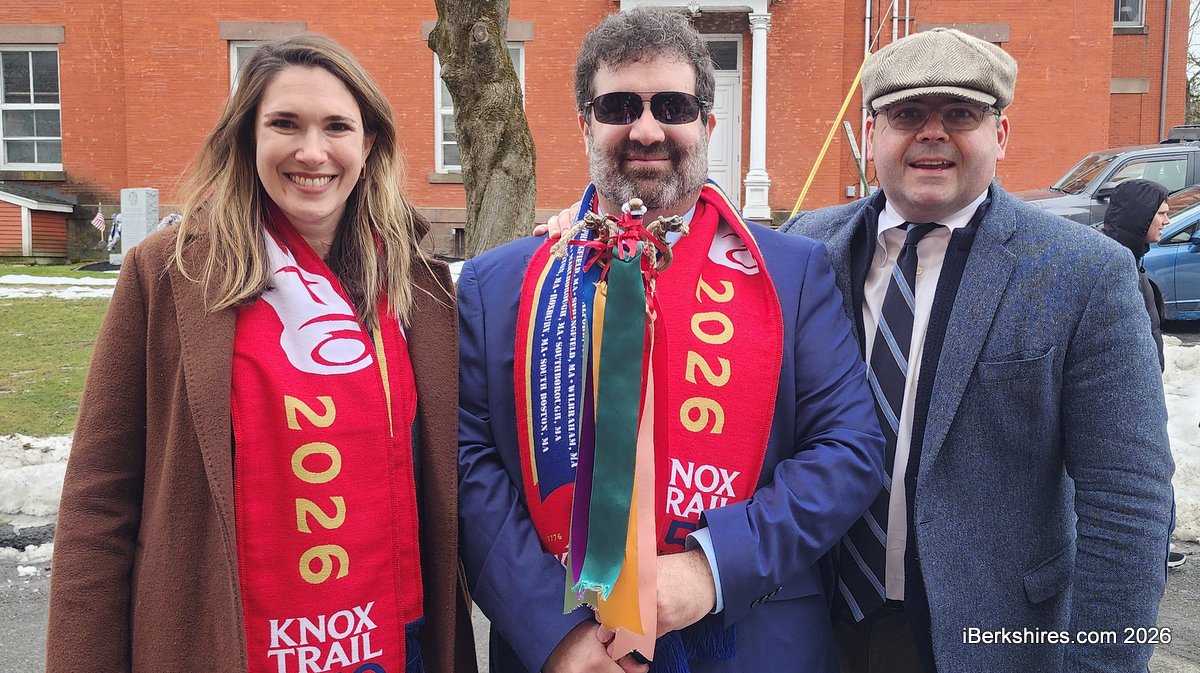
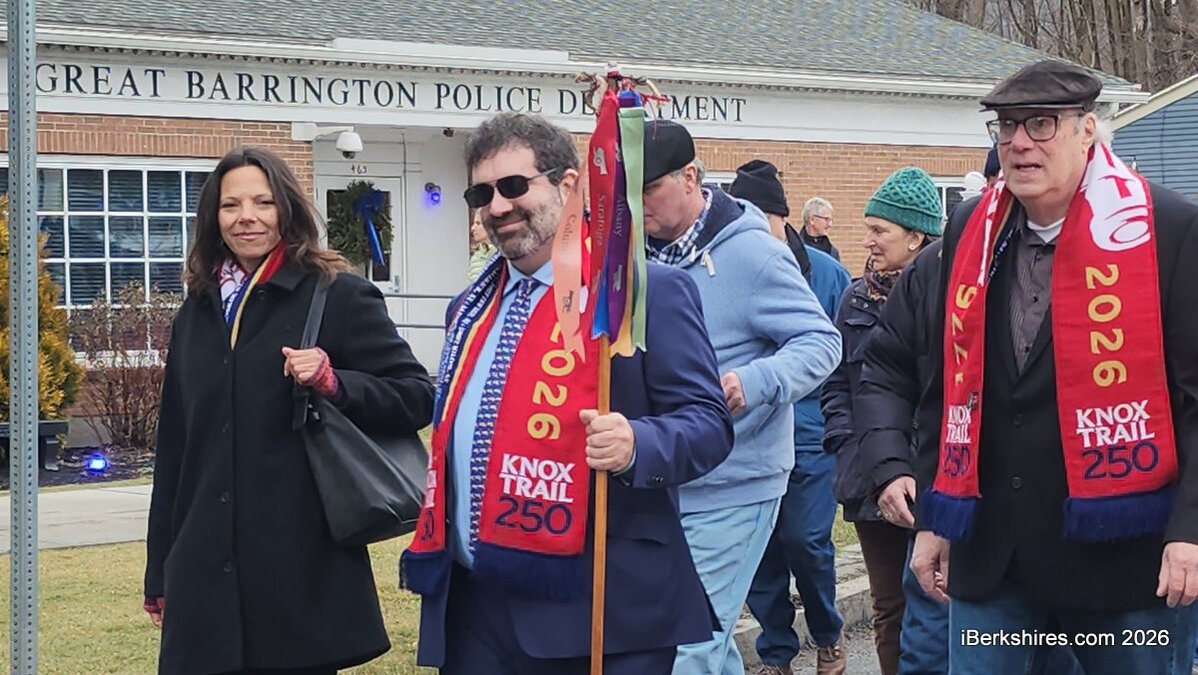
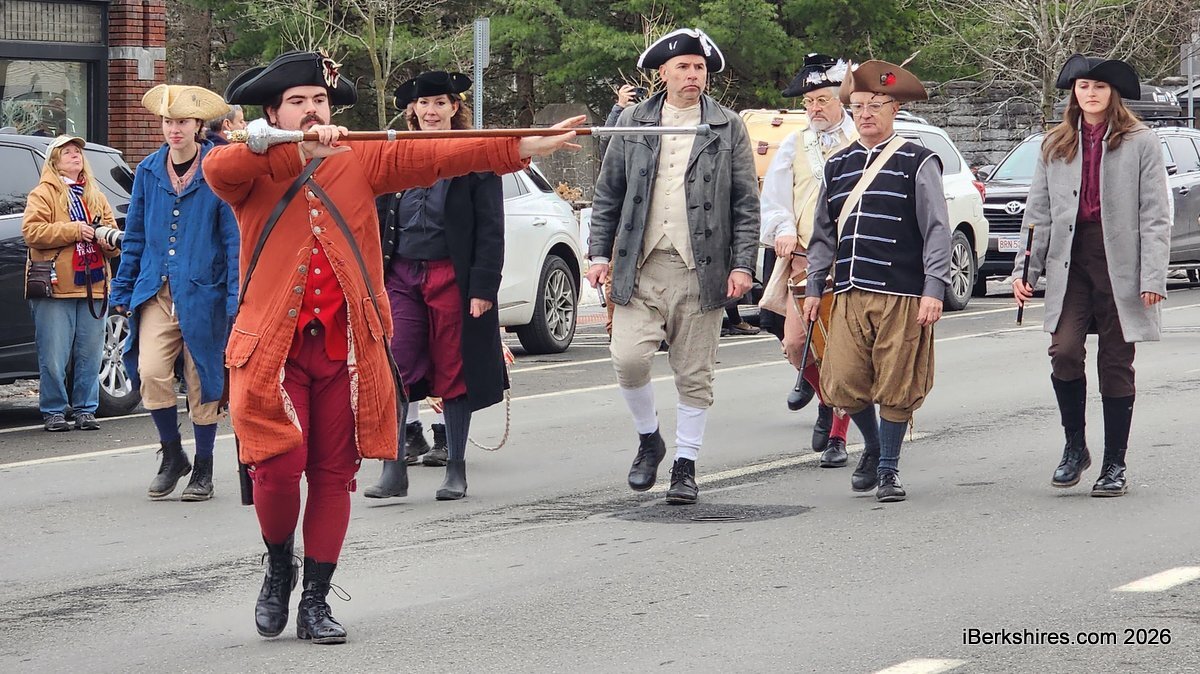
State Sen. Paul Mark carries the ceremonial linstock, a device used to light artillery. With him are New York state Sen. Michelle Hinchey and state Sen. Nick Collins of Suffolk County.
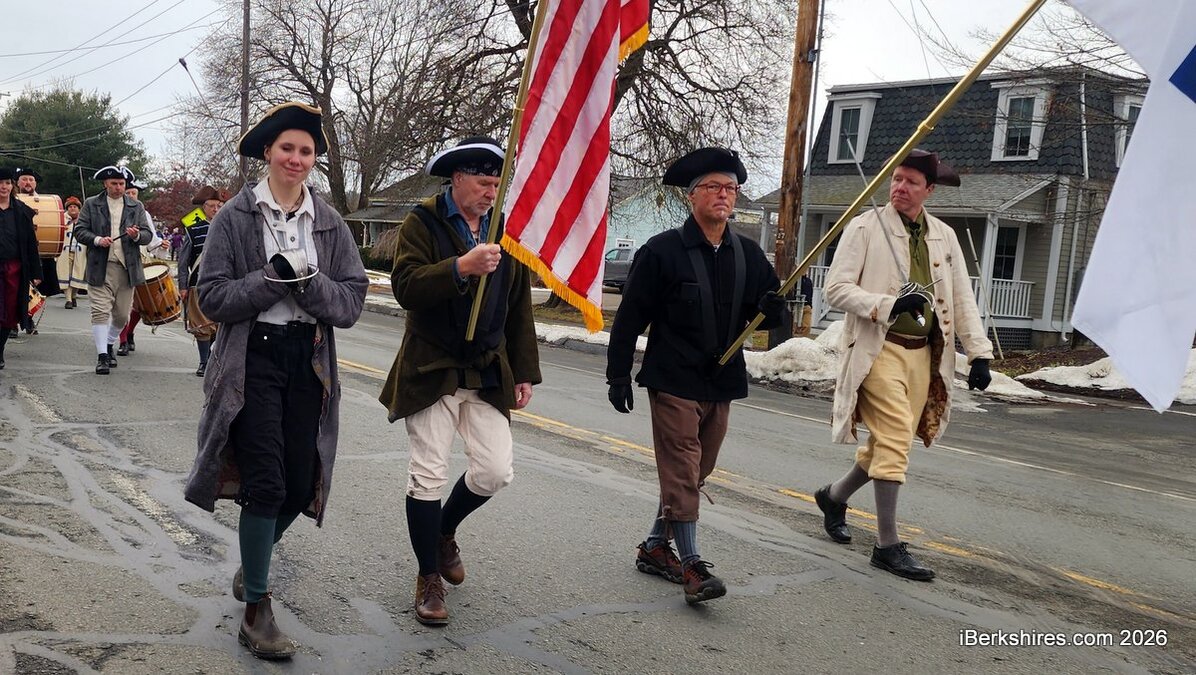
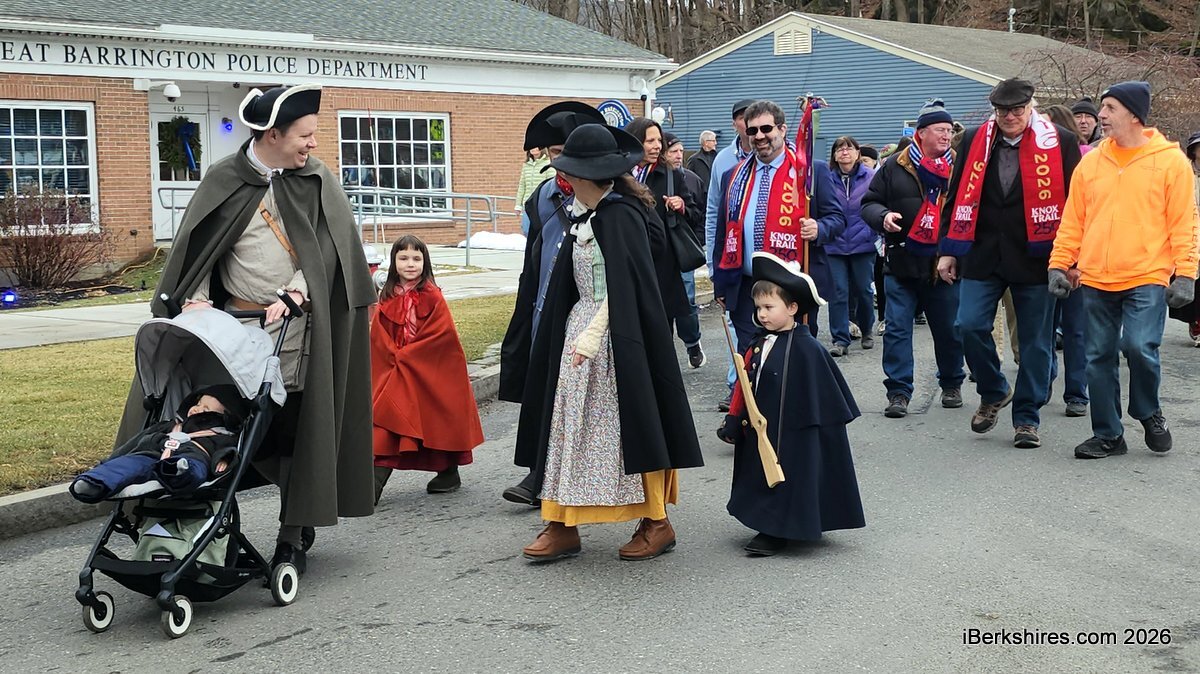
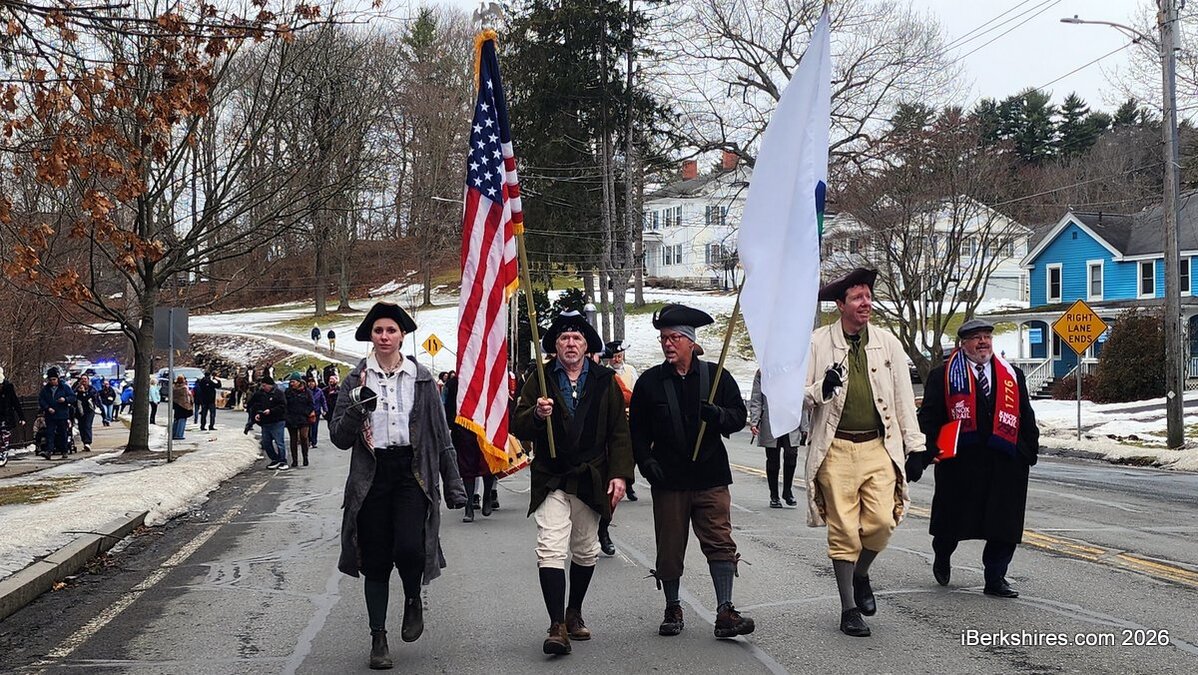
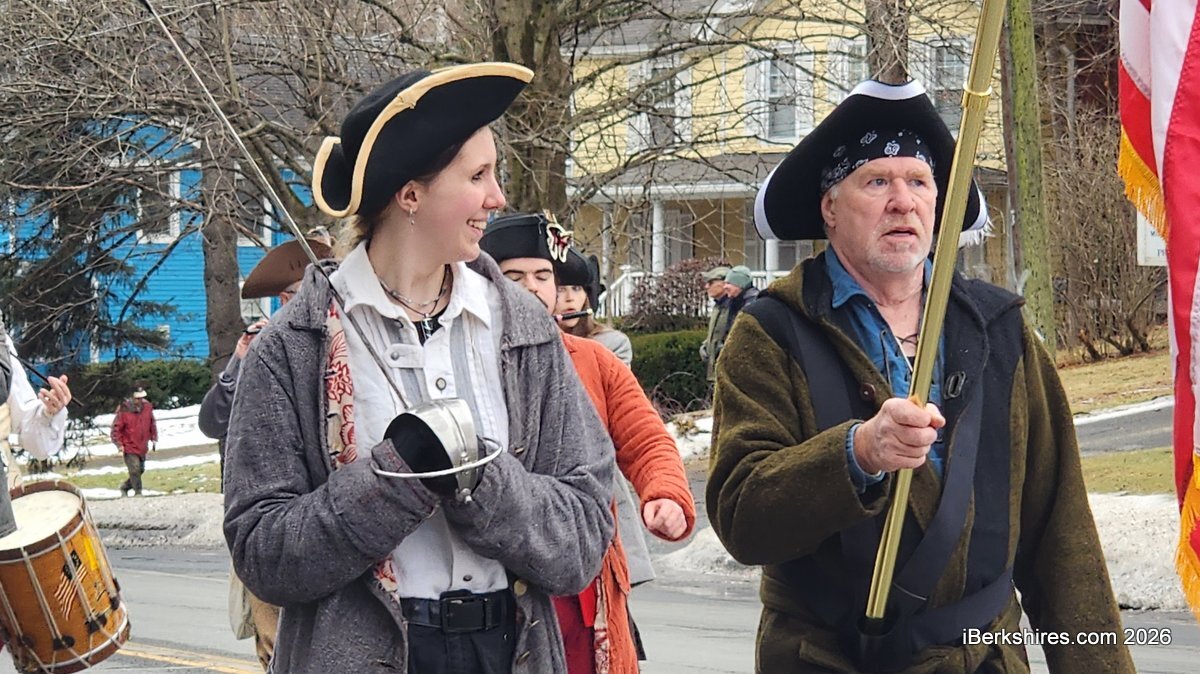
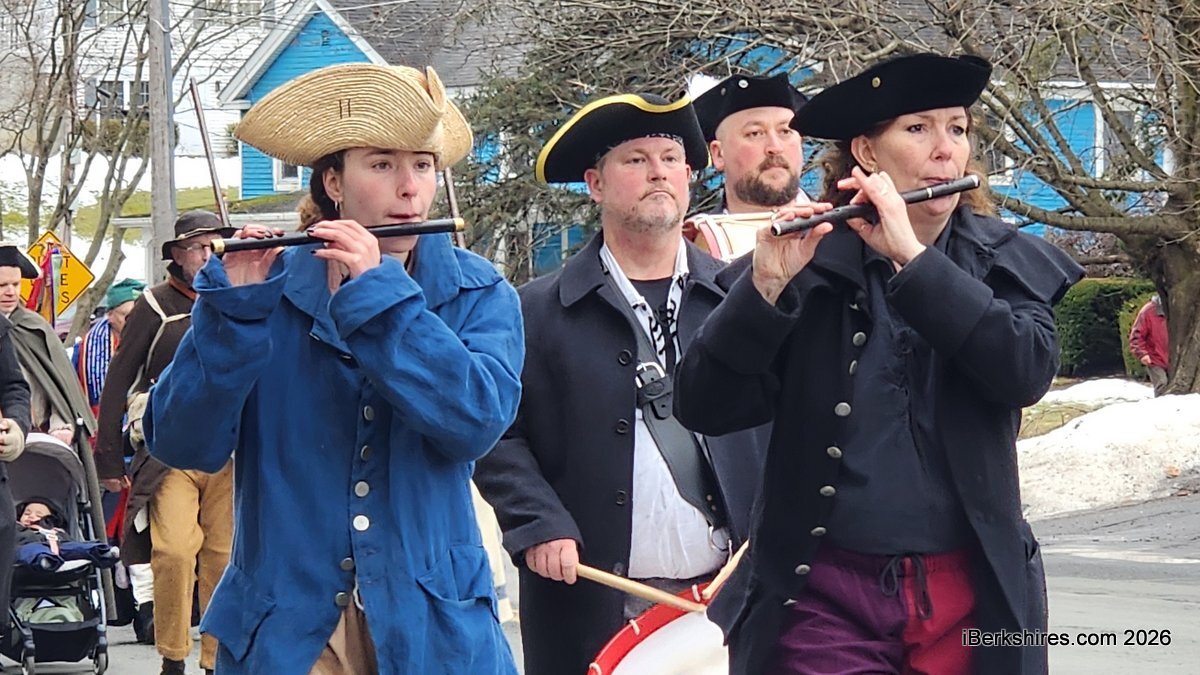
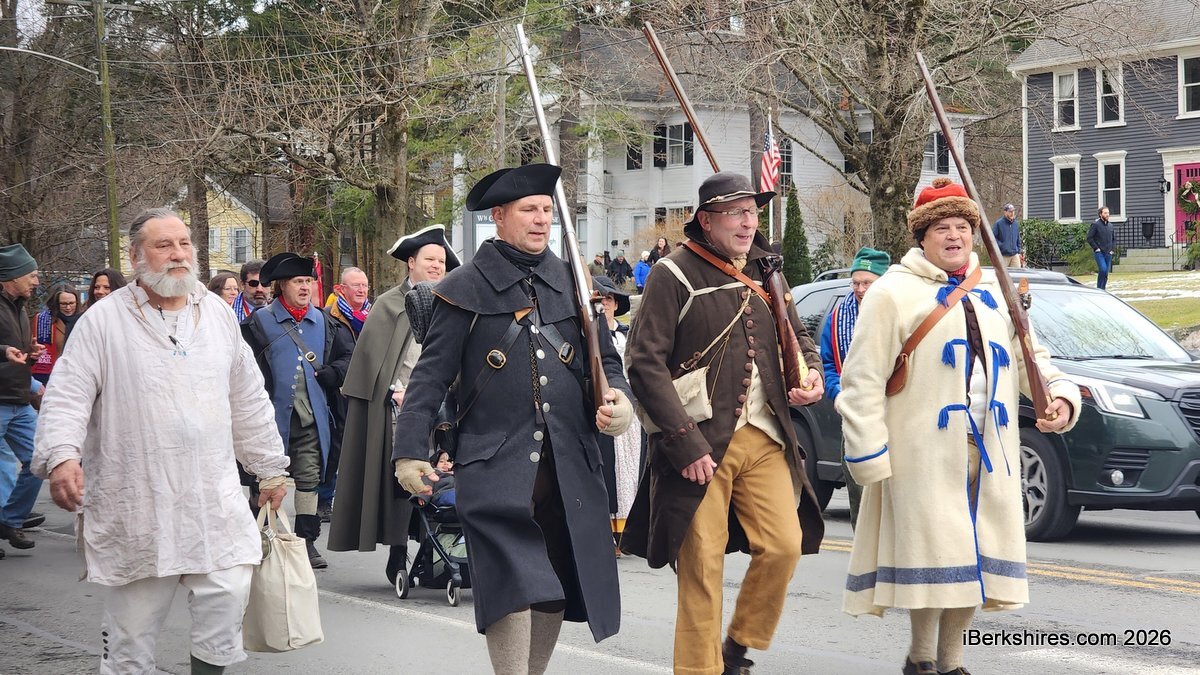
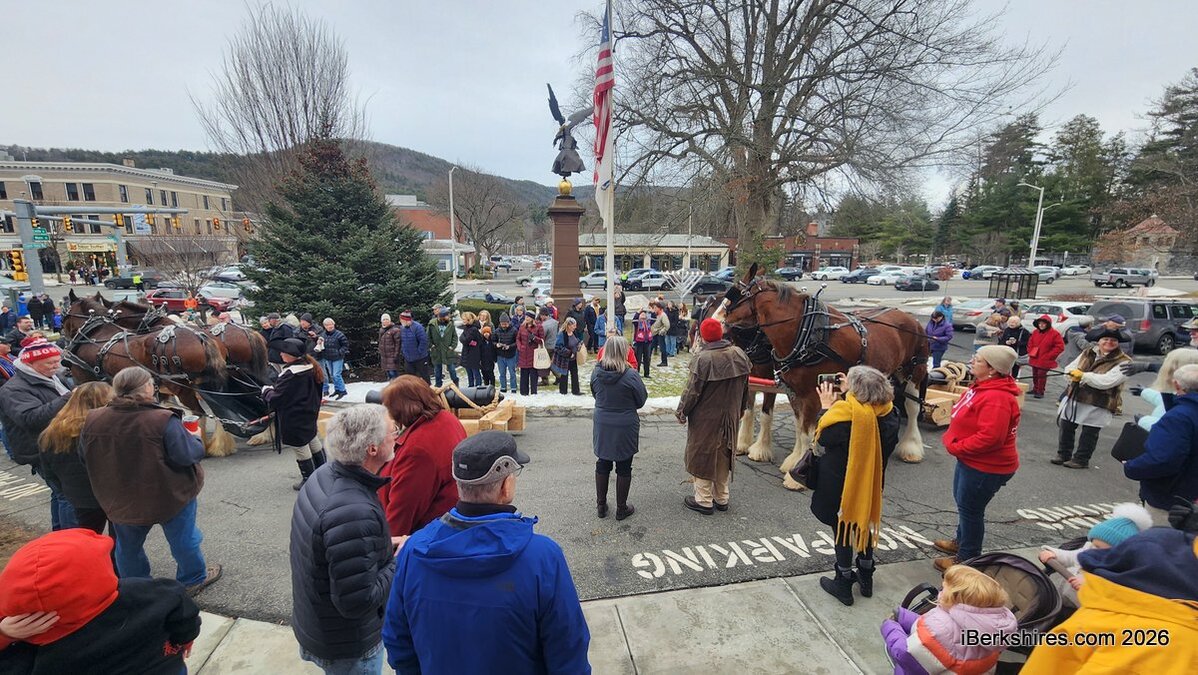
Later that afternoon, a small contingent of re-enactors, community members and officials marched from the Great Barrington Historical Society to the Mahaiwe Performing Arts Center to recognize the Berkshire towns that were part of that significant event in the nation's history.
State Sen. Paul Mark, as the highest ranking Massachusetts governmental official at the Alford crossing, was presented a ceremonial linstock flying the ribbons representing every New York State county that Henry Knox and his team passed through on their 300-mile journey from Fort Ticonderoga to Boston in the winter of 1775-76.
"The New York contingent came to the border. We had a speaking program, and they officially handed over the linstock, transferring control of the train to Massachusetts," said Mark, co-chair of Massachusetts' special commission for the semiquincentennial. "It was a great melding of both states, a kind of coming together."
State Rep. Leigh Davis called Knox "an unlikely hero, he was someone that rose up to the occasion. ... this is really honoring someone that stepped into a role because he was called to serve, and that is something that resonates."
Gen. George Washington charged 25-year-old bookseller Knox with bringing artillery from the recently captured fort on Lake Champlain to the beleaugured and occupied by Boston. It took 80 teams of horses and oxen to carry the nearly 60 tons of cannon through snow and over mountains.
Knox wrote to Washington that "the difficulties were inconceivable yet surmountable" and left the fort in December. He crossed the Hudson River in early January near Albany, crossing into Massachusetts on what is now Route 71 on Jan. 10, 1776. By late January, he was in Framingham and in the weeks to follow the artillery was positioned on Dorchester Heights.
On March 17, 1776, the British evacuated Boston — more than 11,000 soldiers, their families and loyalists. Knox was made colonel of artillery and soon general of artillery for the Continental Army. He would be with Washington during the war's most significant events including the British surrender at Yorktown.
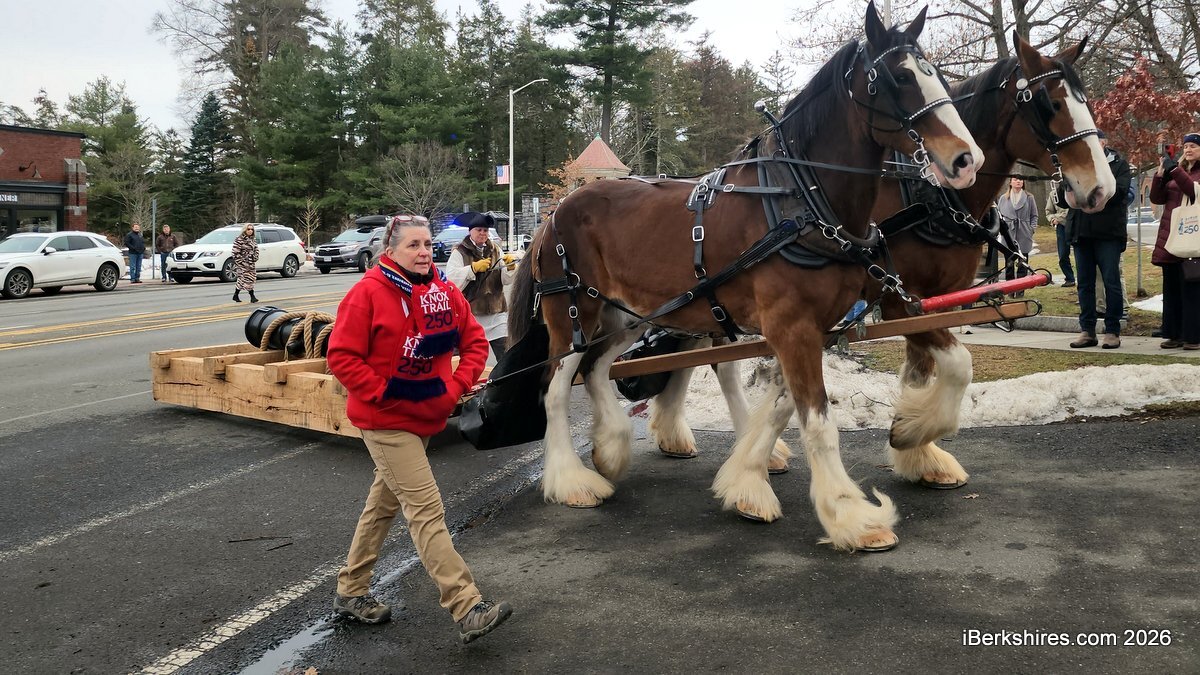
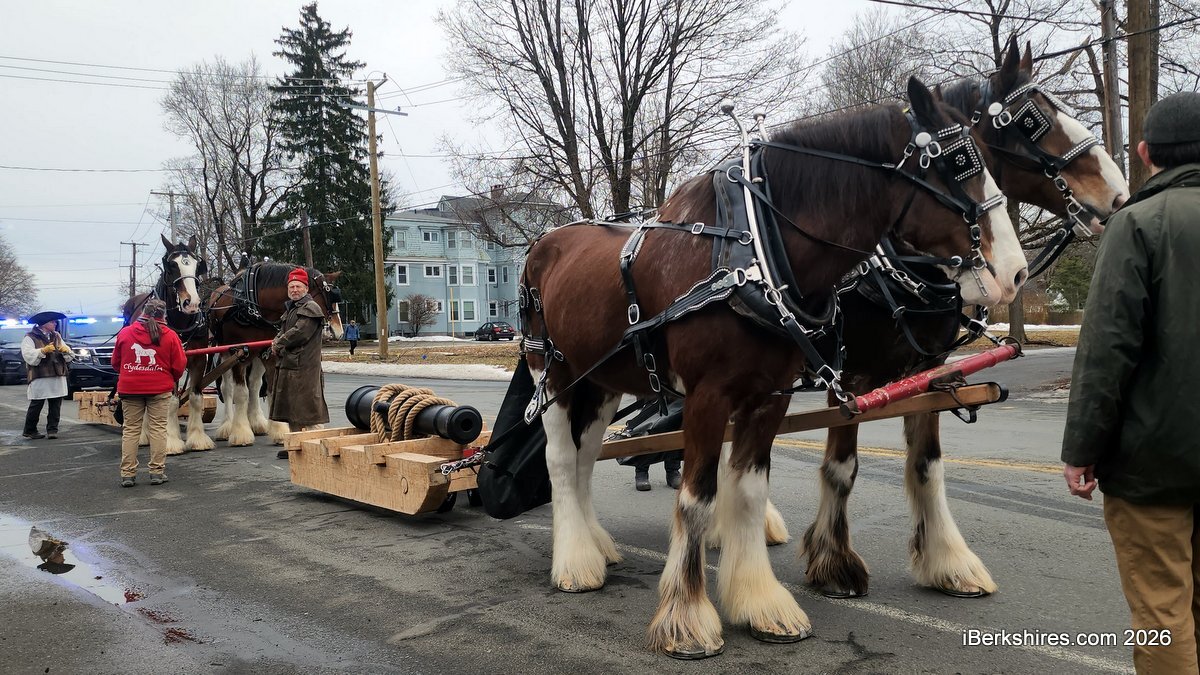
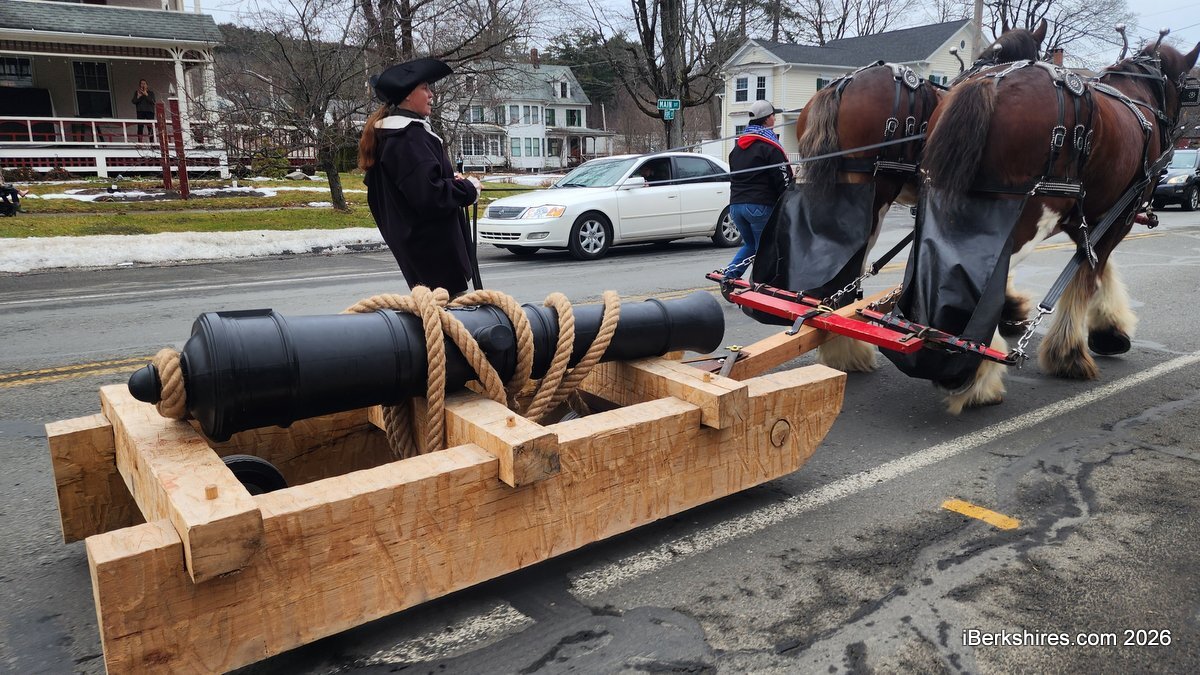
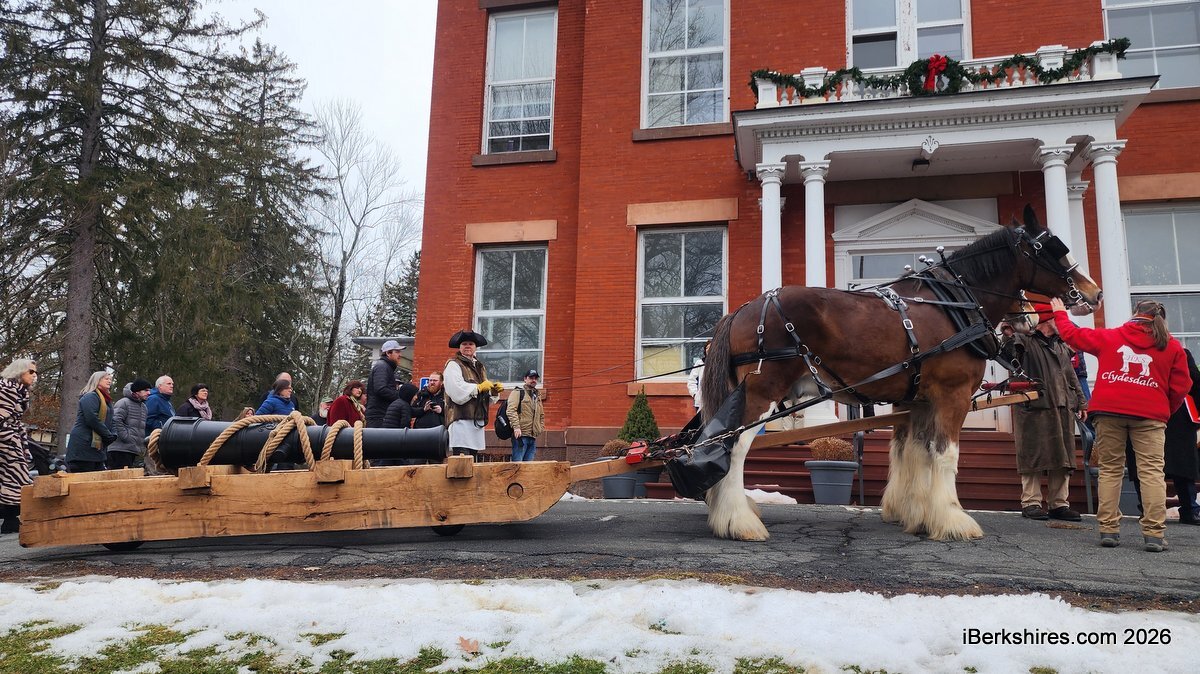
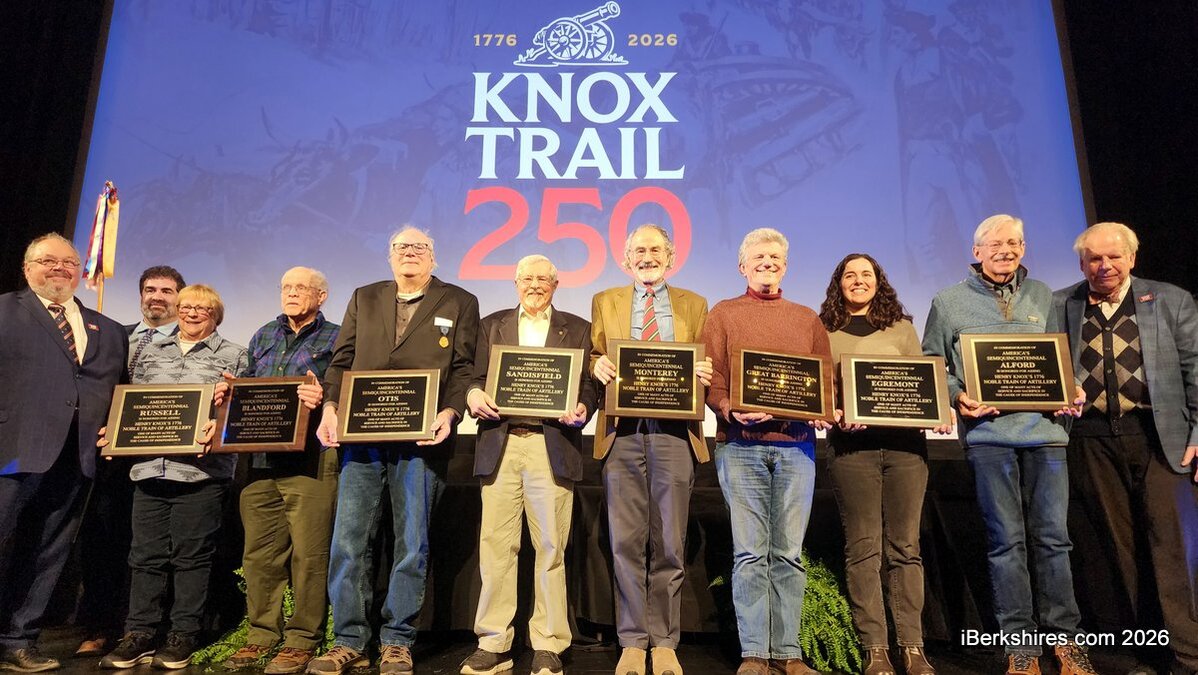
"Reflecting on the cannon that we saw this morning making their way across the border ... thinking about them making their way then through these eight towns, Alford, Egremont, Great Barrington, Monterey, Sandisfield, Otis, Blandford and Russell, connecting these towns with one another, as well as with this greater story, the story of the American Revolution and the story of American independence," said Robert J. Allison, professor of history at Suffolk University and chair of the Revolution 250 Committee.
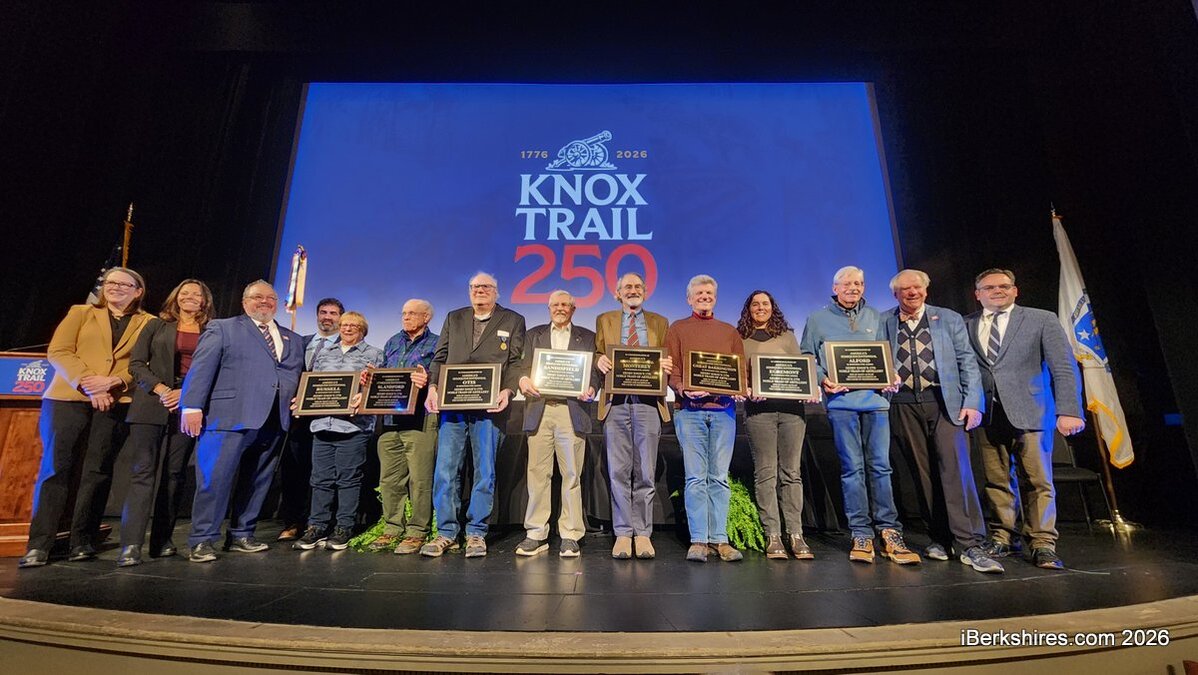
Representatives from those towns were presented with plaques and proclamations, and shared stories of their communities' participation in both the Knox Trail and the Revolution. Local historians have spent years documenting and surveying the path the "noble train of artillery" took through South Berkshire.
"It is notable how much history we learned from people who were invested in the stories of their towns and their community," said Jonathan Lane, executive director of Revolution 250 and emcee for the event. "So I want to thank all of you who have been researching this, teaching us all about the Knox Trail."
Saturday's events was the first in a series being held across the route taken by Knox, including Springfield and Worcester. The celebration will culminate on Dorchester Heights on Evacuation Day, March 17.
State Sen. Michelle Hinchey of New York's 41st District, who attended the handoff, said she'd had a chance to share Knox's story with some people at Fuel coffeeshop who'd asked about Knox 250 scarf.
"We live in this incredibly special part of the world that is so important for the founding of our country," she said. "And to be able to elevate that for folks who maybe haven't been able to engage with that.
"It's important we know where we live and how historic these communities are."
State Sen. Nick Collins, whose 1st Suffolk district includes Dorchester Heights, traveled to Fort Ticonderoga to see the noble train start its journey in December.
"I've known about this stuff since I was a kid, and so being able to participate in the 250 is pretty special," said Collins, a member of the 250 Commission and chair of the 250th Evacuation Day Commemorations.
"I took the trek ... It was more luxurious than they had back then. It was great. And we encourage people to come to Massachusetts for this and to get to Boston because historical tourism ... that's what we're also promoting well."
Tags: historical event, revolution,