Pittsfield School Committee Sees Budget Calendar, Chapter 70 Concerns

By Brittany PolitoiBerkshires Staff
Print Story | Email Story

PITTSFIELD, Mass. — The Pittsfield Public Schools kicked off its fiscal year 2027 budget calendar, and are again facing uncertainties with state Chapter 70 funding. 

During the first meeting of the new term on Wednesday, the School Committee OK'd an FY27 budget calendar that plans the committee's vote in mid-April. Interim Superintendent Latifah Phillips stressed the importance of equity in this process. 

"It's really important for us through these next couple of months to look at our different schools, our different needs, different student demographics, and really understand, are we just assigning resources equally, or are we really assigning them based on what different groups of students need?" she said. 

The district could lose up to $5 million in Chapter 70 funding from declining enrollment, specifically of low-income students. This is a similar issue that PPS saw in 2024, when the discovery of 11 students meeting those income guidelines put the district in the higher funding category and added $2.4 million to the school budget. 

"We are in a funding category, Group 11, for a district with a large percentage of low-income students, and that number could fluctuate depending on who exited the district," Phillips explained. 

"So we're going to do our best to understand that, but ultimately, these numbers will impact the budget that is proposed to us by the governor." 

According to the budget calendar, a draft budget will be presented in March, followed by a hearing in early April, and the School Committee is set to vote on the budget in mid-April. The City Charter requires it to be adopted before May 1, and a meeting with the City Council must occur no later than May 31. 

Assistant Superintendent for Business and Finance Bonnie Howland provided an overview of the Chapter 70 funding and budget process. The budget calendar, she said, is designed to really support transparency, coordination, and legal compliance. 

The state issued funding ensures districts receive enough money for an "adequate education" by setting a minimum spending level for each one.  

"Chapter 70 is fundamentally about equity," she added. 

"Districts with less local wealth receive more state aid to meet that foundation level. Two major components overall drive the formula: the foundation budget and the local contribution." 


The foundation budget is based on Oct. 1 enrollments each year. Additional costs for special education, English language learners, and low-income students are factored in, and costs are higher at the upper grade levels and for vocational programs. 

After the foundation budget is set, a complex formula is applied for the "statewide target local contribution" and an additional "target local contribution" for each community. The local contribution considers income and property values and the municipal revenue growth factor, calculated by the Department of Revenue. 

The MGRF is then applied to determine the "preliminary local contribution," and, depending on whether or not the local contribution is above or below the target amount, funding is adjusted. Governor Maura Healey has until January 28 to set those numbers. 

The foundation budget for the past fiscal year was $104,024,894, and Howland noted that the full amount wasn't received "because of all the complexities of the formula." The district's local budget was $86,450,361 in fiscal year 2026. 

She pointed to the data glitch in 2024, where some students were not counted as low-income, and the state had to go back through and allocate additional resources to PPS. 

"So this year, we are watching that number very closely," Howland said. "… It results in about $850 less per student, so it can really impact the funding." 

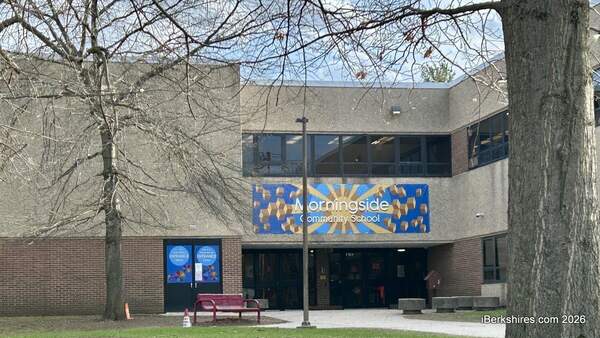
Phillips emphasized the need to do something different with Pittsfield's two community schools, Conte Community School and Morningside Community School. She hopes the district can propose a strategy to see increased outcomes from students in the schools. 

Those two buildings have an outdated, open classroom layout that can "present a tremendous challenge, and we need to take into account," she said.  

Conte is included in plans for a combined school on the Crosby Elementary property, but that plan just entered the feasibility study phase and is years out. 


PPS FY27 Budget Calendar Presentation by Brittany Polito


Tags: fiscal 2027,   pittsfield_budget,   school budget,   
If you would like to contribute information on this article, contact us at info@iberkshires.com.

BRPC Exec Search Panel Picks Brennan

By Breanna SteeleiBerkshires Staff

PITTSFIELD, Mass. — The Executive Director Search Committee voted Wednesday to move both finalists to the full Berkshire Regional Planning Commission, with a recommendation that Laura Brennan was the preferred candidate. 

Brennan, BRPC's assistant director, and Jason Zogg were interviewed by the committee on Saturday.

Brennan is also the economic development program manager for the BRPC. She has been in the role since July 2023 but has been with BRPC since 2017, first serving as the senior planner of economic development. 

She earned her bachelor's degree from Franklin & Marshall College in Pennsylvania and earned a graduate-level certificate in local government leadership and management from Suffolk University.

Zogg is vice president of place and transportation for Tysons Community Alliance, a nonprofit that is committed to transforming Tysons, Va., into a more attractive urban center. 

He previously was the director of planning, design, and construction at Georgetown Heritage in Virginia, where he directed the reimagining of Georgetown's C&O Canal National Historic Park.

They each had 45 minutes to answer a series of questions on Saturday, and the search committee said they were both great candidates. Meeting virtually on Wednesday, the members discussed which they preferred.

"In my own personal opinion, I think both candidates could do the job and actually had different skills. But I do favor Laura, because she can hit the ground running and with the time we have now, I think she is very familiar with the organization and its strengths and weaknesses and where we go from here," said Malcolm Fick.

"I would concur with Malcolm, especially because she was the only candidate who could speak directly to what's currently going on in the Berkshires, and really had a handle on every aspect of what BRPC does, could use examples, and showed that she actually understood the demographic information when that information was clearly available on the BRPC website, and through other means, and she was the only candidate who was able to integrate our regional data, our regional demographics, into her answers, and so I find her more highly qualified," said Marybeth Mitts.

Brennan was able to discus the comprehensive regional strategy the BRPC has worked on for Berkshire County and said she made sure they included voices from all over the region instead of what she referred to as the "usual suspects."

"That was an enormous priority of ours to make sure that the outreach that we did and the input that we gathered was not from only the usual suspects, but community groups that were emerging in a lot of different corners of the region and with a lot of different missions of their own, and try to encompass and embrace as many voices as we could in that," Brennan said in her interview.

Member Sheila Irvin said she liked Brennan’s knowledge of Berkshires Tomorrow Inc.

"I think that her knowledge of the BTI, for example, was important, because that's going to play a role in the questioning that we did on funding. And she had some interesting insights, I think on how to use that," said Irvin. "And in addition, I just thought her style was important. 

"She didn't need to rush into an answer. She was willing to take a minute to think about how she wanted to move on and she did."

In her interview, Brennan was asked her plans to help expand funding opportunities since the financial structure is mainly grants and the government has recently been withdrawing some interest.

"With Berkshires Tomorrow already established, I would like to see us take a closer look at that and find ways to refine its statement of purpose, to develop a mission statement, to look at ways that that mechanism can help to diversify revenue," she said. "I think, that we have over the last several years, particularly with pandemic response efforts, had our movement to the potential of Berkshire's Tomorrow as a tool that we should be using more, and so I would like to see that be a big part of how we handle the volatility of government funding."

Member John Duval said she has excelled in her role over the years.

"Laura just rose above every other candidate through her preliminary interview and her final interview, she's been the assistant executive director for maybe a couple of years and definitely had that experience, and also being part of this BRPC, over several years, have seen what she's capable of doing, what she's accomplished, and embedded in meetings and settings where I've seen how she's responded to questions, presented information, and also had to deal with some tough customers sometimes when she came up to Adams," said Duval.

"She's done an excellent job, and then in the interviews she's just calm and thought through her answers and just rose above everyone else."

Buck Donovan said he respected all those who applied and said Zogg is a strong candidate.

"I think both and all candidates were very strong, two we ended up were extremely strong," he said.  "Jason, I liked his charisma and his way. I really could tell that there was some goals and targets and that's kind of my life."

The full commission will meet on Thursday, March 19, to vote on the replacement of retiring Executive Director Thomas Matuszko.

View Full Story

More Pittsfield Stories