Clark Art Lecture on Justice, Property and Punishment in 18th Century Qubec
Print Story | Email Story
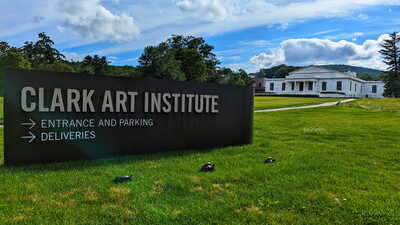
WILLIAMSTOWN, Mass. — On Tuesday, Feb. 10 at 5:30 pm, the Clark Art Institutes Research and Academic Program hosts a talk by Charmaine Nelson (UMass Amherst / Clark/Oakley Humanities Fellow) exploring how transatlantic slavery was grounded in violence and systems of control imposed by enslavers and their surrogates in eighteenth-century Montreal Quebec, Canada. 
 
The talk takes place in the Manton Research Center auditorium.
 
In her talk, Nelson draws from the extant business records of eighteenth-century Montreal sheriff Edward William Gray, who worked to sustain and protect the interests of white enslavers such as the Quebec City printers William Brown and Thomas Gilmore. This case study offers a lens through which to better understand the broader context of the individual at the center of Nelson's larger research project: an African-born enslaved man known as Joe. Enslaved by Brown and Gilmore and forced to work in their printing office, Joe was named in six fugitive slave advertisements issued in Quebec between 1777 and 1786. Gray's correspondence with Brown and Gilmore reveals his efforts to uphold the enslavers' claims to their "human property."
 
Free. Accessible seats available; for information, call 413 458 0524. A 5 pm reception in the Manton Research Center reading room precedes the event. 

Tags: Clark Art,   

If you would like to contribute information on this article, contact us at info@iberkshires.com.

Williamstown Community Preservation Panel Weighs Hike in Tax Surcharge

By Stephen DravisiBerkshires Staff
WILLIAMSTOWN, Mass. — The Community Preservation Committee is considering whether to ask town meeting to increase the property tax surcharge that property owners currently pay under the provisions of the Community Preservation Act.
 
Members of the committee have argued that by raising the surcharge to the maximum allowed under the CPA, the town would be eligible for significantly more "matching" funds from the commonwealth to support CPA-eligible projects in community housing, historic preservation and open space and recreation.
 
When the town adopted the provisions of the CPA in 2002 and ever since, it set the surcharge at 2 percent of a property's tax with $100,000 of the property's valuation exempted.
 
For example, the median-priced single-family home in the current fiscal year has a value of $453,500 and a tax bill of $6,440, before factoring the assessment from the fire district, a separate taxing authority.
 
For the purposes of the CPA, that same median-priced home would be valued at $353,500, and its theoretical tax bill would be $5,020.
 
That home's CPA surcharge would be about $100 (2 percent of $5,020).
 
If the CPA surcharge was 3 percent in FY26, that median-priced home's surcharge would be about $151 (3 percent of $5,020).
 
View Full Story

More Williamstown Stories