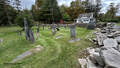
Crane Drops Challenge to Dalton Land Sale
DALTON, Mass. — The sale of the land known as the Bardin property is no longer being challenged.
Dicken Crane of Holiday Farm, the highest bidder on the property, withdrew his lawsuit and a citizen petition requesting the board award him the sale, recognizing that a reversal was unlikely after the deed had already been signed.
The Select Board's decision in December to sell the last 9.15 acres of land to Thomas and Esther Balardini, the third highest bidder, sparked outrage from several residents resulting in a heated meeting to sign the quitclaim deed. Crane was the highest bidder by $20,000.
The board swiftly had the deed signed on Dec. 22, following its initial vote on Nov. 10 to award the parcel to the Balardinis, despite citizen outcry against the decision during a meeting on Nov. 23.
Crane claimed he wrote a letter to the board of his intention to appeal its decision. However, once the deed was signed a month later, it was too late for him to do anything.
"My question is, why were they in such a hurry to push this through, even though there were many people asking, 'explain to us why this is in the best interest in the town,' when they really had no explanation," Crane said on Wednesday.
Litigation is expensive and the likelihood of success to get it changed once the deed was signed is minimal, he said.
The town received four bids on the property: $30,000, $31,500, $51,000, and $51,510. Crane, of Holiday Farm, was the highest bidder at $51,510 but was not awarded the parcel. The 9.15-acre property is located off Route 9, right on the town line of Windsor.
Board members previously highlighted how voters expressed wanting to keep the property whole during an annual town meeting so in an effort to comply with their wishes, the last remaining parcel was also sold to the Balardinis for $31,500.
The board also believed that the only right-of-way to the parcel was through the other three parcels the Balardinis purchased and covered with an Agricultural Preservation Restriction.
Select Board member John Boyle's reasoning also included how the Balardinis are great stewards of the land and allow public access, including for hunting.
During a following meeting, prior to the board signing the deed, Crane clarified the board's misconceptions demonstrating how he too has right-of-way access to the parcel and demonstrated his stewardship experience.
Despite the residents pleas for answers to why the sale to the Balardinis was "in the best interest of the town," the board signed the deed saying their questions were answered during the initial meeting.
Before the ink of the board's signatures were even dry, more than a dozen people protested, demanding an explanation, only to be called out of order.
"They pushed it through to the signing of the deed with not only not answering questions on why it's in the best interest of the town, but also avoid having the opportunity for the petition that I had gotten people to sign to go into effect," Crane said.
Crane explained that he was able to get 100 signatures from voters, which is enough for the article to be placed on the annual town meeting warrant but needed 200 signatures to force the Select Board to call a special town meeting.
The concerns continued, although not as heated, into the following Select Board meeting, during which the Bishop informed the audience that a police officer was asked to be present in case things get out of hand again.
"What's going to happen if things get out of hand — we'll shut the meeting down, and the people will be escorted out," he said.
"We will not withstand behavior like the last meeting as that's why we have our officer present. Please be respectful at all times. We do understand you have questions, and we do want to hear them."
Bishop also explained that public comments during the previous meeting were not taken because it was not included in the agenda, which conflicts with Open Meeting Law.
During the public comment period, some speakers expressed their shaken trust in the board following the decision.
At the end of the meeting, when many of those who spoke out against the boards decision had left, Bishop noted that no one ever spoke badly about Crane and that he had two chances to buy the surrounding land but did not.
Additionally, the board had checked the price of the land with its assessor's office, he said.
"All those parcels, including the last one, was $56,100. We collected $180,500 for a profit of $124,400 so I don't think we did a bad deal," he said.
"I just wish the stone throwers would have had a little more facts."
The four parcels of land came into the town's possession in 2016 in a taking for delinquent taxes. The town first placed a lien against the property in 2009.
The land's history has proven challenging for town officials. Strict regulations complicated efforts to sell the first three parcels, all of which were covered by an Agricultural Preservation Restriction placed by former owner James Edgar Bardin for $260,000 in 1991.
Crane explained his belief that the town separated the APR land from the unrestricted land, because of the belief the restriction would reduce its market value. The hope was that they could get more from selling the unrestricted land separately.
"What they did, though, was they put a ridiculously high minimum bid value on the APR land, which is why I didn't bid on it. Then it looks like they made a deal with the person who bought the APR land at that really high value that they would be able to buy the unrestricted land at a really low value," Crane speculated.
"It's the only explanation why Thomas Balardini would bid as high on the APR land, I mean, it was just the minimum bid, but it was still probably twice what it was worth, and then get the property as a lower bidder for just over the assessed value, which was really low."
It was believed that the sale of the last parcel would be straightforward because it did not have an APR. However, this proved to be incorrect.
Crane recommended that residents start paying close attention to local elections and issues, and emphasized the importance of asking questions, especially when it comes to selecting those in office.
Tags: agricultural restriction, land sales,