HooRWA's Annual State of the River
WILLIAMSTOWN, MASS. — Join the Hoosic River Watershed Association (HooRWA) for their annual State of the River on Tuesday, Feb. 17 at 7:00pm at the First Congregational Church of Williamstown.
Jay Racela, Williams College Environmental Analysis Lab Supervisor and Lecturer will present on the organizations collective water quality monitoring activities and findings in 2025 and discuss overall water quality.
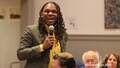
At this event HooRWA will present the Tanzman Award to Jane Winn, recently retired founder and Executive Director of the Berkshire Environmental Action Team (BEAT) for all her advocacy and labor to protect and enhance the Hoosic and Housatonic Rivers. The Irving Jack Tanzman Friend of the Hoosic Award honors a citizen who exemplifies the service and commitment of Irving Tanzman to the Hoosic River and its watershed.
This event is free and open to all. The group thanks the First Congregational Church of Williamstown Environmental Justice Program for hosting this event at 906 Main Street, Williamstown.
HooRWA turns 40 this year and this event kicks off our 40th Anniversary celebrations. Light refreshments will be provided by Williams College Zilkha Center for Environmental Initiatives.
Jay Racela is responsible for the operation of the Environmental Analysis Lab as a teaching and research facility. He supervises the functioning and maintenance of the long-term hydrometeorological monitoring networks in Hopkins Memorial Forest and preservation of the extensive affiliated databases and web pages. In addition, Racela also teaches laboratory classes offered in the Environmental Studies program, Geosciences, and Chemistry departments. Additionally he trains, supervises and advises honors thesis and independent research students from those same units as well as Biology majors and assists these and other researchers with collection and chemical and biological analysis of environmental samples from local and distant field sites. Racela is also a member of the Williams College Environmental Justice Clinic and works with marginalized communities throughout the US. He also implements educational outreach with local elementary, middle and high schools, teacher groups and non-profit organizations. Racela received his BA in Biology with a Chemistry minor from North Adams State College (now MCLA) and his MS in Animal Science from the University of Connecticut.
Jane Winn was one of the founders of the Berkshire Environmental Action Team (BEAT), created to protect the environment for wildlife in support of the natural world that sustains us all. She grew up beside the Housatonic River at a time when it was badly polluted—so polluted that the river stank and stirring the mud sent brightly colored oil spreading across the water. The river and its floodplain were her playground, and those early experiences shaped her lifelong commitment to the environment. Jane went on to earn a bachelor's degree in biology and a master's degree in zoology, and she led BEAT for 22 years. She retired last August, leaving the organization in the capable hands of an amazing staff led by Brittany Ebeling. Jane remains an active and passionate volunteer, still working to ensure a world where wildlife can survive and thrive.