Pittsfield Licensing Board Hikes Fees

By Brittany PolitoiBerkshires Staff
Print Story | Email Story

PITTSFIELD, Mass. — During a brief meeting on Monday, the Licensing Board approved new fees for fiscal year 2027 and upgraded the Barrington Stage Company's liquor license.

This meeting had been postponed twice because of snowstorms on Jan. 26 and Feb. 23. 

The City Clerk's Office joined the Building Department, Board of Health, and Zoning Board of Appeals to update Pittsfield's fee schedule for the first time in 10 to 25 years, depending on the department. The group compared licensing fees in other Berkshire communities as well as Springfield, Chicopee, Northampton, and Holyoke. 

Chair Thomas Campoli observed that some of the increases are between 25 and 27 percent, and that the fees haven't been updated for "Oh, the many years." 

Assistant City Clerk Heather Brazeau reported that Licensing Board fees have not been updated since 2017. She recognized that no one wants to ask businesses for additional money, but said Pittsfield's rates are low compared to surrounding communities.

"We looked at all of the other communities, kind of figured out what would be in the middle, what would be fair, how much of an increase there would be the first time, so that people weren't so taken aback," she explained. 

The city has 38 seven-day, all-alcohol annual licenses that will increase from $1,175 to $1,500, generating $57,000 per year. There are 12 package store licenses that will increase from $1,600 to $2,000. Between the 112 total liquor license increases, Pittsfield will see an incremental revenue increase of $25,170, totaling $142,200 in yearly revenue. 
 
Great Barrington charges $1,100 and Lanesborough charges $1,250 for an annual all-alcohol restaurant license. The average cost among nearby communities is about $1,700. The city of Northampton charges $2,259, and the city of Springfield charges $2,800. Holyoke only charges $1,000 per year for the license.

BSC's Sydelle and Lee Blatt Performing Arts Center at 36 Linden St. can now serve all alcohol, instead of being limited to wine and malt beverages. The facility houses the 132-seat St. Germain Stage and Mr. Finn's Cabaret, a 99-seat cabaret space in the lower level of the building.

A state law passed last year allows restaurants and bars with existing wine and malt beverage licenses to convert their licenses to all-alcohol licenses. 

On the agenda was an update from Chili's on its liquor license for the shuttered Berkshire Crossing location, but no representatives from the company attended the meeting, and it was continued. 


The restaurant closed abruptly in August 2024 and has been looking for a buyer for over a year.  Representatives have come before the board a few times with reports that there are interested parties, but no sale. 

Last fall, Campoli reminded the company that under state law, if a licensee is not operating, the board has to "turn up the heat" to see if the license can be transferred or the venue reopened under a different owner. 

At this meeting, they planned to discuss whether to begin the six months that the business has to reopen or sell its liquor license. The current lease agreement goes out to 2029, and the company, Pepper Dining Inc., is looking for another business to carry it out.


Tags: license board,   alcohol license,   
If you would like to contribute information on this article, contact us at info@iberkshires.com.

Pittsfield Considers Repairing East Part Cemetery

By Brittany PolitoiBerkshires Staff

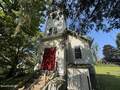
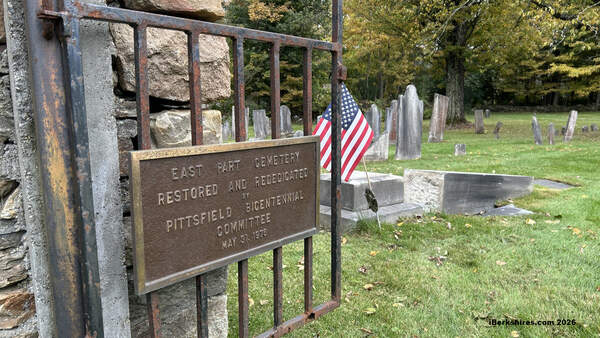
PITTSFIELD, Mass. — The Historical Commission will consider grant opportunities for repairs to East Part Cemetery.

A resident reached out to the city with concerns about degradation in the half-acre burial ground at the top of Williams Street. East Part Cemetery was established in the early 1800s and has about 300 interments. 

“It's a nice old cemetery, and basically, (the resident) had had concerns that the stone wall had taken some damage, the gravestones have taken some damage, and was wondering if there's anything that could be done to repair the gravestones and the wall," City Planner Kevin Rayner told the commission on Monday.

In cooperation with cemetery leadership and residents, the Historical Commission will consider applying for Community Preservation Act funds to support repairs. West Part Cemetery, on the other side of Pittsfield, has previously used CPA funds for revitalization work. 

The 1080 Williams St. property is owned by the city and managed by the Pittsfield Cemetery Commission. Rayner presented photos of broken and overgrown gravestones, parts of the stone wall collapsing, and knocked-over obelisks. 

Some aspects could use general maintenance and restoration, he observed. 

According to the Pittsfield Cemetery and Crematory's website, East Part Cemetery was established around 1808 on land owned by Nathan Webb, who permitted and authorized its use as a public burying ground.  

In 1842, Nathan Webb's son, also named Nathan Webb, deeded the property to the Methodist Episcopal Society of Pittsfield as a public burying ground, and in 1893 the Trustees of the Methodist Episcopal Society transferred their control of the cemetery to the Proprietors of the Pittsfield Cemetery. Their action was confirmed by the Berkshire Probate Court.

View Full Story

More Pittsfield Stories