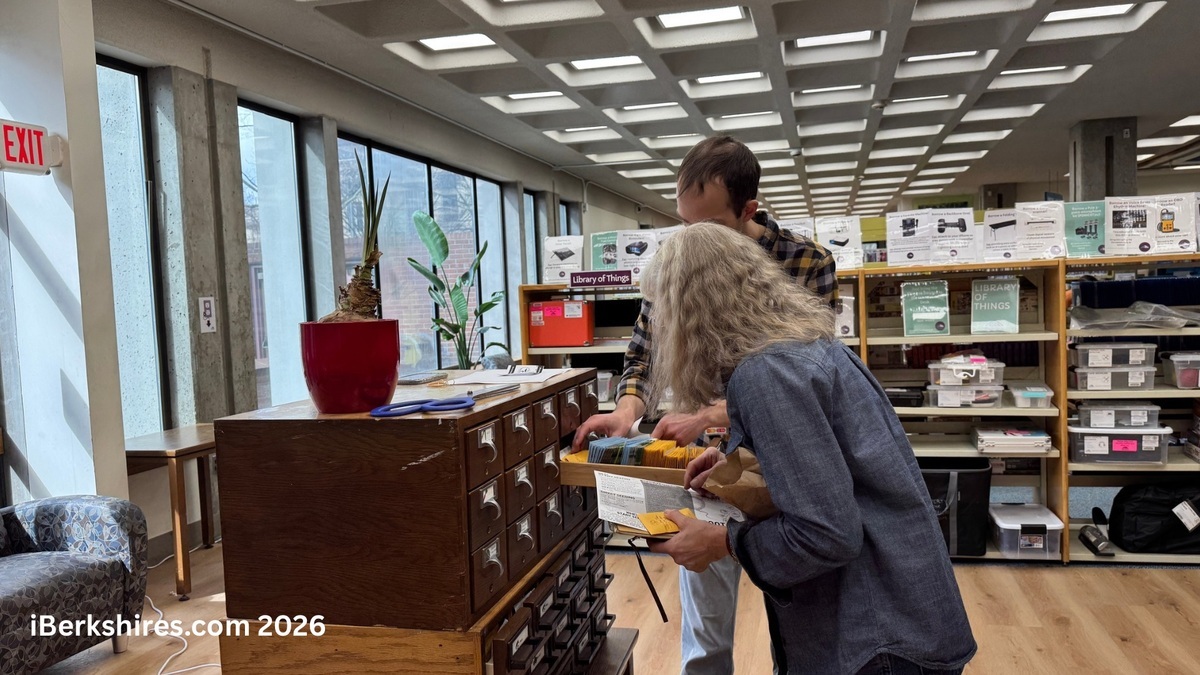
Grow Your Garden With the Berkshire Athenaeum
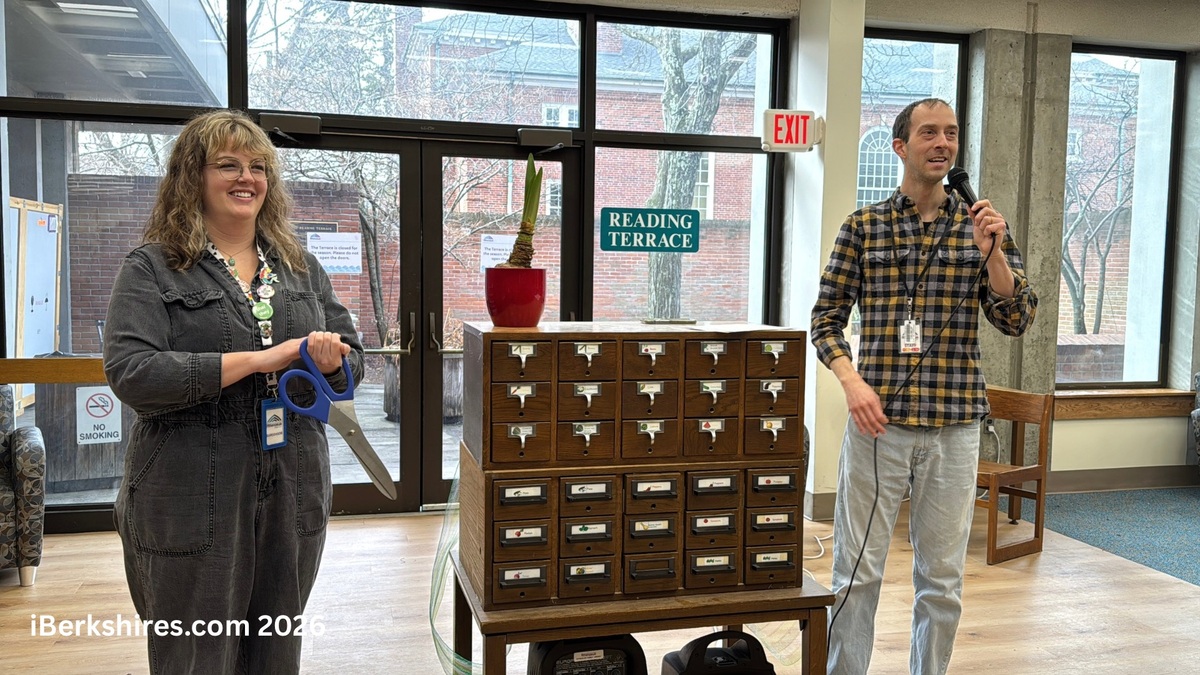
Berkshire Athenaeum staff Olivia Bowers and Tom Jorgenson cut the green ribbon on the seed library last Saturday.
The seed library is funded by the volunteer organization Friends of the Berkshire Athenaeum, which raises funds for the library programming and needs.
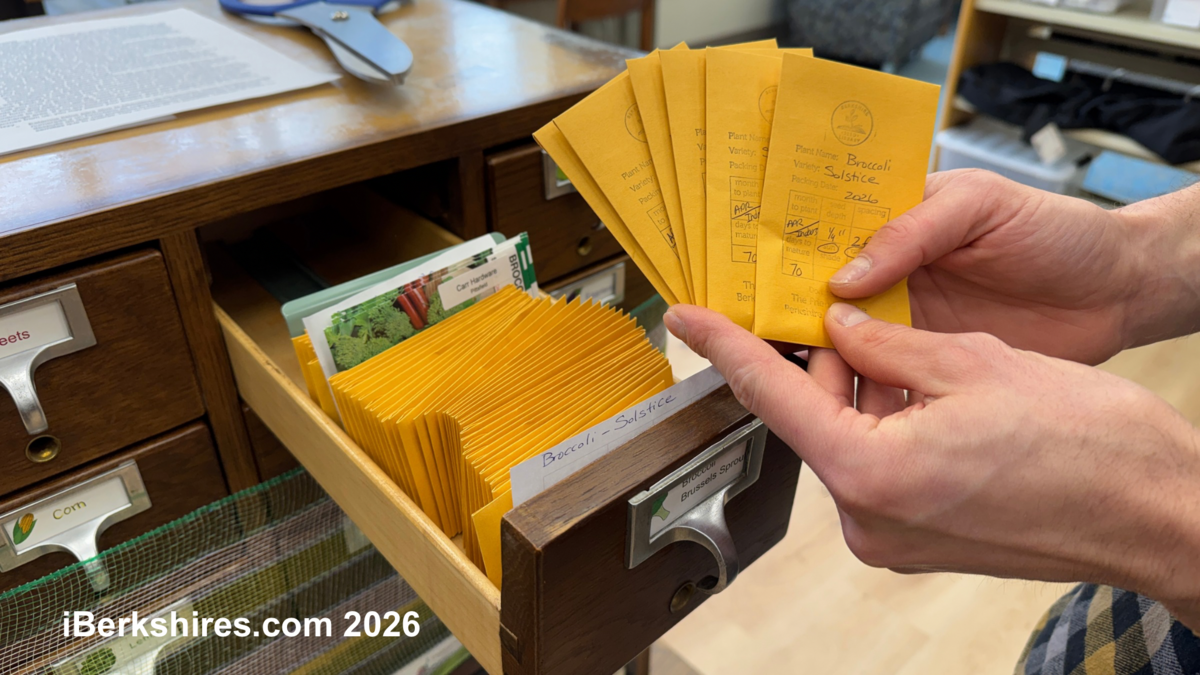
Adult Services and Programming Librarian Tom Jorgenson said at the seed library's opening last week that it's a helpful resource for patrons and they also include many resources for if you are unsure how to plant your seeds.
"It's to provide a resource for the community that might not otherwise be accessible or make sense as an investment, or for someone, it's an opportunity to try something new, to learn a new skill, without having to make a big investment in it. And so we provide not only the seeds, but the supplemental resources to help people try this out."
The library encourages swapping seeds, with users donating leftovers after the growing season to keep supplying the library. Donators can fill out a form at the desk saying what the seeds are and where they came from.
"It's designed to be a source of healthy, sustainable food that kind of empowers the community to try different things, try growing different vegetables and flowers that they might not otherwise have access to," Jorgenson said. "What I've tried to do in the past couple years is really emphasize the community aspect of the seed library, and try to encourage people to share seeds back with us, donate things back to the library, or exchange seeds with each other in order to make the seed library more self-sustaining, make it more community driven, with resilient local varieties of seeds."
The library also receives seeds from local establishments and businesses.
"Some of them come from Carr Hardware and John's Ace Hardware. They donate some of their leftover seed packets at the end of the previous season for us. So we're super grateful for that. And then we fill in the bulk of the collection with seeds that we purchase from Fedco," he said.
Fedco is a member-cooperative garden supply store in Maine that is committed to sustainability and heritage plants.
The athenaeum has had a seed library since 2018 and last year checked out 2,300 packets. You must have a library card to take out seeds.
Recently, it has been trying to get more native seeds.
"What we've tried to do recently is expand into native wildflowers and grasses, because we know how important those are to healthy gardening and maintaining the health of our local ecosystem, and then also expanding the vegetable and herb selection into things that are either locally developed," Jorgenson said. "So for example, we have three varieties of tomato that were developed by Crabapple Farm locally that you can't really find in a seed catalog, but that have been developed specifically for Western Massachusetts."
Pittsfield resident Tyler Shedd was checking out a couple of seeds and said it was cool to be able to share seeds from other local residents.
"I guess seeds themselves, like an individual package, isn't all that expensive, but to grow sort of for a full garden, it can get pricey," he said. "And I think it's cool, especially, like, we've got a couple of the flower seeds that look like they were donated by the community and so it's from somebody else's garden locally.
"A very sort of cool way of sharing, spreading, like summer color, fall color, whenever they, I don't know when they bloom, without having to go to the hardware store."
Library patrons can check out a total of 10 seed packets from now until the end of summer.
Tags: berkshire athenaeum, gardening, seeds,