

Outdated Public Safety Buildings Strain Berkshire Communities
One of the most basic roles of government is public safety. The ability to provide police and fire protection and other emergency services is considered a vital function.
However, one obstacle facing towns and cities in the Berkshires and elsewhere is the condition of the physical facilities that house these operations. Many local police and fire departments are based in older structures and sites that have become overcrowded, outdated, and limited in their ability to accommodate the needs of contemporary police, fire and emergency medical services.
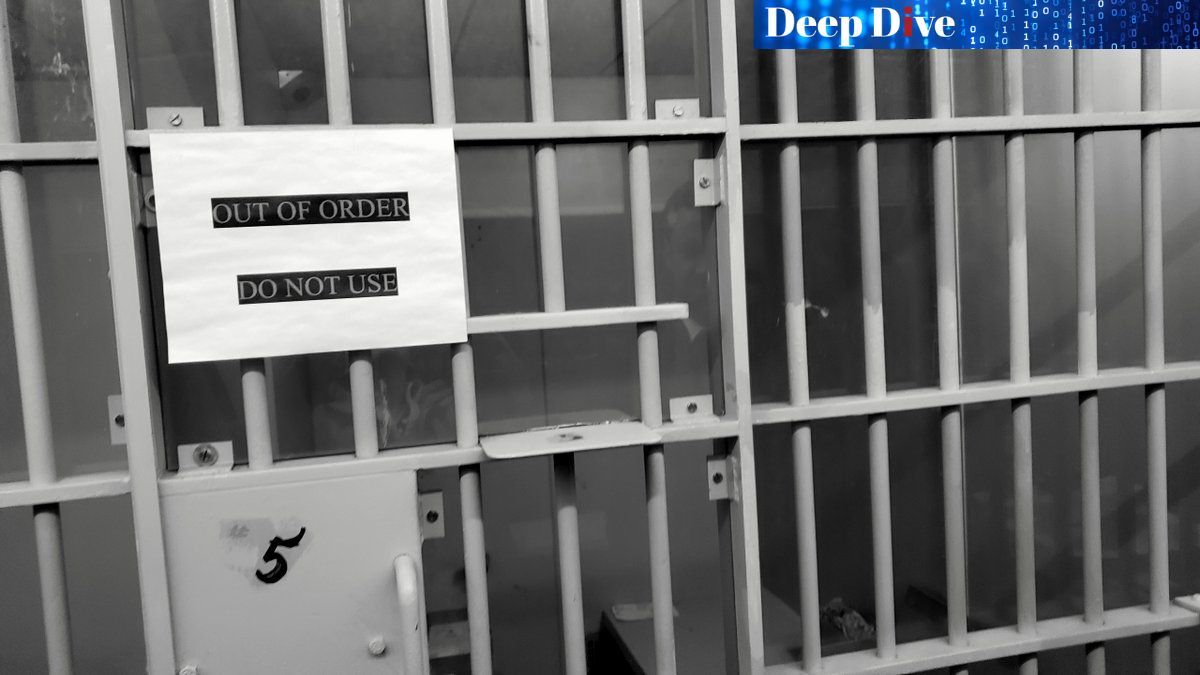
The extent of the problems varies among communities. Some facilities are still serviceable or only need specific modifications. Others require extensive overhauls or complete replacement with new facilities. Some have become totally decrepit and suffer from mold, rodents and structural issues. The worst are not up to modern building codes and regulations or do not meet professional standards.
For example, some fire stations are not large enough to hold larger modern firetrucks and equipment.
"Our fire station was built in the early 20th century and was originally designed for horse-drawn vehicles," said Chris Brittain, Lee town administrator. "We've had to buy custom-built trucks to be able to fit through the door. And even then it has less than an inch of clearance."
Lee is currently taking a major step constructing a major new complex that, when completed next year, will house its Police, Fire and Building Departments.
.jpg)
Other towns and cities have taken steps from major to minor, while exploring their options.
As with many issues, money is a major factor. With tight budgets, gaining voter approval to raise property taxes or taking other steps to fund such projects is a challenge.
North Adams has been under a decree from the U.S. Department of Justice to modify its police station to comply with the Americans With Disabilities Act. The obsolete 1955 building also has a host of other issues. The answer was to move the Police Department to a rented facility.
"We don't have the horsepower to build out a public safety complex the way that we want," said Mayor Jennifer Macksey, noting a $1.2 million earmark for for design and engineering was never released by the state. "I think the belief of state government is that it resides on the backs of the taxpayers of the community. But that's just not fair."
She pointed out that the city is embarking on a new school project "because we had the support of the MSBA and their grant."
Initiatives are being proposed on the state level to help alleviate this by providing additional funding for municipal facilities, including public safety sites as well as administrative offices and other operations and services.
One proposal is the creation of a state Municipal Building Authority, which would allocate grants, lower-cost financing and other support to cities and towns for improvements or construction of their public buildings and facilities. This would be similar to the Massachusetts School Building Authority, a quasi-independent state agency that provides funding and other assistance to upgrade local schools. This concept has been under consideration for several years.
One current aspect of this is a proposed bill in the State Senate that is under review. It was introduced by Sen. Joanne M. Comerford (D- Hampshire, Franklin and Worcester District) who represents 25 communities east of the Connecticut River from Northampton to Vermont.
"My district is largely rural and includes many small towns," she said. "I frequently hear from municipal officials who are desperate. They tell me their local services are in jeopardy because of the condition of their facilities. But their budgets are small and they have no money to take on extra debt for improvements."
She noted, for example, that one community is operating out of a town hall that has been condemned.
Her bill would fund an authority through a portion of state revenue from cannabis sales, the senator said. "It would use this to provide local governments with capital grants and other funding options to improve or build new municipal infrastructure."
Comerford said she hopes the bill, and related measures in the House, will be voted on in this legislative session, which ends in June.
She is cautiously optimistic. "There has been favorable momentum," she said.
She added that it fits in with Gov. Maura Healey's advocacy of the Municipal Empowerment Act, a wide-ranging measure which would provide local governments with various additional revenue tools and support to make it easier for them to generate resources for services.
"The proposals of the Healey administration have turbocharged interest in the issue," said Comerford. "Ideally the Municipal Empowerment Act can be a vehicle for this bill."
In the meantime, cities and towns are addressing the situation in differing ways.
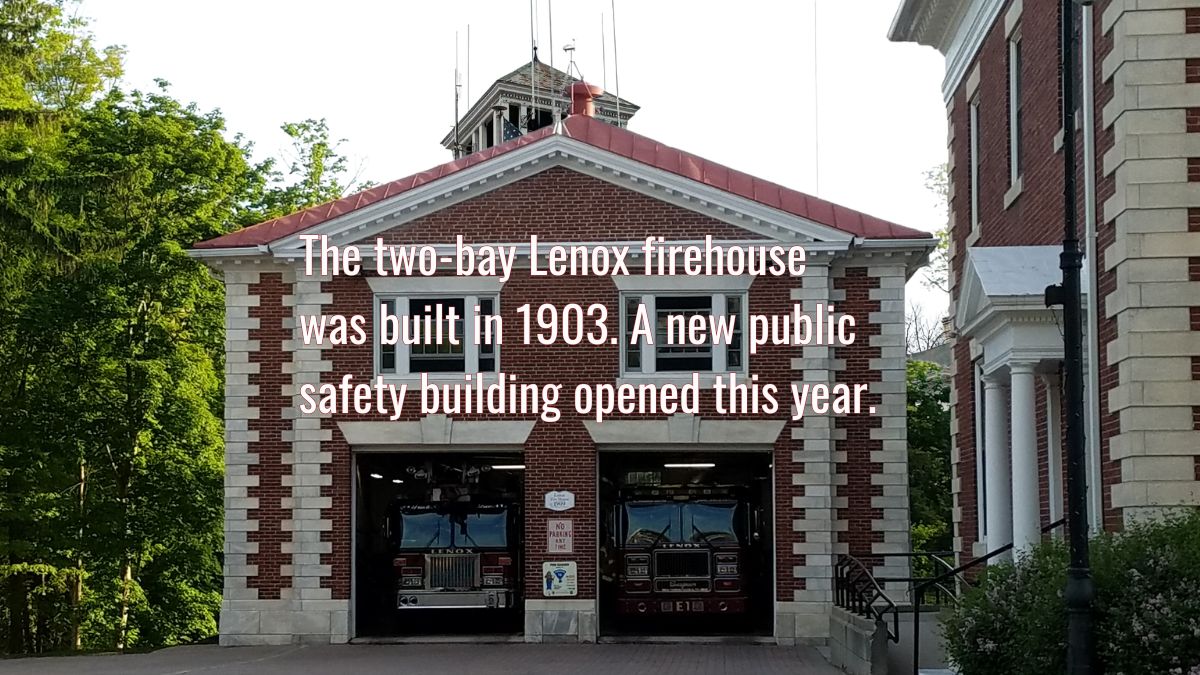
Lenox is an example of a municipality that has taken a comprehensive approach. For many years, the town had to contend with the serious problems and limitations of an obsolete and cramped police station in Town Hall and a 1903 central fire station.
"Everything needed to be changed," said Lenox Town Manager Jay Green. "The Police Department could not be accredited because the station was so inadequate."
After several years of planning and construction, the town recently completed and opened a new public safety complex to house its police, fire and emergency medical services.
Last November, the town held a ribbon cutting for the new 22,000-square-foot structure, which is located at 227 Housatonic St., just off the Route 7/20 bypass.
"We had a soft opening and have moved into it in steps," said Green. "The Fire Department moved there in January. After final installation work is completed, the Police Department is slated to move there by the end of March."
The Lenox Fire Department includes a professional career staff and an auxiliary of volunteer members. In addition to its main station, it has two satellite stations on Route 7/20 and on East New Lenox Road. The main operations center is moving to the new complex and the two other stations will remain in service.
Green noted that like many other communities, Lenox had deferred the project for many years.
"It's an expensive proposition, and is a long road to make it happen," he said. "That's why many towns avoid it. But at some point, if you want to have a good staff and services you have to do it."
He said the movement to replace it began around 2015, when "the conversation started in conjunction with initiatives to review town-wide building projects. ...
"That identified the need to build a more modern public safety facility. From there, the town undertook a very deliberate process to inform the public of why it was needed and how it could be done and what it would cost."
The project subsequently received approval by voters at a town meeting. That began a period of planning and developing financing.
One factor that facilitated the process was the availability of a location. The site had previously been earmarked for affordable housing, but efforts to develop it for that had been unsuccessful.
The project is being financed by short-term and long term bonds.
"It will have an impact on the town's debt service," said Green. "But the town supported that by approving it and so it was planned and expected. That's why communication and participation of voters is vital for a project like this to succeed."
The next installment will look at the experience of other towns and cities.
Tags: fire station, police station, public safety buildings,