Mount Greylock Committee Talks About Middle-High School Improvement Plan
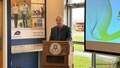
WILLIAMSTOWN, Mass. — Mount Greylock Regional School's principal last week updated the School Committee on the middle-high school's School Improvement Plan.
Jacob Schutz detailed a SIP that focuses on three main goals: social emotional wellness, diversity and inclusion and creating an academic environment that allows all students to "strive for excellence by realizing their full talents and aspirations."
State law requires public schools to have a School Committee-approved School Improvement Plan that aligns with the District Improvement Plan. The most recent three-year DIP was approved by the committee in January 2024.
The first goal, on social emotional wellness, recognizes that "psychologically and emotionally healthy students, teachers and administrators are better prepared to meet academic challenges," Schutz told the School Committee.
To that end, the school is conducting a review of its "Crew" program, a middle school initiative.
"Essentially, every Friday during Directed Study, our teachers in seventh and eighth grade engage in a Crew, which is sort of like an advisory type period," Schutz explained. "A Crew activity could be anything from a team-building activity to mindfulness skills to hearing a presentation or working with some of the peer team members or older students."
The school also this fall plans to survey students, faculty and staff about what they think "detracts from social emotional wellness within the Mount Greylock Community," according to the plan.
"Our priority here is really ensuring staff and students are mentally healthy and ready to learn," Schutz said. "It has been a goal that has continued to be one of our priorities for the past several years, and it remains one of our top priorities."
The SIP's second goal, academic excellence, involves a review of the program of study, an assessment of technology use in the classroom and clarifying "diploma pathways and academic expectations," the plan reads in part.
"This is all about rigor and alignment," Schutz said. "You want to ensure our curriculum meets modern standards, meets the standards we set for ourselves and to make sure they align with any changes from the state or from the School Committee that are possibly in the pipeline.
"We are reviewing the program of studies, and we're assessing the impact of the newer bell-to-bell no cell phone policy with some possible outcomes being a reduction in digital distractions and/or behavioral referrals and an increase in participation of underrepresented students in more rigorous classes or places where they're less represented."
Underrepresented students also are a focus of the third goal, labeled "Diversity, Equity, Inclusion, Belonging and Accessibility."
To this end, the school is looking at whether it can broaden its curricula to include non-Western texts or support cocurricular opportunities to serve "emerging student populations" at Mount Greylock. The school also this spring will readminister a survey on diversity and belonging developed by consultant Cortney King Tunis and first given to the Mount Greylock population in 2021.
"This goal shows that we're committed to a culture where every student feels seen and supported and includes adding those non-Western perspectives to our texts and reviewing the real and potential funding gaps or gaps that prevent students from participating in curricular or extra-curricular activities," Schutz said.
School Committee Chair Julia Bowen asked how the school's work on its social emotional wellness goal will be impacted by the district-wide Director of Behavior, Community, and Culture position included in the fiscal year 2027 budget.
"f we were to pull up the actual SIP, you'll see a lot of the measurable outcomes, we didn't necessarily spell them out [in the presentation to the committee]," Schutz said. "We want to use this as a guide when we first meet with that new administrator to say, to say ... this is where we are now from three general activities that we think we need to focus on.
"And then we'll work with that person to confirm or deny that these are the most applicable and effective activities and themes to focus on and then give us the latitude to work on a meaningful, measurable outcome."
In other business at its Thursday, May 14 meeting, the School Committee heard a presentation from Schutz on Mount Greylock's course offerings for next fall, discussed elementary school math with the district's assistant superintendent of teaching and learning and heard a report from Carolyn Greene about the most recent meeting of the Massachusetts Association of School Committees.
One of the topics on the radar of the MASC is Proposition 2 1/2 property tax override votes, which are becoming increasingly common around the commonwealth.
"In Williamstown, we're probably looking at two or three years before we're in an override because of the way expenses are growing," noted Greene, one of four Williamstown residents on the committee. "I don't know about Lanesborough. I believe Lanesborough is proposing to use free cash to cover a lot of expenses this year, but that is not an annual proposition.
"I think we need to think strategically. We need to work with our towns' Finance Committees and Select Boards. We can be partners in this, because it is not just the district that will be needing to get its budget passed."
Steven Miller, admitting that he might sound like a broken record, reiterated his argument that local governments and school districts are suffering because of fiscal irresponsibility on Beacon Hill.
"We are cutting whatever we can," Miller said. "We're not putting in luxuries. We are trying to get the best education we can with limited resources and increasing demands on what we have.
"The only long-term viable solution is Boston and beyond need to be more responsible. They need to prioritize. They need to figure out which things are mandated and must be done, which things are luxuries and don't have to be done."
Thursday's meeting also included an appeal for residents of both Williamstown and Lanesborough to consider running for School Committee in the biennial election in November.
Four 4-year seats — two for Williamstown residents and two for Lanesborough residents — from the seven-person committee will be on the ballot on Nov. 3. Both towns vote on all members of the committee, which is why, unlike other local elections, district school committees are elected in November, when everyone in the commonwealth goes to the polls on the same day.
Superintendent Joseph Bergeron shared that prospective candidates need at least 45 verifiable signatures from the two member towns to earn a place on the ballot. Nomination papers currently are available at the district office next to the middle-high school and at Williamstown's town hall, he said.
The deadline for returning papers with the required number of signatures is July 21.
"I'm available to anyone who is interested in running to find out what the real work of the School Committee is," said Bowen, who noted that her seat is not on the ballot because her term ends in 2028.
"There's a lot more work behind [the public meetings]. I want to make sure that if people choose to run — and I hope they do — they deeply understand the amount of work that goes into the role. We need as many people as possible to do the different things."
Tags: MGRSD, school improvement,