Mount Greylock District Aims to Increase Sense of Belonging for All Families
WILLIAMSTOWN, Mass. — Recent reports of racist incidents at Williamstown Elementary School prompted a discussion at the Mount Greylock School Committee on Thursday.
And that discussion tied directly to a scheduled discussion about the long-term improvement plan for the district.
Committee member Jose Constantine raised the issue during the monthly report from WES Principal Cindy Sheehy.
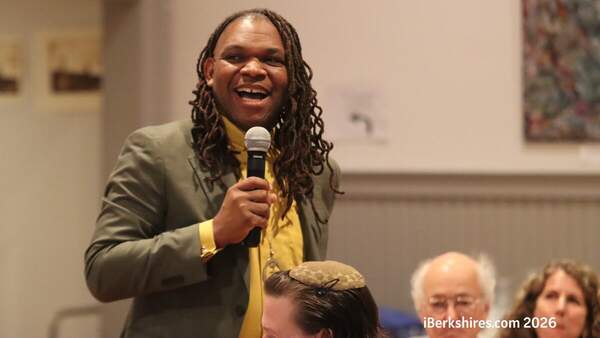
"The question I have is one that is in response to what seems to be a step change in the number of racist incidents afflicting children in Williamstown," said Constantine, who holds one of four seats designated for Williamstown residents on the seven-person committee. "They seem to be occurring on a near weekly basis either at the elementary school or the [Williamstown] Youth Center.
"That is no reflection on the school district. I think it's a reflection of the wider values and culture of Williamstown. But as the town continues to diversify, I think there is fear and concern among families of color that these incidents are going to continue occurring, which leads to the sincere need to support our teachers with professional development."
Constantine said a recent incident in the second grade at the school led to reports from families that the response from school staff was "imperfect," and "may have placed this student of color in a compromising position."
Constantine said the district can expect similar incidents in the future and asked how officials are helping give teachers and staff the tools to respond appropriately.
Sheehy pointed to professional development the school has offered around helping staff have conversations with pupils when incidents occur, and she noted that more workshops are planned with Khyati Joshi, a national consultant who "conducts anti-bias workshops for organizations across disciplines and industries."
Sheehy said Joshi plans to conduct role-playing incidents with staff that explore incidents like the ones Constantine referenced on Thursday.
"It takes training, and it takes having someone lead us and guide us through that," Sheehy said. "Do I think this is an isolated incident? No. But we have to start somewhere, and this seems like a good place to start to empower our teachers to have these conversations."
McCandless said that without the right training, school staff can feel like their interventions in a difficult situation can be counterproductive.
"One of the things we hear consistently from our faculty and staff is there is a general lack of knowing exactly how to respond appropriately," Superintendent Jason McCandless said. "There is some concern about stepping in and saying the wrong thing and making the situation worse for a child.
"That's one of the reasons we entered into a lengthy relationship with Dr. Joshi. It's one of the reasons we did the work that we're going to hear about on Oct. 19."
Tuesday, the School Committee is holding a special meeting to hear a report from Cortney King Tunis on the results of a districtwide diversity and belonging survey conducted in the spring and summer of this year.
The data from that survey is likely to inform how McCandless and his administrative team implement the district improvement plan he presented to the School Committee on Thursday night.
All districts in the commonwealth are required by law to have a long-range improvement plan in place. But McCandless, who was hired at Mount Greylock in the summer of 2020, emphasized that he sees the DIP as more than just "checking a box" on the administration's to-do list.
"I see it as an opportunity to share who we are, what we believe, where our priorities lie and how we can better serve the students and the families who are our clients and customers," McCandless said.
The heart of the plan consumes eight pages of a 17-page document and was described by McCandless as less of a "road map" than a vision for the district.
Constantine asked McCandless how he would prioritize the work laid out in the DIP, and the superintendent pointed to the idea of increasing the sense of belonging for all the district's students, a familiar theme throughout his tenure in the Lanesborough-Williamsotwn district.
"The most crucial piece of this, the crisis level piece, is building community," McCandless said. "If you don't already agree, after Oct. 19 [and the Tunis presentation], you're likely to agree. We've already started prioritizing and taking on that piece. It's about how individual people that we serve perceive themselves as human beings in relationship with the other people in the community they've chosen to call home.
"The rock that we have to build on is that community piece. If we start anywhere but there, we're building these structures on a foundation that, to some families, they're going to say, 'This is not the place for me.' "
Tags: MGRSD,