Berkshires in Mild Drought
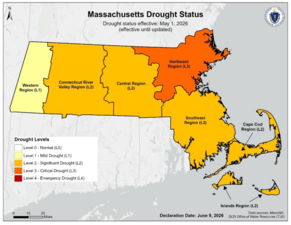 |
BOSTON – Energy and Environmental Affairs (EEA) Secretary Rebecca Tepper declared a Level – 1 Mild Drought in Western Mass.
The Southeast, Cape Cod, and Islands Regions are in a Level-2 Significant Drought due to worsening dry conditions. The Northeast part of the state is in a Level 3 -Critical Drought.
The designation follows two years of below-average rainfall and declining streamflow and groundwater across the state, signaling worsening drought conditions and increasing stress on local water resources.
During May, the state received between 1-3 inches of rain, which was 1.5 to 3 inches below normal. The greatest precipitation deficits were in the Berkshires, the Southeast, and Cape Cod and the Islands. Rivers and streams throughout the region are running below normal levels, even with some temporary increases right after a rain event. These decreasing levels are an indicator that groundwater levels continue to go down.
"Many parts of the state have gone months without enough rainfall to replenish groundwater levels and stream flow," said Secretary Tepper. "As we enter the summer months, it is important to be conscious of our water use by limiting outdoor watering to ensure water supplies remain available."
For Regions in Level 1 – Mild Drought ?
Residents and Businesses:?
-
Minimize overall water use;?and,
-
For any outdoor water use, limit watering to one day a week (only from 5:00 pm – 9:00 am), or less frequently if required by your water supplier;?
-
Plant only local and drought-resistant species;
-
Minimize lawn sizes; and,
-
For larger buildings and businesses, conduct water audits to?identify?areas of leaks and potential water conservation opportunities.?
Local Governments:?
-
Establish a year-round water conservation program that includes public education and communication, taking advantage of the?state’s library of outreach materials;?
-
Provide?timely?drought and water conservation information to residents and businesses;?
-
Check emergency inter-connections for water supply; and,?
-
Develop a local Drought Management Plan.?
State agencies continue coordinating drought response efforts with federal and local partners, including municipal officials and local Boards of Health (BOH). Massachusetts Department of Environmental Protection (MassDEP) is providing technical assistance and outreach to communities affected by drought conditions.
Residents are encouraged to report dry environmental conditions and upload photos through the Massachusetts Water Impact Reporter?to help the state monitor drought impacts in real time. Private well owners experiencing problems such as dry wells should contact their local BOH, which is also asked to report local well conditions to the state.
Additional information, including drought? FAQs,?water conservation guidance, and resources for private well owners, is available online.