Pittsfield ConCom OKs Weed Treatment for Pontoosuc
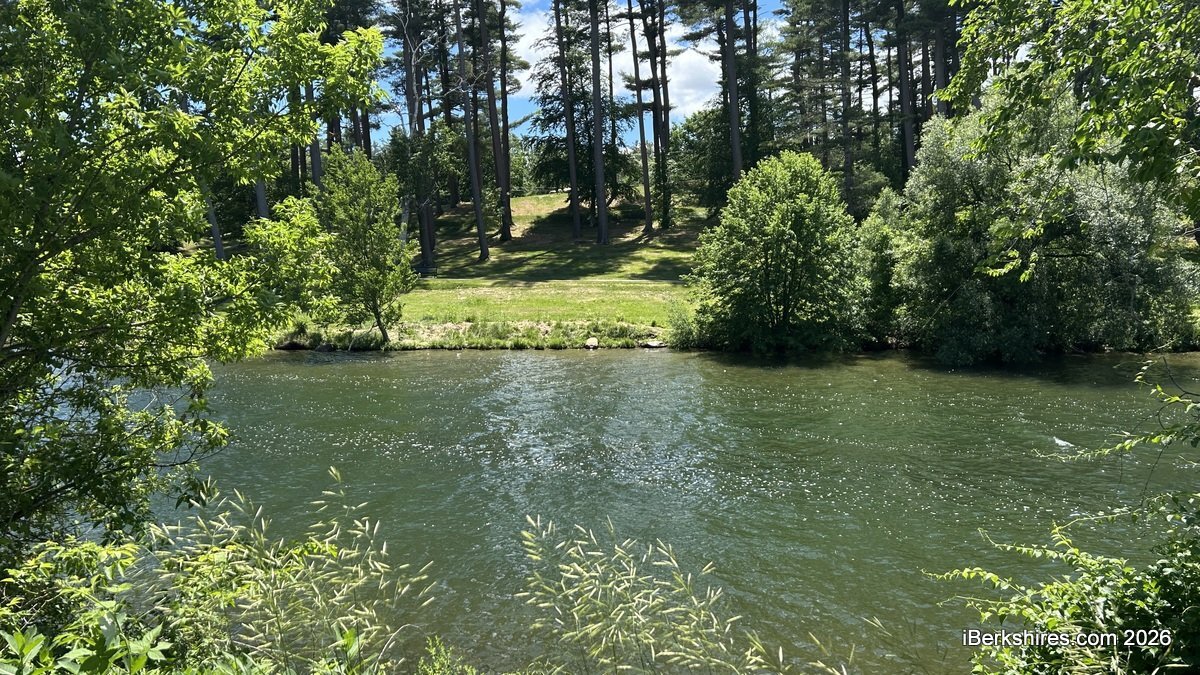
PITTSFIELD, Mass. — Pontoosuc Lake will be treated for weeds with a contact herbicide on Thursday, June 17.
Last week, the Conservation Commission OK'd a request for Diquat treatment on 53 acres of the lake.
"We have four non-native and invasive species, three of which we are controlling with the use of herbicides, and if we didn't do that control, the weeds would take over the lake and the shore," explained Lee Hauge, president of the Friends of Pontoosuc Lake and Lanesborough's harbormaster.
"All the shorelines would be unusable for swimming and even fishing, and you'd only have the center half of the lake, where you could do any boating or swimming if you could get out there."
Pittsfield and Lanesborough equally share the management of the lake and associated costs.
Hauge explained that underwater weeds were harvested for almost 20 years, and it was successful in making the lake accessible for swimming and boating, though over the years, he said, the process favored the propagation of Eurasian milfoil, which spreads by fragmentation.
"And so the result of that 20 years of harvesting control was the lake being choked by Eurasian milfoil, and the native desirable weeds were choked out of being able to grow because of the proliferation of the milfoil," he said.
The application is for 53 acres, and Pontoosuc will need to be treated again in August. This will require permission from the ConCom.
Lanesborough resident Michael Callahan, also vice president of the Friends of Pontoosuc Lake, explained that the group has reorganized. Former initiatives had trouble meeting deadlines, and the new committee made a calendar to stay on top of it and keep everyone on the same schedule.
The group now has more than 70 members.
"This year we've been able to meet everyone's deadlines through the help of the Friends of Pontoosuc to get people to this point, and we have a whole new group of residents," he said.
"I'd like to say we've risen up from the bottom of the lake."
Rick Reid, a longtime lake resident, said he is taking numerous wheelbarrow loads of weeds off his beach, and that it hasn't been this bad in nearly 20 years.
"At this point right now, you can't travel to shore in a boat. We're already out into the middle of the lake in order to not be in the weeds," Reid added.
"So I am in favor of the treatment."
Another person said, "We are approaching a dangerous situation here now. It's already bad, and it's only June."
Nearby resident Michele Rivers Murphy said she uses the lake daily, and expressed concern about the Diquat application. She understands that there is a Eurasion milfoil problem in the water, but worries about the lake's health with this herbicide.
Rivers Murphy said best lake management practices emphasize diverse, adaptive, and minimally destructive strategies, not repeated chemical dependence.
"This is the largest we're ever seeking to treat, but 53 acres has a potential for a rapid oxygen depletion from sudden die off in the biomass that falls to the bottom of the lake, as well as increased fish kill," she said.
"… sediment binding, non-target plant destruction, harming already stressed native vegetation. We forget about the native vegetation that is needed for the health and welfare of our lake fish and wildlife, and increased likelihood of harmful algae blooms, which is a huge problem for all our lakes."
She and resident Daniel Miraglia recommended treating the lake in phases.
Chair James Conant was one of the two votes in opposition. He explained that he has a record of opposing Diquat for over 20 years.
It will be applied to less than 20 percent of the lake. The contractor said Diquat's product label allows for the treatment of half of the lake without concerns about dissolved oxygen.
Conservation Agent Shannon Poulin reported that the ask has decreased from 64 acres.
Tags: herbicide, Pontoosuc,