Dalton Board Talks Short-Term Rentals
DALTON, Mass. — As third-party booking platforms have grown in popularity, the number of short-term rentals has increased. Municipalities across Berkshire County have been grappling with how to regulate these rentals, and now the conversation has reached Dalton.
According to the state Department of Revenue, Dalton has 22 short-term rentals, Planning Board member Richard Hall said during the board's meeting earlier this month.
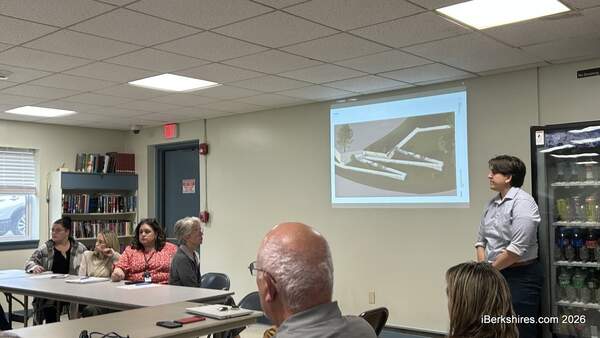
Board member Dennis Croughwell presented his colleagues with a very rough draft of a bylaw, based on what other towns in the area have done. By the end of the meeting, the board had a game-plan.
The board will have two sessions to gather input from residents and current short-term rental operators in town, because they will not be grandfathered in when the bylaw is enacted.
Members had initially considered holding two public hearings but Town Planner Janko Tomasic informed them that a public hearing would require a decision prior to adjourning. Instead, the board can hold a public forum and then a public hearing.
The board hopes to hold the public forum by October, providing it enough time to finish the draft, then have a public hearing in January or February, a few months prior to the annual town meeting, during which the board can vote on the bylaw draft.
Having a public hearing helps keep the topic fresh in people's minds for the May vote. Once approved, the bylaw is sent to the attorney general’s office for approval.
Board chair Robert Collins said that the town should reach out to the 22 short-term rental operators directly to inform them of the public hearing.
The purpose of the bylaw is to establish a registration, inspection, and enforcement system for short-term rentals operating in the town, Croughwell said.
It is intended to protect the health, safety, and welfare of occupants and neighboring properties by ensuring short-term rentals operate responsibly and do not create nuisance conditions, while complementing current zoning bylaws, he said.
During the meeting, the board discussed several aspects of the proposed bylaw, including key definitions that should be included, whether short-term rentals should be allowed by right or require a special permit, the registration process, which department should oversee administration and enforcement, the maximum length of short-term rental stays, and safeguards to protect neighboring properties and the community.
While it was noted the increase in short-term rentals may generate additional revenue and tax income, the town is also focused on preventing the displacement of residents and preserving homeownership opportunities for first-time buyers.
The town wants to prevent corporations from buying out property in the area, Tomasic said.
The board also needs to determine how many days per year short-term rentals will be permitted to operate in Dalton. Some municipalities have limited short-term rentals to 90 days annually, while others have established a 180-day limit.
"That is the big line in the sand that this board has to decide — what’s the number," Collins said.
A 90-day annual limit would allow an operator to rent out a property during a single season, such as the summer, while a 180-day limit would allow rentals across two seasons, such as the summer and fall, he said.
Board member Don Davis also proposed that the bylaw specify that an individual occupant cannot rent a short-term rental for more than 89 days; otherwise, it would be classified a long-term rental.
The draft bylaw says short-term rentals cannot be operated without first getting a license from the town clerk. At that time they will be required to provide the following information:
- Name, address, phone and email of the owner,
- Name and 24/7 contact information of the local contact,
- Proof of primary residence, for owner-occupied rentals,
- Floor plan showing bedrooms and egress routes,
- Parking plan demonstrating compliance with zoning and safety standards,
- Proof of registration with the state DOR for room occupancy tax collection,
- Certification that the short-term rental complies with all safety requirements.
Board member Don Davis also proposed that operators provide proof of insurance.
Among the most significant topics discussed was how to regulate commercial events held at short-term rentals, including weddings, parties, and other large gatherings.
The draft bylaw says that short-term rentals shall not host these types of events unless a separate permit is obtained.
Board members noted that property owners who host events such as weddings or parties may be required to obtain additional permits, including a liquor license and any applicable food service permits, which are administered by the town's designated permitting authorities, such as the Board of Health.
The board also noted that the bylaw needs to define the difference between owner-occupied and company-operated short-term rentals.
The topic of sprinkler requirements was also mentioned, which has been a challenge many towns are navigating.
The town's bylaw has to align with the state's building code requirements, which has been a hot topic in communities because of costs and other factors.
Converting a unit into a short-term rental is often a change of occupancy that can trigger the need for a higher-level sprinkler system, 13R or Commercial System, Duval said during an Adams Planning Board meeting on short-term rentals.
The state allows one- and two-family homes to have a domestic-line, 13D sprinkler system, which has a lower cost and can be done by a plumber, he said.
The state is actively working to come up with a compliance alternative for the next building code cycle, 11th edition, because it is realizing that it is becoming a problem for everyone but the next cycle will not be complete for a few years, Duval said.
One thing towns are doing, such as Lanesborough, is when they put zoning in place for short-term rentals, they are allowing people to apply for a temporary certificate with a caveat that all other safety regulations are being followed, and give them one year to file for a variance or install the state-required sprinkler system, he said.
It was also mentioned that the bylaw should establish a fine system for violations of its requirements, including the option to revoke a short-term rental registration if violations occur multiple times.
Tags: short-term rentals,