Pittsfield ConCom Sees Revised Work Plans for Wahconah Park
PITTSFIELD, Mass. — The Conservation Commission will dig into the notice of intent application for Wahconah Park's overhaul.
The commission heard an update on the historic park's reconstruction during its regular meeting on July 23.
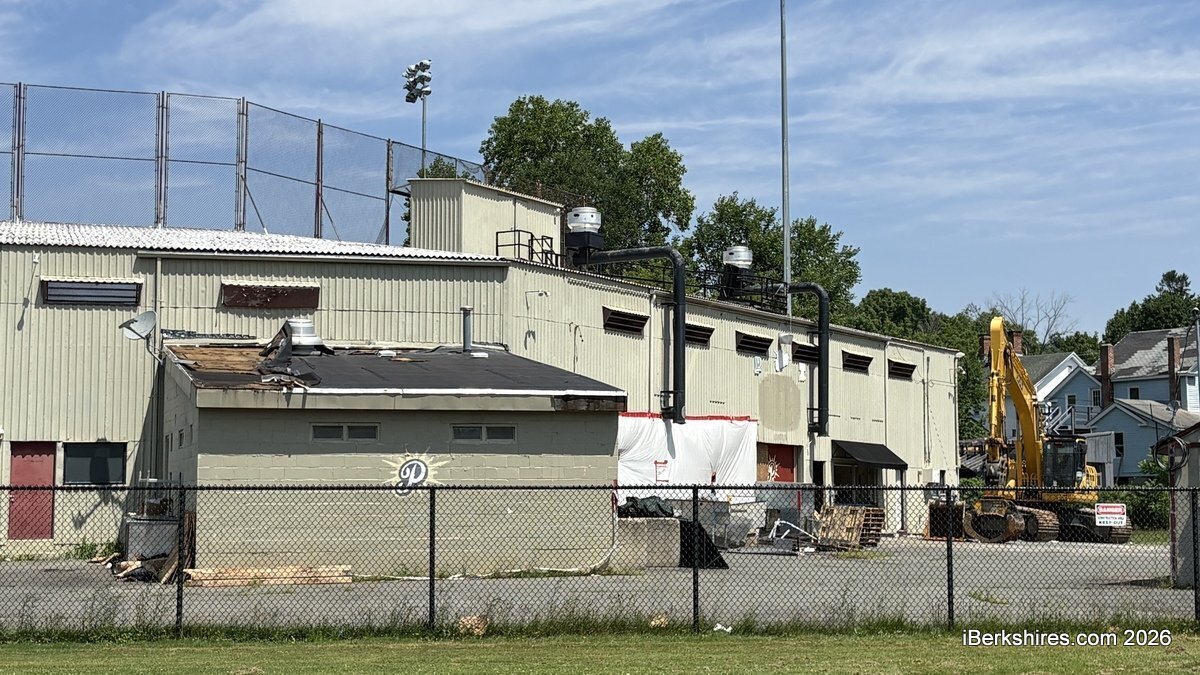
The grandstand is expected to be down by early September, and the city has been working with SK Design Group and the Department of Environmental Protection to revise work plans, which can be complex on a site located entirely in the floodplain.
The revised plan includes supplemental materials to address the DEP's comments, clarified riverfront area compliance, a separated wetland replication area floodplain, a fully documented stormwater conveyance and treatment approach, and addresses wetland floodplain and construction sequencing impacts.
It was continued to Aug. 13 so that commissioners can review the new documents and comment.
"The revised design will replace the aging and failed drainage infrastructure," explained James Scalise of SK Design Group, on behalf of the city.
"…We have avoided and minimized impacts to regulated resource areas. We've reduced the potential for erosion control, drainage failure, and uncontrolled discharges."
The nearly century-old structure was deemed unsafe in 2022, and planners have determined that starting from square one is the best option; a $15 million rebuild is on the table.
The project team was before the ConCom in May after receiving several comments from the DEP. Because of the difficult permitting path, they requested a continuance and have spent that time responding.
The proposal is to demolish the existing facilities, which Scalise said is somewhat underway; the area is being abated for asbestos and demolition will begin in mid-August. The second step is to redevelop and reconstruct the grandstand.
The goal really is to rebuild the longest established public ballpark, "Kind of within a difficult setting," Scalise explained.
"I think if we were to choose a place to have a historic ballpark, it might not be in the floodplain along the river, but here we are," he said. "So we're going to make the best of it."
Wetlands were identified by another company and later amended by SK. The response to DEP spends time discussing degraded areas, because in the team's opinion, this is a redevelopment project.
Plans for the new grandstand rebuild it in a similar footprint with bathrooms, concessions, and an elevated concourse area. The entire grandstand will be accessible, with the seasonal ice skating rink in front.
There is also a failing drain line that needs repair. There is 4,300 square feet of wetland alteration as part of that drainage work.
"[There is] almost 280,000 square feet of riverfront on site. There is about 9,900 square feet that's already altered. We're talking about altering another 3,600 square feet for a total of 4.7 percent," Scalise explained.
"A pretty reasonable percentage. With new construction, the regulations allow up to 10 percent. We're at 4.7 in a redevelopment project."
Last year, the Parks Commission accepted a negotiating rights agreement between the city and the longtime summer collegiate baseball team, the Pittsfield Suns. It solidifies that the two will work together when the historic ballpark is renovated.