Pittsfield: Should Park Square Be an Historic District?
PITTSFIELD, Mass. — The committee drafting a proposed local historic district around Park Square wants to generate interest and participation in the process.
Members launched the charge during meetings in August and September. A survey and public hearing are planned to gather feedback early on.
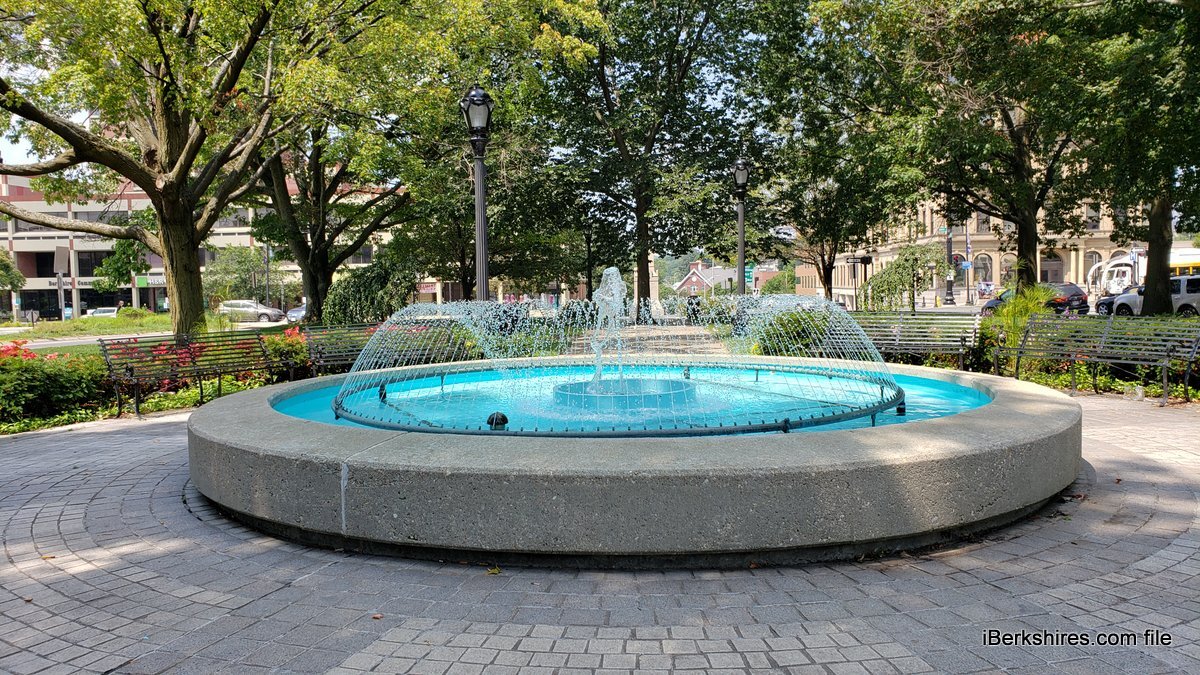
City Planner Kevin Rayner explained they are not just doing this out of a love for historic buildings, but for the timeless sense of place you get when you step into Park Square, which was laid out over 200 years ago and hosted the first-ever agricultural fair in 1810.
"I think that the main thing that we need to kind of park on is that this is the heart of our community, and it really sets the stage for the sense of place in Pittsfield, and any change to that should have some review and some consensus from folks who have a passion for protecting the history and that character of Pittsfield," he said to the new Local Historic District Study Committee last week.
"And there's that private property versus historic resource thing, but I’d say that a lot of these buildings on the square belong to the soul of Pittsfield here, and deserve to be protected, and I don't think that the layer of regulation that we're throwing down here is going to be unreasonable or a real boundary."
In March, the City Council voted to amend the City Code, Chapter 2, to establish the study committee.
Pittsfield has more than 20 locations on the National Register of Historic Places, including the Park Square Historical District, but the designation just allows communities to apply for federal tax credits and doesn't impose restrictions on buildings. The central area was laid out a few decades after Pittsfield was given a town charter in 1761.
A district can be one building, several buildings, or an area. Historic restrictions only apply to the exterior of buildings; the committee has authority to say a building in the district cannot be demolished.
At the end of the year or in early 2027, the study committee will hold a public hearing for the proposal; all properties within the district will be contacted. In the meantime, questions will be drafted for a survey.
"I’d love to have just a brief talk about what it is and what we're trying to do and why we're trying to do it, and then have a walk around of pictures and history of the buildings, and have them walk around and talk to us about what this means and why we're doing it and the history of each structure," Rayner said.
"To really show them why you care about this and why this is important, and then you know, help them get over any fears that they might have that this is going to be a burden."
He added that unless property owners want to demolish the building or completely change the facade, they probably won't come down on them.
The preliminary report is the committee's main product, along with a companion ordinance to govern the district.
Rayner explained that he is being conservative with the size of the district, as it needs approval from the City Council, and if they get a "no," the process would have to start over. Though once boundaries are in place, they can always be expanded with additional approval.
There was a suggestion to include the Thomas Colt House on Wendell Avenue, which most recently operated as the Whitney Center for the Arts. It was agreed that they would need to get a better picture of the building's current condition beforehand.
Tags: historic district,