Dalton Looks to Curb Sewer Infiltration as Rates More Than Double
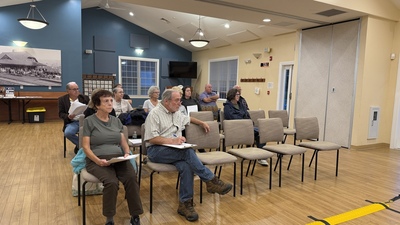 |
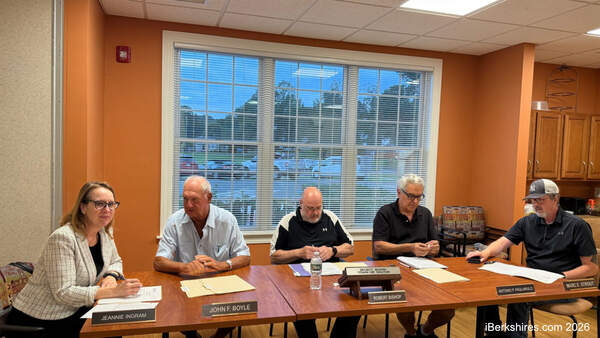
| More than a dozen residents attended last Monday’s Select Board meeting. The new rate is challenging for some taxpayers, so the town is implementing relief measures. |
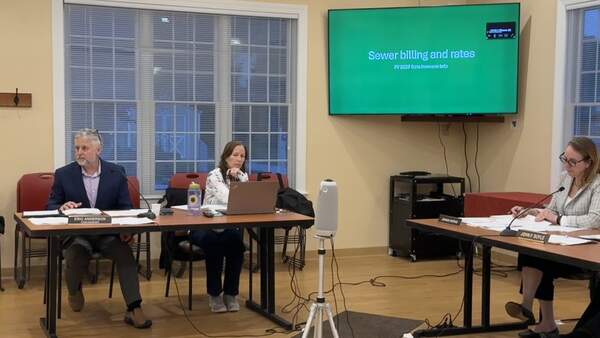
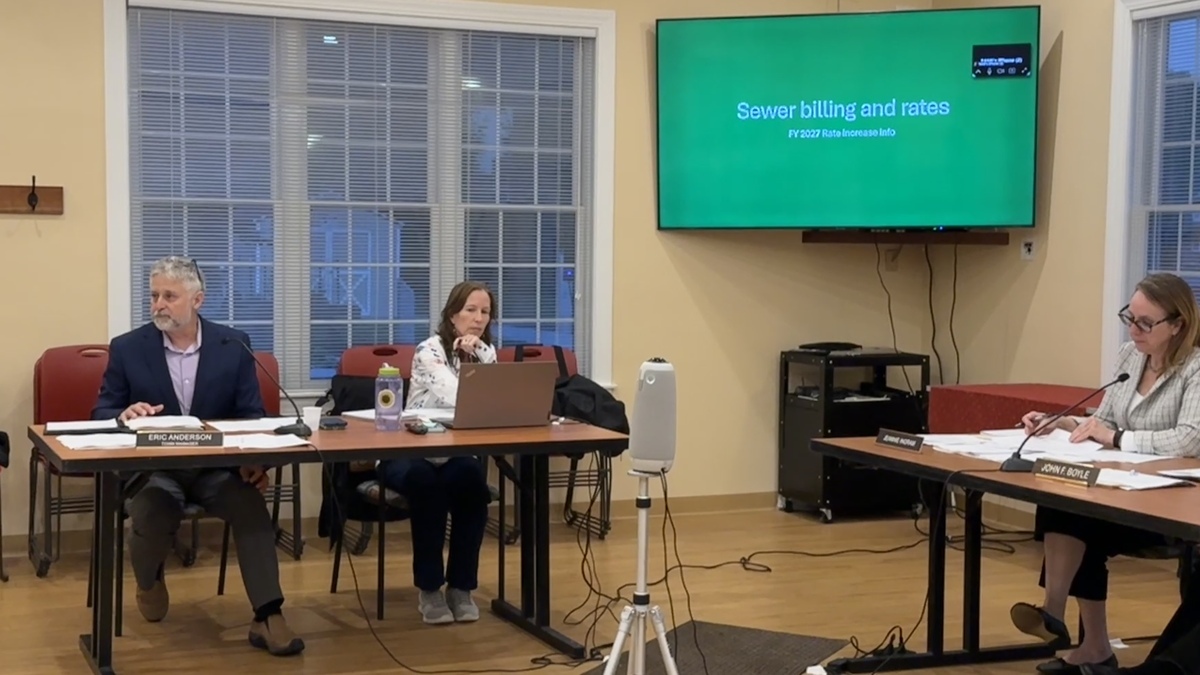
DALTON, Mass. — The new sewer agreement with Pittsfield is going to "hurt" unless the town and its residents address the large amount of excess water entering the sewer system, Town Manager Eric Anderson told the Select Board last week.
The town's sewer rate has more than doubled for fiscal year 2027, with an annual bill of $1,217.08, which is billed biannually. The total bill for the town is $1,777,728.50.
"Our way out of this is reducing infiltration, reducing direct connections that shouldn't be there, and tracking down and figuring out how we can get the average household usage down. If we can do that, we can make this reasonable for the residents," Anderson said.
"I say that, but it's not easy to do, and we're not going to suddenly wake up tomorrow and go from 300 million gallons going to Pittsfield to 120 million gallons. So, we kind of have to be realistic about our expectations, but we've got to work pretty hard to address this."
More than a dozen residents attended the Select Board meeting, where Anderson outlined the history of the town's sewer agreement with Pittsfield, which dates back more than 50 years, along with the town's next steps in mitigating the cost.
In a follow-up interview with iBerkshires.com, Anderson said the town sends an average of roughly 350 million gallons of water into Pittsfield's wastewater system annually. This is significantly more than what a town of Dalton's size should be sending. Approximately 33 percent of this volume is the result of inflow from direct connections and infiltration of groundwater into the sewer system, he said.
The town understands that this new rate is challenging for some taxpayers, so it is implementing relief measures.
At Anderson's recommendation, the board agreed to have a "grace period" for charging interest and late fees on FY27 sewer use utility bills through July 1 to allow taxpayers more time to make payments without being penalized.
"The last thing we want to do is tell people who are having trouble paying the bill that we're going to whack them with another 12 percent interest on top of that," Anderson said. (Clarification: The interest rate is 14 percent per annum.)
Late fees will be charged after July 15, 2027, on all sewer accounts with a remaining balance.
Additionally, taxpayers can communicate with the collector's office to establish a payment plan during which the town will accept partial payments of at least $50, a minimum that is set because the town incurs a processing cost for each transaction.
The town is also proposing using approximately $200,000 from sewer stabilization to fund a Sewer System Evaluation Survey on how it can most effectively repair the current system and reduce infiltration. This would not affect the town's current tax rate.
This is a continuation of what the town has been doing since 2017 with its engineering firm Tighe & Bond, which has resulted in a reduction of sewage being sent to Pittsfield by more than 100 million gallons per year, Anderson said.
They hope to put the project out to bid in December, with the goal of selecting an engineering firm by January and having the work begin by late March or April, Anderson said in a follow-up.
The town is currently operating under a sewer agreement with Pittsfield that was drafted in 1973 and ratified in 1974, Anderson said.
The agreement calculated costs based on three factors: the total number of gallons entering the system, turbidity levels, and the number of households rather than individual meters, he said.
The formula did not account for other significant expenses, including system maintenance and, more recently, debt associated with required infrastructure upgrades.
In the 1950s, after the state Board of Health required the construction of a wastewater treatment plant to end the discharge of wastewater into the Hoosic River, the town independently bonded to help finance Pittsfield's wastewater system. The town also took on additional debt in the 1970s to help fund major improvements to the system.
However, independently bonding for improvements is no longer an option because the number of communities sending wastewater to Pittsfield's treatment plant has grown from two to seven, Anderson said. It is no longer practical for all towns to bond separately for the cost of the most recent required upgrades. Additionally, Pittsfield also takes on all the legal liability, he said.
"They're the ones that got sued by [the U.S. Environmental Protection Agency] in 2017, which set off this whole quest to modernize their system," Anderson said.
Pittsfield leadership has been raising concerns about this agreement since at least the mid-1990s, believing that the town was "kind of freeloading off of them," Anderson said.
Anderson explained that, as with other shared services, the municipality providing the service typically charges participating communities a multiplier above its own cost. In this case, Pittsfield is applying a 1.5 multiplier to Dalton's wastewater treatment costs.
While it would be preferable to have a lower rate, Pittsfield's 1.5 multiplier is not unique to the town. Lenox, for example, has essentially been on the same contract with Pittsfield for eight years, he said.
"So, I don't think it's inappropriate, but it's not ideal either from our residents' perspective," Anderson said.
The old rate formula didn't penalize the town for the age of its leaky infrastructure, so it was able to afford having leaks in the system because it wasn't cost-prohibitive. Some of the infrastructure is up to 130 years old.
The formula in the new contract is billed based on the total gallons only in households not metered, resulting in a significant penalty for infiltration, Anderson said.
"The rates set for Dalton as of this year are basically equivalent to Pittsfield," he said. However, the town does not bill households the same way as the city.
"But in aggregate, we pay the same amount overall for households as Pittsfield under this formula this year," he said.
If the town doesn't find ways to decrease the number of gallons of water entering the system, then in four years the rate is projected to increase to more than $1,800 per household, Anderson said.
Refusing to sign the new agreement is not a realistic alternative, he said. Under the existing contract, Pittsfield can give Dalton three years' notice that it will no longer accept the town's wastewater. That would leave Dalton just three years to secure financing, design and build its own wastewater treatment system.
Building its own system is not something the town wants to contemplate for a number of reasons: One, the town doesn't have the bonding ability, and two, the town lacks the space to build it, Anderson said.
"Literally, the only big spots we have would be to repurpose one of the athletic fields or build it right in front of [the senior center] and I don't think any of us wants to contemplate a wastewater treatment facility sitting down at the end of this parking lot. I'm pretty sure I'd be run out of town as a town manager," he said.
Tags: Dalton_budget, sewer, sewer rates,