State Strips Funding For Adams' Roundabout Project
.jpg) Adams officials hoping to solve the intersection issues at Friend Street and Route 8 found out Tuesday that federal money for the project had been spent elsewhere. |
Adams officials were banking on $650,000 from a 2004 earmark for the region to put toward the $1.5 million project. But the federal government is ordering states to spend languishing earmarks by the end of the year or lose them.
So the $650,000 is being spent on something else — the Berkshire Regional Transit Authority.
The local Metropolitan Planning Organization and the town never had a say in the use of the funds.
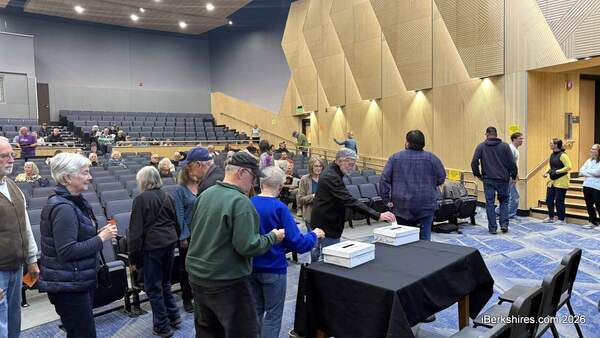
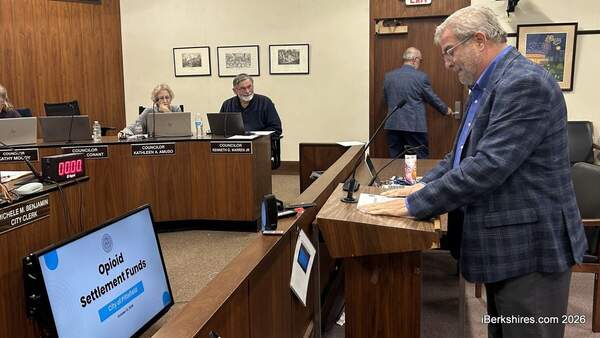
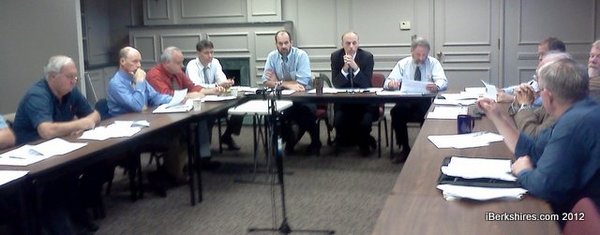
Local officials came to plead their case on Tuesday when the MPO, which operates under the Berkshire Regional Planning Commission, opened the 15-day public comment period on a now updated transportation improvement plan that doesn't include the intersection.
"It seems like it was a done deal without any input from the town," said state Rep. Gailanne Cariddi, D-North Adams, who attended the meeting with Town Administrator Jonathan Butler, Director of Community Development Donna Cesan and Selectman Arthur "Skip" Harrington.
But the MPO could only consider the funds already spent.
The original federal earmark was $1.25 million in 2004 for the region; in 2009, about $650,000 was approved for a signalization project at the intersection.
The town entered a $95,000 contract for design and the simple light turned into a roundabout. A quarter of that design has been completed and the $650,000 overall project cost has inflated to $1.5 million. The 25 percent design stage has not been reviewed by the state and there must be public hearings before construction can even begin.
According to Clinton Bench, state Department of Transportation deputy director of planning, the federal government is ending earmarks. President Barack Obama has called for the repurposing of unused earmarks from 2003 until 2006 under his "We Can't Wait" program. Each state now has to spend those earmarks by the end of the year or the funds will go back to the federal government and be redistributed across the country.
"It's just not a risk we can take in regards to losing the money to another state," Bench said.
MassDOT surveyed its projects and redistributed earmarked funds to projects that could be substantially completed by Dec. 31. A total of 14 projects statewide lost $13.2 million in funding; Adams was the only town in the Berkshires to lose funding.
The money has been redistributed to regional transportation agencies. Gov. Deval Patrick announced on Oct. 2 that he would release $670,000 to the BRTA for maintenance facility roof and the purchase of new buses.
BRPC Executive Director Nathaniel Karns was frustrated that town officials had not been allowed to argue for a portion of the funds because the intersection was part of a much bigger economic development plan - the Greylock Glen. Instead, the decision had been made only by transportation officials.
The intersection renovation was part of Adam's contribution to the project. According to Butler, the state Department of Conservation and Recreation has $3 million that can only be used at the Glen with matches from either the town or the federal government.
Cesan said the town is confident it will find other ways to make the match but the loss of the federal funds throws a hitch in the plans. There's faint hope that some of the earmark will still come the town's way.
An additional $125,000 is needed to complete the roundabout design. The contract could be signed by the end of the year, which would keep the plans from getting shelved.
Butler said town employees have committed a lot of time and effort toward the project, and the engineers have met multiple times with local businesses and citizens. While Butler said officials wouldn't want that effort to go to waste, the town would have trouble affording this project on its own.
"My hope is that they find the $1.5 million for construction," he said.
Bench took responsibility for the lack of communication and attributed it to the "whirlwind" of the changes. The state had to identify and repurpose those funds by the beginning of October.
Tags: Berkshire Regional Planning Commission, earmarks, intersection, MPO, transportation,