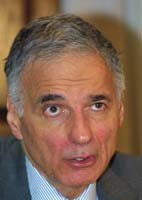
Consumer advocate and former Green Party presidential candidate Ralph Nader will speak at Berkshire Community on Saturday afternoon, April 21, at 2 in the college’s Robert Boland Theatre. His presentation, “Challenging Corporate Power and Building Democracy,†is free and open to the public but requires a ticket for admission.
Tickets will be issued on a first-come, first-serve basis through the Office of Student Life in the Susan B. Anthony Center on BCC’s main campus in Pittsfield. Office hours are Monday - Friday from 8 to 4. Tickets may be obtained in-person, by phone or e-mail.
Tickets for walk-in requests will be available beginning Monday, April 9. Requests to reserve tickets may be made now through Thursday, April 19, by calling 413-236-1660, or by e-mailing mzancona@berkshirecc.edu. No more than 10 tickets may be reserved per call or e-mail. Reserved tickets may be held in the theatre’s box office for pickup on April 21. Tickets that are not claimed by 1:50 will be released for walk-in requests.
E-mail requests should include “Ralph Nader tickets†in the subject line. The text of the message should include the first and last name of the person making the request, number of tickets requested, and a statement specifying whether the tickets should be held at the box office or prepared for earlier pickup at the Office of Student Life.
Named as “One of the 100 Most Influential Americans of the Twentieth Century†by Time magazine, and more recently as “One of the 100 Most Influential Figures in American History†by The Atlantic Monthly magazine, Nader began his public life in 1965 with the publication of his book “Unsafe at Any Speed,†in which he accused the auto industry of disregarding their customer’s safety. The Senate hearing into his accusations and the resulting motor safety laws catapulted Nader into the public sphere.
In subsequent years, working with lawmakers, Nader was instrumental in creating the Occupational Safety and Health Administration (OSHA), Environmental Protection Agency (EPA), and Consumer Product Safety Commission. He also helped to draft and pass such laws as the Safe Drinking Water Act, Meat and Poultry Inspection Rules, Air and Water Pollution Control, and Freedom of Information Act.
Working to empower the average American, Nader has formed numerous citizen groups, including the Center for Auto Safety, Public Citizen, Pension Rights Center, National Coalition for Universities in the Public Interest, and the student Public Interest Research Groups (PIRGs) that operate in more than 20 states.
Recently the subject of the critically acclaimed documentary, “An Unreasonable Man,†Nader is also the author of a number of best-selling books including “Winning the Insurance Game,†“Why Women Pay More†and “Getting the Best From Your Doctor.†More recent books include “Children First: A Parents Guide to Fighting Corporate Predators†and “The Seventeen Traditions.â€
A question and answer period, and a book signing, will follow his presentation. Forum credit is available for BCC students.
If you would like to contribute information on this article, contact us at info@iberkshires.com.
Your Comments
iBerkshires.com welcomes critical, respectful dialogue. Name-calling, personal attacks, libel, slander or foul language is not allowed. All comments are reviewed before posting and will be deleted or edited as necessary.
Confederate Vice-President Alexander Stephens once wrote, "times change and men often with them, but principles never!"
However, a poiltician's principles often change based on coming political storms. Hillary Clinton is great example of person who has changed her principles, but Ralph Nader remains true to his timeless principles of good clean government and consumer safety.
If Nader runs consider voting for him, because neither party's candidates owns you so they doon't own your vote. Nader can't steal the votes from Democrats which Democrats do not possess; they must earn them as must any candidate.
Scenic Vistas, Open Spaces Central to Berkshire's Rural Character
By John TownesSpecial to iBerkshires
This is the first of a two-part series looking at types of land trusts, their missions and their place within the Berkshires.
Land is an essential resource for life. We all spend the vast majority of our lives directly connected to the land or in structures built on it. Land is also a central core of the global ecosystem that makes the earth sustainable for all lifeforms.
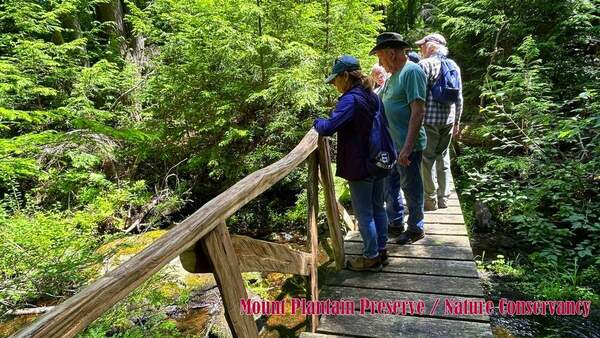
The landscape has special significance in the Berkshires. It is a central element in the region's scenic rural character and quality of life, as well an economic resource that is a basis of tourism.
Access to land, and control of its use, is largely based on ownership. This system enables people to own homes, build businesses, establish communities, and pursue other goals and activities.
However, the private use and control of land can also be a source of contention and conflict — from debates about development at local planning boards to international wars over territory.
Traditionally, local and regional planning policies and regulations such as zoning have been used to balance the concepts of private ownership with shared public goals and needs. In addition government ownership provides land for schools, roads, infrastructure, parks and nature preserves, and other public purposes.
In recent decades another form of land ownership and control has gained increasing visibility and prominence. This concept is often known as land trusts.
The landscape has special significance in the Berkshires. It is a central element in the region's scenic rural character and quality of life, as well an economic resource that is a basis of tourism.
click for more
Middle and South County led the market with increases in both sales and dollar volume in residential sales, while North County single family home sales declined. click for more
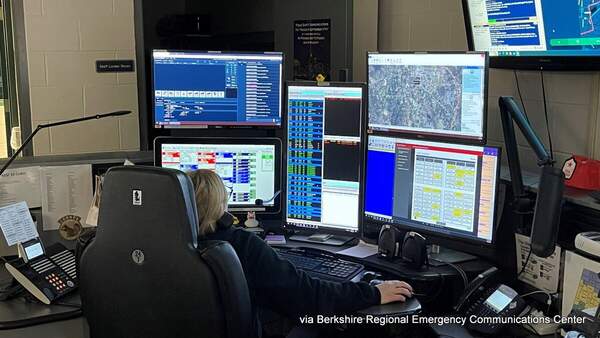
Hinsdale has experienced longer emergency response times since the Dalton Police Department suspended its mutual aid agreement with the town. Now, Hinsdale is considering suspending its use of Dalton's Communication Center.
click for more
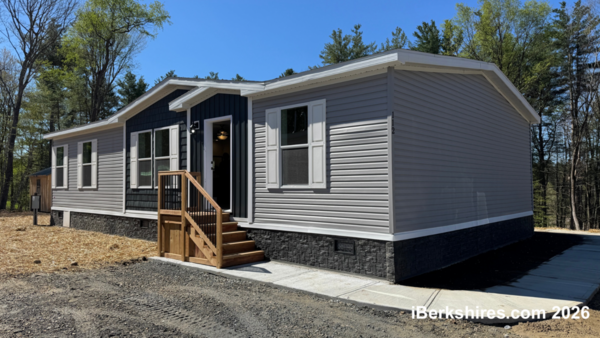
Just a few months after Allendale Pines North cut the ribbon on its first six homes in the new manufactured home community, the planned development for more homes is already selling fast. click for more