Williams College Art Museum Will Be a Lab for Sustainability
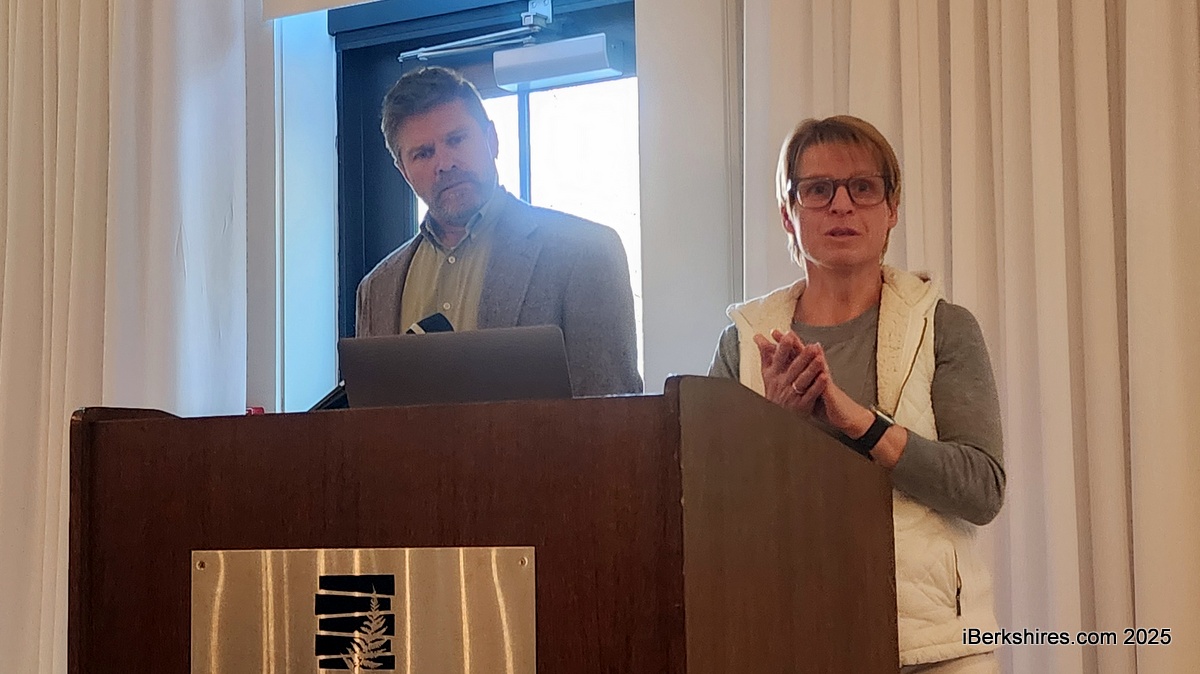
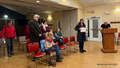
Michael Evans and Tanja Srebotnjak of the Zhilka Center for the Environment get into details about green standards.
"Really building a learning laboratory for sustainable art museums for the future," said Pamela Franks, museum director, at Monday night's community forum.
"One of the really distinctive features of the Williams College Museum of Art is its long tradition and contribution to the field of arts leadership. So a student who's leading a tour today may be the director of a major museum tomorrow, and everything that the student learns over the time that they're here at Williams becomes a kind of possibility for impact moving forward."
The forum at the Williams Inn was the latest public update on the museum's progress and information on its various aspects, this time on its sustainability focus.
When it opens in fall 2027, the single-story structure designed by Brooklyn-based firm SO–IL will be something of an epitome of the college's sustainability and conservation ethos, first formally adopted by the trustees in 2011.
Over nearly 20 years, construction and renovations on campus have focused on attaining energy efficiencies, with projects over $5 million required to reach the gold standard in Leadership in Energy and Environmental Design, or LEED. The college has also sought the Living Building Challenge's Petal level in several cases.
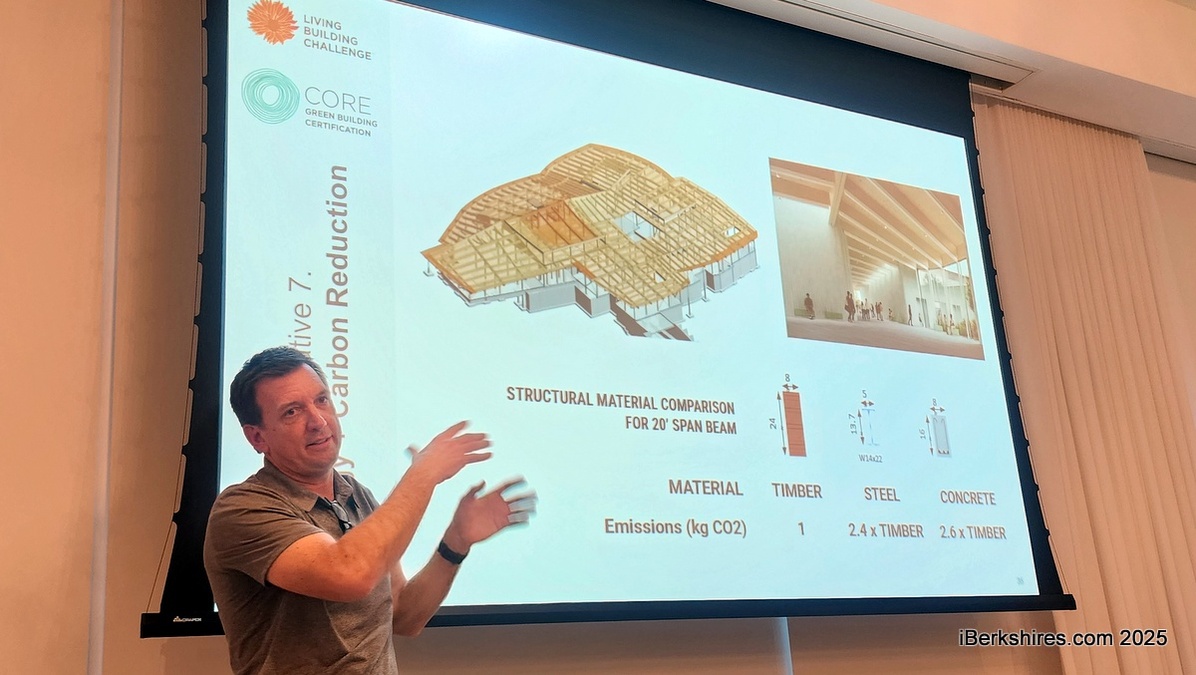
The museum is also looking to become an International Living Future Institute core building, of which only two now exist, and is focusing on Energy Use Intensity benchmarks, with the goal to operate with 70 percent less usage than a comparable 1990 museum. The structure will also be "zero ready" for solar, although it will powered through electricity not solar panels.
"That concept of regenerative design also considered the full life cycle impact of a building from construction all the way through the end of its lifespan," said Tanja Srebotnjak, executive director of the college's Zilkja Center for the Environment. "And very importantly, it centered human health, well-being, equity and community and the connection to nature inspired beauty that surrounds us."
The structure will be made of "simple" materials: a mass timber frame, bluestone and wood floors, masonry walls, wool insulation.
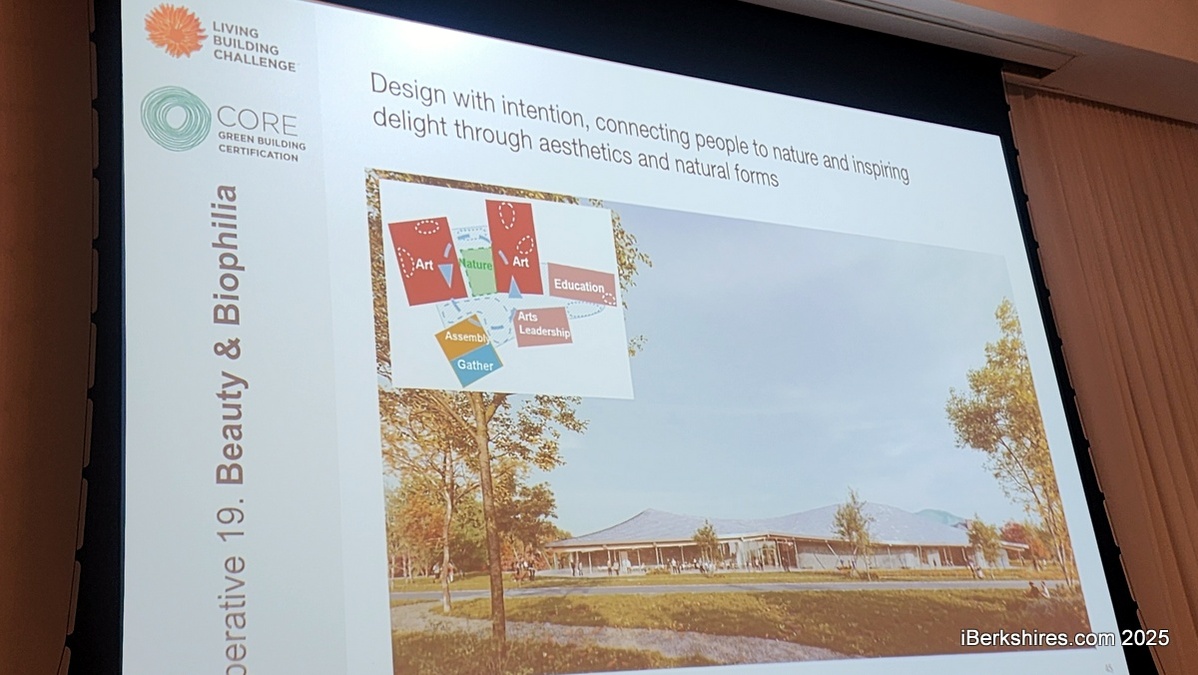
Scott Henderson, project manager, reiterated the "human scale" of the one-story structure with its accessible pathways, gathering spaces along the paths and under the expansive canopies, calm earth tones and large floor-to-ceiling triple-glazed windows.
The centering of arts and education will also include a healthy interior environment with air quality, natural light, and thermal comfort.
"So this is one of my favorite aspects of the project, because this shifts the focus from say, talking about a green building, to talking about who's in the building, about the occupants," he said. "So it really makes it about being in that space."
Henderson noted that the college is working with partners that share its values
"Oftentimes, we'll find companies have what's called a 'just' label, and again, that ties to their commitment within their company to support these ideas of equity, diverse, diversity and inclusion," he said.
The removal of invasives is almost complete in the northwest corner and replanting is underway. The stormwater trap — a series of large concrete chambers — is in place and will exist under the parking lot. The drains and swales of the stormwater management system will empty into the system.
The timber frame from Nordic Structures in Montreal is expected be installed this summer. (The construction team is keeping an eye on tariffs.)
The former Northside Motel is continuing to be used for construction offices and employee parking. In response to questions, Henderson said he the college is considering the future of the property but there is two years to plan.
One of the 40 or so attendees queried Franks about a subject not addressed on Monday: the art.
The director noted that WCMA has 15,000 items in its collection and that the new museum will have outdoor sculptures and 11 galleries plus a large flexible lobby inside.
"What we're doing right now is a collaborative process where all of our curators who focus on different areas of the collection, different pedagogical specialties, different modes of engagement are working together to plan the installations, and the teaching program for the future," she said. "There will be art everywhere."
The director thought this would be a good topic for a future community forum.
WCMA has been holding regular hours for community members who wish to speak to staff about the project. The next drop-in times are today, Tuesday, at 4 p.m. and May 27 at 4 p.m. More information on the project can be found here.
Tags: green building, WCMA, Williams College,