The Awareness Of Payne
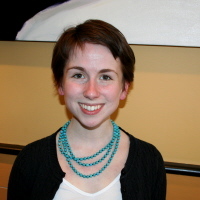 |
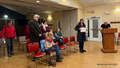
| Rachel Payne will present "Making the Commitment:Community Action and Climate Change" at the First Congregational Church on Monday, March 26. |
And there lies the foundation of Mount Greylock Regional High School student Rachel Payne's senior project "Making the Commitment: Community Action and Climate Change."
Public Event
Payne plans to present local solutions to global warming and climate change on Monday, March 26, 7 p.m. at the First Congregational Church. The free event will include information about the science of climate change and suggestions for human change and reducing a societal "carbon footprint."
A reception will follow the formal presentation, and those in attendance will be able to buy energy efficient florescent light bulbs, sign petitions, register with GreenStart, and write their legislators.
True Cause
And they will be able to "take the pledge" as described by Payne during a March 23 interview.
"We need a new social contract, a contract that we acknowledge that we owe it to one another to make changes," she said."I think there is a certain consciousness that comes from doing what you know to be right."
Payne, 18, said she'd been seeking a community service focus throughout high school but was opposed to latching on to any topic just because it existed. She was determined to discover something that truly inspired passion, she said.
"I was searching for something, a 'true cause,' and global warming did it," she said. "And I chose to do a lecture because I want to be a good public speaker. I've encountered some hypnotic speakers but most are mediocre."
Lead And Legislate By Example
Payne's strategy is rooted in two arenas; our government and ourselves, she said.
"My approach is two-pronged," she said. "It's political and there is activism. We can ask our politicians to bring change but we have to do it ourselves as well. We need to instill a different set of values. We need to remember that the entire population, and the future population, has a right to enjoy what is now a dwindling number of resources. I think we need to be more awake."
Changes do not have to radical, she said, and noted that many earth-supportive actions require more thought than money or upheaval.
For example, organized car pools, using compact florescent light bulbs, planning ahead and making one trip to the store instead of six trips, remembering to turn off lights, and investing in companies that demonstrate a willingness to protect the Earth's climate are all major steps, she said.
From Back-Burner To Hot-Button
The global warming issue has shifted so quickly from back-burner minutia to hot-button topic that even researching the matter was a challenge, Payne said.
"I have learned to not trust the Internet," she said, and added that even most information available at the Williams College Schow Science Library was published during the early 1990s, "when we thought there was 50 years to solve the problem, not 10."
Payne said she received accurate information from local individuals such as Wendy Penner and Nancy Nylan, and was genuinely educated and deeply moved by one movie.
"When I saw 'An Inconvenient Truth,' I bawled," she said. "I'm very, very scared. And I'm waiting - hoping- to see if Al Gore will run [for U.S. President] in 2008."
Former U.S. Vice-president Al Gore is the narrator and force behind "An Inconvenient Truth," which is focuses solely on global warming and its' consequences for all forms of life on Earth.
Most people would likely join forces and act to protect the climate and the planet if they truly understood the impacts of doing little or nothing, Payne said.
"Most Americans need an in-your-face inspiration," she said. "And since 'An Inconvenient Truth,' if you look at what's happened over the past year, the consciousness of this country has been turned around. People really need to familiarize themselves with the McCain-Lieberman Climate Stewardship Bill and the Gilchrest-Olver Climate Stewardship Bill. We really need to put Congress in the furnace on this."
"We Are Not Greedy, Selfish, People"
Payne was referring to a U.S. Senate bill crafted by Arizona Republican Senator John McCain and Connecticut Democratic Senator Joseph Lieberman and a similar bill introduced by U.S. Congressman Wayne Gilchrest R-Maryland and Congressman John W. Olver D -Massachusetts.
"We need to show our legislators that we are not wedded to our conveniences, that we are not blind consumers, that we are not greedy, selfish people who will destroy quality of life for future generations," she said.
A Motivator
Payne does not keep with an everybody-change-but-me attitude, in fact, she is an example of "if it is to be, let it begin with me."
"I spent my childhood believing I was going to be an actor," she said and added that she applied to 12 colleges with an eye on their theater or performing arts departments. Among the list of colleges is Vassar, she said.
"This project has changed me," she said. "I'm taking a leadership course. I would love to meet Al Gore. I know that I'm never going to be one of the innovators-but I could be a motivator. I will have to make a decision between personal wealth and distinction and working on these issues. And I have an overwhelming sense that if I don't do it, nobody will."
Step It Up Day: April 14
Payne plans participation during an April 14 "Step It Up Day" launched by Bill McKibben.
McKibben is a well-known environmentalist and writer who led a five-day walk across Vermont during 2006 as an climate change awareness demonstration. The April 14 event is designed to be a grass-roots, community-based, nation-wide rally demanding that Congress enact emissions controls to cut global warming pollution by 80 percent by 2050.
"It's really hard to make changes, but whether that change will come from the grass-roots level or the President, it has to come," Payne said. "We do know it won't come from President [George W.] Bush."
"We need to create an expansive public transportation system, we need to streamline travel. I think that for every mile you walk, you [eliminate] one pound of carbon dioxide. Once people fully understand the consequences of every [environmental] decision you make every single day, these changes become something you do unconsciously."
And It's Heart-Healthy, Too
Payne agreed that in the United States, specific regions must focus on the changes that are workable and can generate benefits. For example, southern regions of the country may have different solutions than the Northeast.
And walking is a four-season activity under all but extreme weather conditions, and can even be a pleasant, introspective and healthy experience, she said.
"Walking around in the snow isn't that bad," she said.
Payne's March 26 presentation is supported by MGRHS, the First Congregational Church, the Williamstown COOL Committee, and a recently-formed MGRHS Youth Enironmental Squad.
Additional information about global warming is available at www.climateark.org and www.nrdc.org Internet web sites.