Harry Payne, Former Williams President, Dies
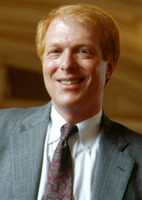 |
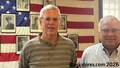
| Harry C. Payne |
According to reports in the Atlanta Journal-Constitution, the Woodward Academy president had given an upbeat speech just hours before to staff and faculty at the College Park, Ga., school to kick of the 2008 semester.
A suicide note was found in his eighth-floor room in the midtown hotel but police declined to reveal its contents. The Fulton County Medical Examiner's Office ruled the death a suicide, according to the Journal-Constitution.
Payne was the 14th president of Williams, serving from 1994 to 1999. The great room in Goodrich Hall was renamed for him; the Harry C. Payne Williams College Professorship in the Liberal Arts is designed to promote and support interdisciplinary teaching and research.
He was instrumental in the construction and renovation of the college's $45 million Science Center and updating of Griffin Hall, the college's oldest classroom building. He also helped launch planning for the '62 Center for Theatre and Dance.
"We benefit here at Williams every day from initiatives carried out or begun during the presidency of this wonderfully decent and caring man who dedicated his professional career to expanding the intellectual lives of students," posted Williams President Morton O. Schapiro on the college's Web site Tuesday. "His influence lingers even in the construction of our North and South Academic Buildings, designed to achieve for the humanities and social sciences what, under his stewardship, the Science Center was able to do for the natural sciences."
Payne earned his bachelor's, master's and doctoral degree from Yale University. He was president of Hamilton College in New York prior to Williams. He resigned from Williams to lead the 108-year-old Woodward. Reportedly the largest independent school in the nation with an enrollment of 2,850, the school was established as the Georgia Military Academy and serves Grades prekindergarten through 12 in five schools in the College Park area.
According to news reports, Payne had been successful in leading Woodward through a multimillion-dollar capital campaign and taught a history class in the Upper School.
Ben Johnson, a close friend and the school's chairman of the board, said told the Journal-Constitution on Tuesday that "I've never seen him more upbeat."
"It is as close to totally inexplicable as anything I've ever dealt with," he said.
Payne leaves a wife, Deborah, and two grown sons, Jonathan and Sam, and brother, Richard, of Andover. The funeral was scheduled for today at 3 at Arlington Cemetery in Atlanta.
Atlanta Journal-Constitution Obituary
Schapiro's Post
Payne's Legacy