Governor Creates Education Finance Commission
 |
Both recommendations come from the Readiness Project, a statewide initiative involving more than 200 educators, business leaders and community leaders developing a strategic blueprint for the next phase of education reform in the state. The goal is to build on the reform of 1993 and prepare the state's students to compete globally by 2020.
"Education transforms lives, and there is no better way to position Massachusetts for prosperity in the 21st century than to prepare our children with the skills they need to compete anywhere," said Patrick, surrounded by students at the Dorchester Boys & Girls Club on Monday. "It's time to build on the remarkable achievements of the past 15 years, and take public education to the next level."
The project was formed more than a year ago; its full report — said to be made up of 50 initiatives — is being released Wednesday.
The Readiness Finance Commission, headed by John Fish, president of Suffolk Construction Co., and Gloria Larson, president of Bentley College and chairman of the Greater Boston Chamber of Commerce, will examine the calculation methods of the Chapter 70 Foundation. The state education aid was established by the Education Reform Act of 1993 to determine a minimum net spending for each school district.
The budget has not been recalculated in 15 years even though school districts' average spending is 18 percent above the foundation level. Local funding, primarily in the form of property taxes, constitutes the bulk of education spending and property owners around the state feel the burden heavily, say administration officials.
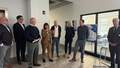
.jpg) Gov. Deval Patrick and Bentley College President Gloria Larson. Gov. Deval Patrick and Bentley College President Gloria Larson. |
"The governor has made a call to action to transform education in Massachusetts. It's our job to find the most efficient and financially responsible way to fund it,” said Larson in a press statement. "What's clear is that we can't afford not to do it."
Since the passage of the Education Reform Act in 1993, Massachusetts leads the nation in education achievement, with its students consistently scoring at the top on national tests, said the governor.
Notwithstanding this success, when measured against top-scoring students in other nations, Massachusetts does not rank in the top tier, and after 15 years of education reform, achievement gaps persist throughout the system between black and Latino students and white and Asian students.
"Addressing the achievement gap requires that teachers are given the tools and the time to focus on the educational needs of each child," said Paul Reville, the new secretary of education, in the press release.
Among the recommendations to reduce the achievement gap and to create successful students of all ages include a comprehensive, statewide child and youth data and reporting system that would lead to development of the "Readiness Passport" for every child. The passport would provide parents, guardians and agencies with a tool to document key elements of a child's educational experiences as well as to chronicle various services, interventions, supports, data and performance evaluations related to that child.
| |
It also recommends the immediate establishment of a task force to establish a statewide birth-to-school age strategy to ensure the healthy development of children, particularly those from low-income families; and "Commonwealth Child and Youth Readiness Cabinet," an intergovernmental agency cabinet chaired by the secretaries of Education and Health and Human Services and including a stakeholder advisory group.
The governor's proposed budget for fiscal 2009 includes a $368 million increase in education funding, including a record level of school aid to cities and towns and significant increases in universal prekindergarten and full-day kindergarten programs.
"Quality early education is one of the best predictors of educational success and full-day kindergarten is an essential part of this strategy," said Patrick. "My administration will continue to support and expand these areas of education."
The full action agenda will be released at the first-ever joint meeting of the state's education boards: the Board of Early Education and Care, the Board of Elementary and Secondary Education, the Board of Higher Education and the University of Massachusetts Board of Trustees.
Members of the Readiness Finance Commission also include:
Chris Anderson, president of the Massachusetts High Technology Council; Jeffrey Bussgang, general partner, Flybridge Capital Partners; Jim Caradonio, superintendent of the Worcester Public Schools; Jack Connors, founding Partner and chairman of Hill, Holliday, Connors, Cosmopulos Inc.; Mark Edwards of Edwards & Co.; Michael Flynn, 2008 Teacher of the Year; John Hamill, chairman of Sovereign Bank; Wendell Knox, president and CEO of Abt Associates; Grace Lee, first deputy treasurer/general counsel of the office of the state treasurer; Karen Hawley Miles, executive director of Education Resource Strategies; professor Tom Payzant of Harvard Graduate School of Education; Marta T. Rosa, director of government affairs and senior interim director of Wheelock College; Jackie Jenkins-Scott, president of Wheelock College; Joe Tucci, chairman, president and CEO of EMC Corp.; Michael Widmer, president of the Massachusetts Taxpayers Foundation, and Anne Wass, president of the Massachusetts Teachers Association.