image description

Winthrop Continues to Draw Crowds With 'Counting on Grace'
By Lyndsay DeBordSpecial to iBerkshires
Print Story | Email Story
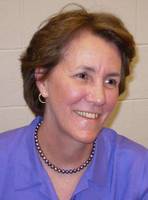
Elizabeth Winthrop
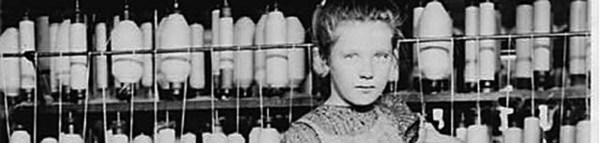
WILLIAMSTOWN — It's been two years since Elizabeth Winthrop's "Counting on Grace" was published but local interest doesn't seem to have waned for the novel inspired by the famous Lewis Hine picture of a 12-year-old mill girl in Vermont.

Author of more than 50 books for adults and children, Winthrop was greeted by a sizable crowd at the House of Local History last week and organizers had to rearrange chairs to fit everyone into their small meeting room.

The author, who has spoken about her novel in towns across Vermont and Massachusetts, discussed her creative process and her journey to find the girl behind the photo.

"I see this as a book for 9- to 90-year-olds," Winthrop said, adding, "I don't like the way publishers gentrify books."

She was commissioned to write a book in 1999 and had the idea of mixing a real character with a fictional setting. She first saw the photograph of the little girl at a show of Hine's work at the Bennington (Vt.) Museum. She later learned that the same image had been used on a postage stamp.

"It was her face that drew me," said Winthrop. "It is a beautiful face, but a world-weary face."

In the novel, main character Grace Forcier deals with the struggles of mill life. Winthrop, who lives part time in Williamstown, said the novel, set in 1910 in North Pownal, Vt., was "very much a local setting."

While the character is fictional, Winthrop was intrigued by the real-life story of the "sad little mill girl" in the photograph whom Grace was based on. After her novel was finished, she spent a great deal of time researching the life of the young mill worker who had been identified as Addie Laird.

Where others had failed, Winthrop discovered information about the girl, whose name, she found out, was really Addie Card. Through her research at the National Archives in Pittsfield, she found more details about Addie, who lived to the age of 94. (Writer Joe Manning would also take up the search for Addie, including tracking down her relatives.)

Winthrop felt that the spirit of Addie haunted her. When her search for Addie's family had stalled, a local library offered one last place to check.

The librarian returned with a book containing Card's marriage certificate. "'It's as if Addie pushed the book off the shelf,'" the librarian told Winthrop.

As Winthrop was talking about one of Addie's relatives who thought unfavorably about her, one of Hine's black-and-white photographs fell off the wall.

"See, she haunts me to this day," said Winthrop.

Denise Peltier, of Pittsfield, said her home-schooling family had read many of Winthrop's books, including "Counting on Grace." Peltier's grandmother had worked in mills in the early 1900s in upstate New York.

"That was a big connection for me," said Peltier.

"When you start a book, you have no idea where it's going to take you. Sometimes it's a wild ride," said Winthrop.


Some of her writing processes allowed her to visualize the setting of her novel, she said. "When I have a setting, the story moves."

Upon realizing she only needed to travel six miles, Winthrop drove to the site of the North Pownal cotton mill (later the Pownal Tanning Co.) along the Hoosic River where Addie had worked. There's a park where the mill once stood.

"I went back and I stood on the site of the mill many times when I was writing this book. I would position myself on the bank above the river and close my eyes and imagine [the mill] stood there still. And behind me I could imagine that girl in a dirty smock."
  Photo by Lewis Hine
Addie Card, third from left, with co-workers and sister Annie, to her right


Winthrop's research encouraged her to look into her own family's background. Her grandmother on her father's side was Eleanor Roosevelt's first cousin, so the writer knew that part of her family history. But she didn't know much about her mother's side.

"No one had ever asked about her life," said Winthrop, who discovered that one of her relatives on her mother's side had been a spy for MI5, Britain's military intelligence agency.

Life for Children in the Mills

Through her research, Winthrop was able to gain insight into the lives of children in the mills. From the photo of Addie alone, she learned that the girls working in the mills had to wear their hair tied up because of the danger of being scalped if their hair got caught in the spinning frame. She also learned that Addie would have worked 12 hours a day, six days a week, for $2.50 a week.

"That's a lot of work for a 12-year-old," said Winthrop.

The author showed another Hine photograph of boys working in a coal mine whose job it was to pick out the bad pieces of coal sliding down chutes. An older boy, in the background, holds a pole to prod the others and keep them awake so they wouldn't fall into the chute.

"The dirt in the air is palpable," said Winthrop about the photo.

Along with Hine's photographs of mill workers, his pictures of Ellis Island immigrants are famous. He also followed the children into America and worked from 1908 to 1917 for the National Child Labor Committee, which was pushing for an end to child labor. For more photos by Hine, click here. For a biography on Hine, click here.
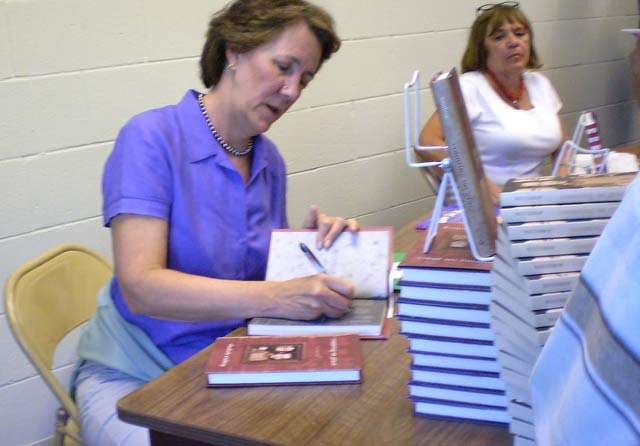

Photo Lyndsay DeBord
Elizabeth Winthrop signs copies of 'Counting on Grace.
Winthrop credited the photographer for why the photo of Addie drew her in: "Because he takes the photograph at Addie's level, he forces us to look directly into her eyes."

The author also said the problem of child labor has not gone away and questioned what Hine would have to say today about children workers in other countries.

"Because he saw each one of them as a separate human being, he forces us to do the same — and that is why his pictures haunt us to this very day — and that is why I had to find Addie," Winthrop said.
If you would like to contribute information on this article, contact us at info@iberkshires.com.

Puppets Teach Resilience at Lanesborough Elementary School

By Breanna SteeleiBerkshires Staff

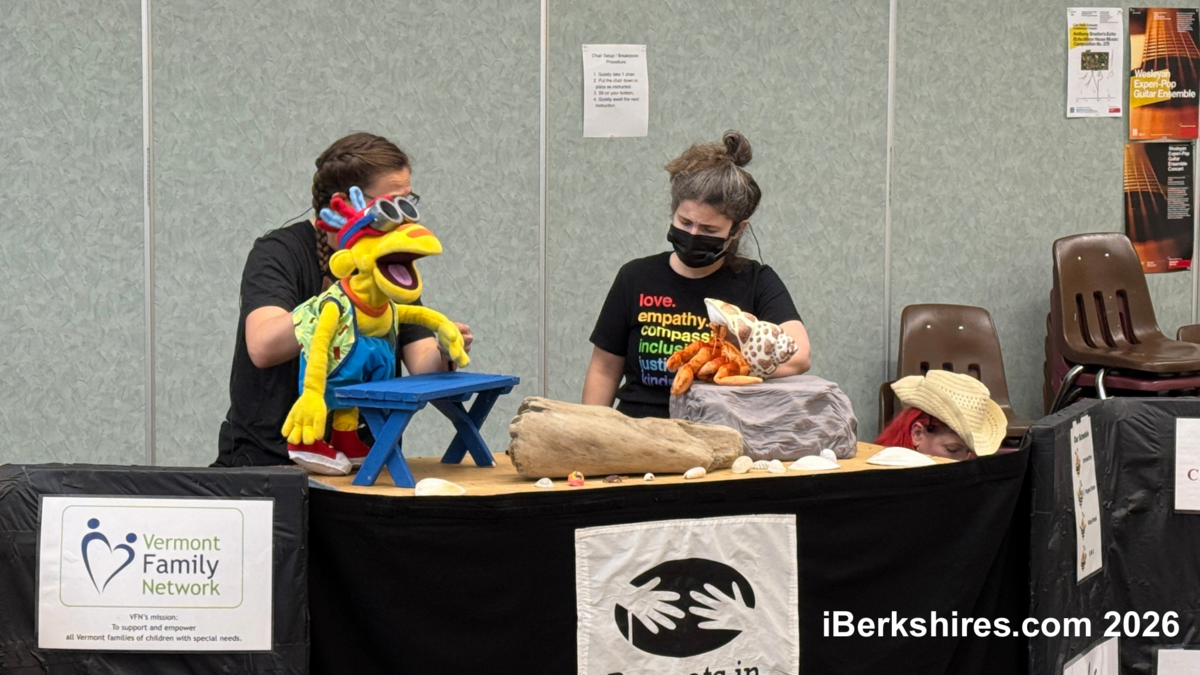
The kids learned from puppets Ollie and a hermit crab.

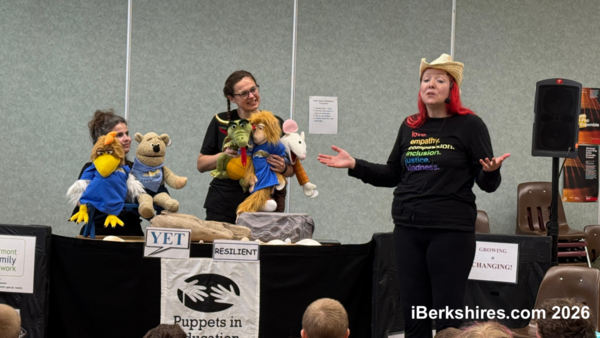
LANESBOROUGH, Mass. — Vermont Family Network's Puppets in Education visited the elementary school recently to teach kids about being resilient.

Puppets in Education has been engaging with young students with interactive puppets for 45 years.  

The group partnered again with Bedard Brothers Chevrolet, which sponsored the visit. 

Classes filtered through the music class Thursday to learn about how to be resilient and kind, deal with change and anxiety, and more.

"This program is this beautiful blending of other programs we have, which is our anxiety program, our bullying prevention and friendship program, but is teaching children the power of yet and how to be able to feel empowered and strong when times are challenging and tough," said program manager Sarah Vogelsang-Card.

The kids got to engage with a "bounce back" song, move around, and listen to a hermit crab deal with the change of needing a new shell.

"A crab that is too small or too big for its shell, so trying to problem solve, having a plan A, B and C, because it's a really tough time," Vogelsang-Card said. "It's like moving, it's like divorce of parents, it's changing schools. It's things that children would be going through, even on a day to day basis, that are just things they need to be resilient, that they feel strong and they feel empowered to be able to make these choices for themselves."

The resiliency program is new and formatted little differently to each of the age groups.

"For the older kids. We age it up a bit, so we talk about harassment and bullying and even setting the scene with the beach is a little bit different kind of language, something that they feel like they can buy into," she said. "For the younger kids, it's a little bit more playful, and we don't touch about harassment. We just talk about making friends and being kind. So that's where we're learning as we're growing this program, is to find the different kinds of messaging that's appropriate for each development level."

This programming affirms themes that are already being discussed in the elementary school, said school psychologist Christy Viall. She thinks this is a fun way for the children to continue learning. 

"We have programs here at the school called community building, and that's really good. So they go through all of these strategies already," she said. "But having that repetition is really important, and finding it in a different way, like the puppets coming in and sharing it with them is a fun way that they can really connect to, I think, and it might, get in a little more deeply for them.

Vogelsang-Card said its another space for them to be safe and discuss what's going on in their life. Some children are afraid because maybe their parents are getting divorced, or they're being bullied, but with the puppets, they might open up and disclose what's bothering them because they feel safe, even in a larger crowd. 

"When we do sexual abuse awareness that program alone, over five years, we had 87 disclosures of abuse that were followed up and reported," she said. "And children feel safe with the puppets. It makes them feel valued, heard, and we hope that in our short time that we're together, that they at least leave knowing that they're not alone."

Bedard Brothers also gave the school five new puppets to use. Viall said the puppets are a great help for the students in her classroom, especially in the younger grades. 

"Every year, I've been giving the puppets to the students. And I also have a few of the puppets in my classroom, and the students use them in small groups to practice out the strategies with each other, which is really helpful," she said. "Sometimes the older students, like sixth graders, will put on a puppet show. They'll come up with a whole theme and a whole little situation, and they'll act it out with the strategies for the younger students. It's really cute, they've done it with kindergarteners, and the kids really like it."

Vogelsang-Card said there are 130 schools in Vermont that are on the waiting list for them to come in. Lanesborough Elementary has been the only Massachusetts school they have visited, thanks to Bedard Brothers. 

"These programs are so critical and life-changing for children in such a short amount of time, and we are the only program in the United States that does what we do, which is create this content in this enjoyable, fun, engaging way with oftentimes difficult subjects," she said. "Vermont is our home base, but we would love to be able to bring this to more schools, and we can't do this without the support of community, business funders or donors, and it really makes a difference for children."

The fourth-grade students were the first class to engage with the puppets and a lot of them really connected with the show.

"I learned to never give-up and if you have to move houses, be nervous, but it still helps," said William Larios.

"I learned to always add the word 'yet' at the end," said Sierra Kellogg, because even if she can't do something now, she will be able to at some point.

Samuel Casucci was struck by what one of the puppets talked about. "He said some people make fun of him if he dresses different, come from different place, brings home lunch, it doesn't matter," Samuel continued. "We're all kind of the same. We're all kind of different, like we have different hairstyles, different clothes. We're all the same because we're all human."

"I learned how to be more positive about myself and like, say, I can't do this yet, it's positive and helpful," said Liam Flaherty.

The students got to take home stickers at the end of the day with contact information of the organization.

View Full Story

More Williamstown Stories