Coakley, Patrick Team Up For Solar Generation
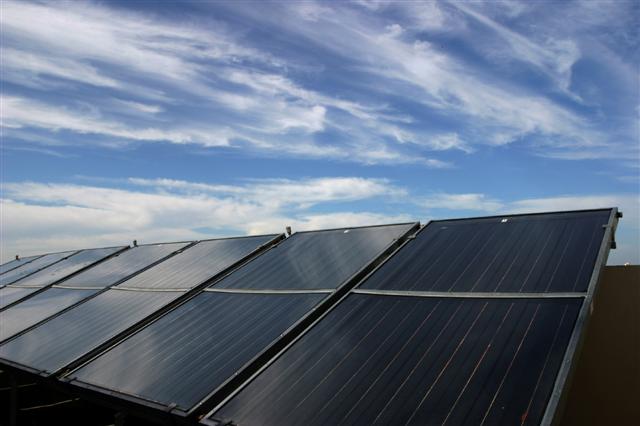 The agreement, if approved by the Department of Pubic Utilities, would allow the state's investor-owned utilities to collaborate on large-scale solar generation facilities. |
Gov. Deval Patrick and Attorney General Martha Coakley pledged their commitment to solar energy development by collaborating through a new state entity with the state's four investor-owned electric distribution utilities. The plan is designed to maximize the benefits of renewable power through the Green Communities Act and help meet Patrick's goal of generating 250 megawatts in solar energy by 2017.
Under the proposal, the new entity would be responsible with identifying, developing and financing large-scale solar-power generation projects rather than having each utility try to separately develop the infrastructure to service its territory.
"Development of solar generation through a statewide pool will drive down costs through economies of scale and spread the costs and benefits across the broadest base of customers," said Coakley, a North Adams native whose office serves as ratepayer advocate in proceedings before the Department of Public Utilities.
"Solar power is a key component of our clean energy future," said Patrick. "I am delighted to work with Attorney General Coakley on an innovative new model to bring renewable energy — and the jobs that come with it — across the state at the lowest cost possible."
The Green Communities Act, the comprehensive energy reform legislation enacted last year, allows each of the investor-owned utilities in Massachusetts until the end of 2012 to develop up to 50MW of photovoltaic generating capacity.
Given disparities in geographic area and customer base between the four utilities – NSTAR, National Grid, Unitil/Fitchburg Gas & Electric and Western Massachusetts Electric Co. – the Coakley's office has agreed to work with the Executive Office of Energy and Environmental Affairs and its Department of Energy Resources to identify a unified and streamlined mechanism to serve consumers in all four service territories and develop the most cost-competitive solar projects. That plan will need to be approved by the DPU.
In June, the Attorney General's Office responded to WMECO's proposal to develop solar generation, the first of its kind under the act, by raising the statewide pooling concept as a way to provide more solar power generation to a wider customer base at lower cost. As part of a settlement reached in June and supported by DOER, the utility will deploy 6MW of solar power while agreeing to explore the statewide pool for future development.
The venture would be charged with developing the most cost-competitive projects statewide through a series of procurements for large-scale (100kW or larger) projects. The competitive procurement process will identify the most cost-effective projects for solar PV installation on commercial and industrial rooftops, municipal and state facilities, and other sites suitable for solar energy development.
"The goal is to drive down the installed cost of solar power," said DOER Commissioner Philip Giudice. "As the industry grows, we will get better prices. The more we do, the less we pay."