EASTHAMPTON, Mass. — Eight Berkshire County women have been selected by The Women's Fund of Western Massachusetts as members of the 2010-11 Leadership Institute for Political Impact.
A new initiative of the Women's Fund, the 10-month curriculum is designed to create a cadre of effective and powerful women leaders in the region and to train local women to run for elected office.
Focusing on areas such as community organizing, the legislative process and policy-making, fundraising and campaigning for office, LIPI is designed to give women the tools — but more importantly the confidence — they need to become political leaders.
"We believe that a critical way to address the problems facing our communities is to engage the talents and the input of women at all levels and in all sectors of decision making," said Carla Oleska, chief executive chairman of the Fund. "With this project we will create wave after wave of confident, skilled, politically savvy women leaders who will be at the forefront of strengthening our communities."
The women:
Nakeida Bethel-Smith, an outreach educator at the Elizabeth Freeman Center
Gwendolyn Hampton VanSant, co-founder and director of Berkshire Resources for the Integration of Diverse Groups and Education, or BRIDGE
Ariane C.Blanchard, Great Barrington Housing Authority Commission member and volunteer BRIDGE Youth Corps coordinator
Eliza Crescentini, executive director of Berkshire South Regional Community Center
Tanya A. Hills, director of CHP-South Berkshire Youth Coalition
Susan Olshuff, fundraising consultant in Lenox
Marla N. Robertson, mentoring program director for Railroad Street Youth Project
Becky Schirber, an acupuncturist and chef in Lenox
They were publicly recognized as new Leadership Institute members on May 6 at the Delaney House in Holyoke. Their yearlong participation in the institute begins in June.
If you would like to contribute information on this article, contact us at info@iberkshires.com.
Your Comments
iBerkshires.com welcomes critical, respectful dialogue. Name-calling, personal attacks, libel, slander or foul language is not allowed. All comments are reviewed before posting and will be deleted or edited as necessary.
No Comments
Texas-Style Barbecue Opens for Lunch, Takeout in Downtown Pittsfield
By Breanna SteeleiBerkshires Staff
PITTSFIELD, Mass. — FireKing BBQ is making it easier to find its smoked ribs — they're in the Clocktower Building in downtown Pittsfield.
Owner Ethan Sumner has been operating as a catering service for more than a decade, with a mobile smoker for his award-winning barbecue.
"We specialize in low and slow cooking as well as grilling over charcoal and hardwoods," he said. "We love using cherry wood, apple wood, and a little kiss of hickory wood in all of our cooking. Most of our cooking, I should say. And we don't use any propane. I'm a purist in that sense. I love cooking over open flame and hot coals."
He works alongside Robear Robespierre, who helps with Sumner's sales and distribution.
Sumner said he spends hours cooking his meat, like his baby back ribs that won him first place in the 2019 Grillsdale competition in New York State. It takes him about six hours, two of them smoking at 250 degrees, to cook the ribs.
He said he wanted a space to be able to keep up with demand. Business dropped off every winter because people think of barbecue as outdoor food, and while he will cook outside even in negative temperatures, an indoor space lets him serve year-round, including football season and the Super Bowl.
He is now located at 75 South Church St. and he is no stranger to the building. Sumner had run the publication Berkshire's Best: Buys, Business, and Beyond out of the building so he knew its possibilities.
"It's funny how I've come full circle here back into the building. So I've always kind of seen this space. But I was never into culinary then. I was into publishing. So this is 13 years in the making, and I had my paper for 13 years, which again, is coincidental," he said. "So I just really like this space. It's modern. It's nice. It's clean, and that's how my food is. It's clean. It's fresh, and it's local, just like me."
Sumner is originally from New York City and made his way to Great Barrington with his family. One of the inspirations behind his business was his father, who loved to grill outside.
"Even when we lived in New York City, he would go on the terrace of our 36-story apartment building on the third floor there was a terrace, and he would always cook on a Weber charcoal grill with charcoal, and I always was fascinated by that. And he always loved cooking outside, and he loved cooking over charcoal. And he would always make this mustard and tea leaf steak," he said. "That was a standout. It was a family favorite of ours and I could always taste the difference between something that was cooked [with charcoal]. Even when I was 7 years old I could, I always craved that certain taste that you could only get from charcoal."
He wants customers to know he cares about his food and its quality, making sure he gets the best ingredients for his dishes.
"I want them to know that. I'm a barbecue guy, but I also offer so much more. I consider myself somebody who loves cooking over open flame, smoking meats, but I also love using fresh ingredients to create deli sandwiches and fresh salads," Sumner said. "So I want people to associate FireKing with quality. I also want to point out that I get a lot of my meat from Mazzeo's meat market. So I don't sacrifice quality, which I think is half the battle in doing what I do is getting quality meats and produce."
He hopes customer will find the eatery a comfortable atmosphere to enjoy their lunch and hangout, or grab a sandwich and go.
"They could grab a pulled pork sandwich in about a minute and a half flat and be out of here if they want to. So there's no pressure," he said. "I love the community. I love talking to people here. Everyone in this community has been super kind and gracious, and I appreciate them. And I want to give back what they've given me."
He also plans to have DoorDash and barbecue pickup packages for families, and to have vacuum-sealed, pre-cooked smoked ribs with reheating instructions, also available for local pickup.
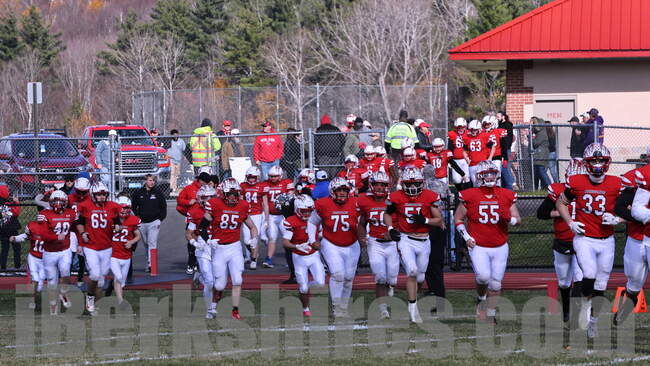
The Cooperative Hoosac Valley football program will resume football related activities on Monday, Sept. 28, after being on “pause” for the past nine days. click for more
Hoosac Valley High School has postponed this weekend’s football games following a reported alleged hazing incident involving a large number of football players, the athletic director announced Friday afternoon. click for more
The State Public Health Laboratory confirmed WNV in a mosquito sample collected in Clarksburg on June 16. On Monday, the public was notified of the detection on the town’s website.
click for more
Cassidy Flynn scattered five hits in a complete-game effort in the circle as Lenox upset top-seeded Hoosac Valley, 3-2, in the quarter-finals of the Division 5 State Tournament. click for more
Brayden Durant struck out seven and walked one in a complete-game effort on the mound Saturday to pitch the Drury baseball team to a 6-0 win over Keefe Tech in the quarter-finals of the Division 5 State Tournament at Joe Wolfe Field. click for more