Pittsfield Housing Project Adds 37 Supportive Units and Collective Hope
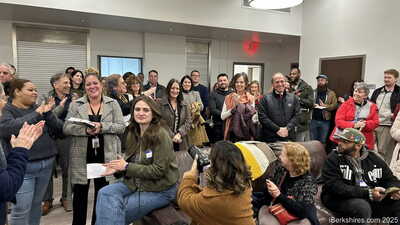 |
| The Housing Resource Center, funded by Pittsfield's American Rescue Plan Act dollars, hosted a celebration for a project that is named for its rarity: The First. |
PITTSFIELD, Mass.— A new chapter in local efforts to combat housing insecurity officially began as community leaders and residents gathered at The First on to celebrate a major expansion of supportive housing in the city.
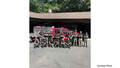
The ribbon was cut on Thursday Dec. 19, on nearly 40 supportive permanent housing units; nine at The First, located within the Zion Lutheran Church, and 28 on West Housatonic Street. The Housing Resource Center, funded by Pittsfield's American Rescue Plan Act dollars, hosted a celebration for a project that is named for its rarity: The First.
"What got us here today is the power of community working in partnership and with a shared purpose," Hearthway CEO Eileen Peltier said.
In addition to the 28 studio units at 111 West Housatonic Street and nine units in the rear of the church building, the Housing Resource Center will be open seven days a week with two lounges, a classroom, a laundry room, a bathroom, and lockers.
Erin Forbush, ServiceNet's director of shelter and housing, challenged attendees to transform the space in the basement of Zion Lutheran Church into a community center. It is planned to operate from 8:30 a.m. to 4:30 p.m. year-round.
"I get calls from folks that want to help out, and our shelters just aren't the right spaces to be able to do that. The First will be that space that we can all come together and work for the betterment of our community," Forbush said.
"…I am a true believer that things evolve, and things here will evolve with the people that are utilizing it."
Earlier that day, Executive Office of Housing and Livable Communities Secretary Ed Augustus joined Lieutenant Governor Kim Driscoll and her team in Housatonic to announce $33.5 million in federal Community Development Block Grant funding, $5.45 million to Berkshire County.
He said it was ambitious to take on these two projects at once, but it will move the needle. The EOHLC contributed more than $7.8 million in subsidies and $3.4 million in low-income housing tax credit equity for the West Housatonic Street build, and $1.6 million in ARPA funds for the First Street apartments.
"We're trying to get people out of shelter and off the streets, but we know there are a lot of people who are couch surfing, who are living in their cars, who are one paycheck away from being homeless themselves," Augustus said.
"There are a lot of folks who are housing insecure right now because of all of the challenges with the cost of housing, the cost of energy, the cost of health care, all the things that we know— and quite honestly, at the federal level, everything is being made worse every single day. The safety net that we have from the federal government is being frayed and attacked every single day."
He pointed to the shootings that happened at Brown University in Rhode Island and at Bondi Beach in Australia, as well as the murder of filmmaker and actor Robert Reiner and his wife, Michele, that occurred the same week, explaining, "This is a tough week."
"This is you as the Pittsfield community who collectively lit a candle in a time and a period of darkness, and I think that is really profound. That is a big, big deal, and hopefully you all draw some hope and inspiration," he added.
"We can push back. We can make a difference. We don't have to just take it. We don't have to just be victims from what we're hearing. We can act locally. We can move the needle. We can help people. We can make a difference."
Former Mayor Linda Tyer was able to see the outcome of her administration's $6.5 million ARPA contribution, and was applauded by the room. Mayor Peter Marchetti said one of the great things about becoming mayor after another great mayor is that you get to inherit all her successes.
"We wouldn't be able to celebrate a lot of today without your leadership, without your commitment, and without your dedication of ARPA funds. This room down here is funded wholly by the City of Pittsfield, and you can't get away from not acknowledging that," he said.
"You made the decision, you created the path through your investment in ARPA funds that wouldn't otherwise have been possible. I was committed to building on this momentum as we have additional housing opportunities coming for the next few years."
Just a year ago, the community gathered upstairs at the Zion Church to celebrate the approximately $16 million project's ceremonial groundbreaking. Marchetti pointed out that two days before he was inaugurated in early 2024, he was on a Zoom call with Forbush, trying to figure out what Pittsfield would do for emergency shelter that winter.
"I want to acknowledge the folks at Zion Lutheran Church. We, the City of Pittsfield, could not have done this alone. Your collaborative efforts have helped this project become what it is," he said.
"…We wouldn't be standing here today, welcoming this new opportunity, and to the folks at Hearthway, with you at the helm, I know that we'll succeed with what we're doing."
State Sen. Paul Mark explained, "We all needed a day like today, but I needed a day like today." He was at the CDBG announcement earlier that day, where his region received 22 percent of the awards, and then took a tour of the Eagle Mill development in Lee with Augustus.
"2025 has been a tough year to be in government. It's been a tough year to watch it, I'm sure. It's even harder on the inside. There is so much anger and chaos and cynicism, and it looks like progress and work that we have all been trying to do and have made such great strides on has not just been set back, but has been pushed backwards," he said.
"...This is an amazing project, and I think it says a lot about what kind of community Pittsfield is and what kind of a place the Berkshires are."
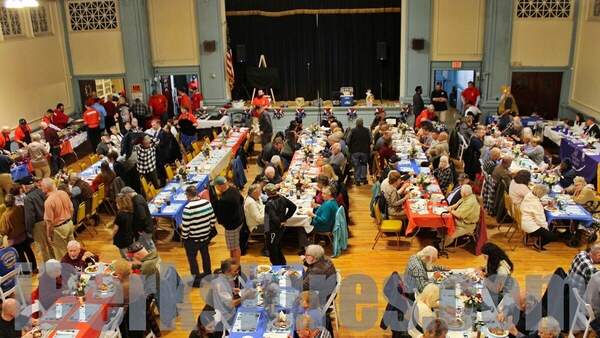
Before the ribbon-cutting ceremony, the public was invited to tours of both facilities. Many thanks were extended to supporters during the event, and a billboard thanked Berkshire Health Systems, Lee Bank, Berkshire Bank, MountainOne, Greylock Federal Credit Union, Adams Community Bank, Pittsfield Cooperative Bank, and Molari as generous sponsors.