Pittsfield Adult Learning Center OK For New North St. Home

By Joe DurwinPittsfield Correspondent
Print Story | Email Story
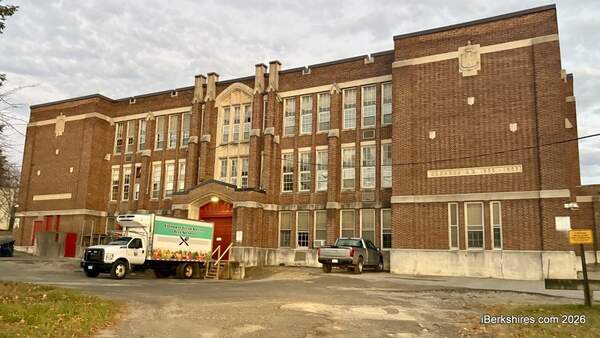
PITTSFIELD, Mass. — The Adult Learning Center will relocate from its longtime home at 10 Lyman St. to a new space at 141 North St., following a 7-4 vote by the City Council to authorize a lease at the new location.

The new five-year lease, which was unanimously approved by the city's School Committee at its June 6 meeting, was the result of a request for proposals put out by the center in February as the school department's current lease with Massery Realty for the Lyman Street building is set to expire June 30. 

An offer from GDL Associates for equivalent quarters at the Brothership Building (formerly the W.T. Grant building) on North Street would save about $21,000 per year, or $105,000 over the next five years, from the city's school budget expenditures.

Kristen Behnke, school business administrator for the center, said the request for proposals and bidding process was a requirement of Massachusetts General Law, rather than a reflection of any dissatisfaction with their current location. The North Street space offered by GDL Associates rated higher overall on a set of criteria laid out in the RFP, in addition to its lower price.

"It's a nine dollar per square foot price, as opposed to Massery Realty, which came in at $13 per square foot," said Behnke.

The four councilors in opposition Christopher Connell, Melissa Mazzeo, Anthony Simonelli, and Christine Yon, cited concerns about the center being a good fit in this largely retail-oriented sector of the city.

"I think that location should be set aside for retail," said Ward 7 Councilor Anthony Simonelli, "It's prime real estate right downtown on our North Street."

Other tenants in the Brothership Building include both retail stores such as Persnickety Toys and Bisque Beads and Beyond as well as office spaces, including Meridian Associates, which provides mental health outreach services.

Ward 1 Councilor Christine Yon pointed to a five-year planning document completed by Downtown Inc. last year that called for preserving  called for preserving the first-floor spaces on North Street for retail, restaurant or cultural uses. 


"When we do things like Juvenile Court, what that creates on North Street is what they call 'retail black holes,'" said Yon. "You have to walk a long distance to the next retail; it doesn't make it conducive for shoppers or even retailers to want to set up little retail shops on North Street."

Ward 2 Councilor Kevin Morandi said the Adult Learning Center would be an additional draw and reason for people to frequent the revitalized North Street area.

"I know we want to keep particularly businesses, retail, going in there, but we do have empty storefronts," Morandi said in support of approving the lease.

"This is an opportunity to not only save the taxpayers money, but to bring more people downtown," agreed Ward 5 Councilor Jonathan Lothrop.

Ward 6 Councilor John Krol said he was sympathetic to the concerns about losing space that was prime for retail on North Street, but questioned whether it was the council's role to impose that onto the ADL's lease approval.

"We're not really a permitting authority here, we're just accepting a lease," said Krol. "Because frankly, if Mildred Elley wanted to go into this space, we wouldn't have any control over that, it would just happen."

The Adult Learning Center provides adult continuing education classes, GED testing, family literacy programs and a number of other free community resources. About 125 individuals utilize the center daily, between day and evening classes.

Tags: adult learning,   city council,   North Street,   retail,   
If you would like to contribute information on this article, contact us at info@iberkshires.com.

BRTA Hears From New ITS System to Help With Rides

By Breanna SteeleiBerkshires Staff

PITTSFIELD, Mass. — The Berkshire Regional Transit Authority heard from an "intelligent transportation system" company on what it can bring to the bus service.

Spare Labs presented to the board last week, showcasing its platform for demand-response services, fixed-route information, service planning, and rider engagement. 

Spare representatives said the company has been working with transit authorities across the state and hope to "de-risk" the service with software changes.

"We know how tough it is to make a software change. It's no small feat. We've done it quite a few times in the states, so you're now working off of a blank piece of paper. We understand what your partners have done, positives and negatives, so you're building with that in mind," said senior growth manager Joshua Bethel.

Bethel emphasized a hands-on implementation where they will work with BRTA staff to prepare data, test the system, train dispatchers, drivers, and administrators, and help with rider communications.

"One example of how we've de-risked is the MBTA, one of the largest paratransit services [The Ride] in North America. In their switch to Spare, they saw immediate results. So our kind of implementation process is extremely white glove," he said. "We like to get in the trenches. We like to be with you on site, opening up a lot of times. We're here 4 a.m. when the days open, working with you. So look at this as an active partnership." 

Bethel gave an example on how the system helped the Massachusetts Bay Transit Authority with a training approach.

"Internally, every stakeholder will have some type of training, whether it's a dispatcher, a driver, admins. You all will have some level of training and different permissions in the system. Because of that approach, MBTA saw immediate great results," he said. "Their on-time performance pre-spare was 88 percent. Within 24 hours of launch, they were up to 95 percent, and they are continuing to grow."

Spare described several ways riders could interact with the system — a BRTA-branded smartphone app, online booking through a web portal, phone booking with a human dispatcher, text-based interactions, and an AI phone agent for routine requests, such as booking, canceling, or checking the status of a trip.

"One of the biggest differences that riders will see is everything will truly be at their fingertips, and we have multiple ways we're going to stay up to date based on what's available to them, we obviously will have a router app on the smartphone, but we offer availabilities for people who don't have that," Bethel said. "So, for someone who doesn't have a smartphone but they have access to a computer, we have a webbooker. For someone who doesn't have access to a computer but they need to call in, we also will be teaming what you have from a dispatcher standpoint. We also offer an AI call taker who can answer frequently asked questions, and when wait time is too hard, too high, automatically clicks in and says, 'Hey, this is the final wait time. You can call, you can cancel.' So effectively, with the technology, you can reduce wait times as you grow."

Their platform could also account for rider accessibility needs when matching trips to vehicles and could flag cases where a rider's booking did not reflect their usual needs. It can also have caregivers and others book on a rider's behalf if need be for medical appointments and more.

Earlier in the meeting, BRTA Deputy Manager Benjamin Hansen spoke on the ridership numbers citing inaccurate data on how many are riding because of the outdated system. Their system will be able to know in real time when a passenger boards and when one gets off. 

Spare also described tools intended to support route and demand-response planning, including; reporting by route, stop, time of day, and rider; integrations with passenger counting hardware and other systems; real-time vehicle and trip information; traffic-aware routing, which could use Google traffic data; and alerts for unusual patterns or apparent data discrepancies.

They said data could be brought into the platform from existing hardware and configured into reports for BRTA. The Spare team would work with BRTA during implementation to decide which data to import and which measures the agency needs. 

Many of the questions posed by the board were about the selling of data and how rider data is protected. Spare representatives said the company does not sell rider data and that BRTA would control the permissions as the data would belong to BRTA. As for a government agency asking for the data, they were unsure and said they would have to verify the rules for sharing information, but added they are compliant with the Americans With Disabilities Act and federal and state law. 

View Full Story

More Pittsfield Stories