image description
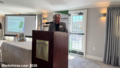
A crowd of about 50 residents protested a proposed methadone clinic.

Crowd Rallies Against Newly Proposed Pittsfield Clinic Site

By Joe DurwinPittsfield Correspondent
Print Story | Email Story

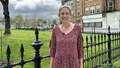
City Councilor John Krol wants the clinic to be located somewhere else.
PITTSFIELD, Mass. — About 50 residents and several local officials gathered at an impromptu demonstration in the parking lot of Dwyer Funeral Home Monday afternoon to voice concerns about plans to locate an addiction treatment clinic in a largely residential part of the Morningside neighborhood.

Worcester-based Spectrum Health Services intends to open a clinic for methadone maintenance recovery services at the site of a former medical practice on Stoddard Avenue.

Neighborhood residents and other effected parties acknowledged the state-mandated need for additional methadone maintenance alternatives in the city, but said the proposed spot on this largely residential street is not appropriate. 

While the 15 Stoddard Avenue facility, owned by Pittsfield Board of Health Chairman Dr. Phillip Adamo, is positioned directly across Route 7 from Berkshire Medical Center, opponents find its less than half mile proximity to both Reid Middle School and Morningside Elementary School worrisome.

Resident Mary Lou Robinson called for a blitz of communication to the Mayor's office to vocalize resistance to the idea. 

"Keep the phones going, keep the emails going, and let them know we're not going to sit down lightly. That we love our neighborhood and we're going to keep it safe," she said at the rally.

Robert Skowron, correctional officer and president of the International Brotherhood of Correctional Officers Local 297 union expressed sympathy with the plight of those seeking help with addiction issues but echoed a popular sentiment that the clinic's presence would bring increased crime.

"Their intent is good, what they're designed to do is correct. The problem is, there are those that abuse them," said Skowron, who was instrumental in spreading the word last week about the deal to rent the Stoddard Avenue location to Spectrum, which opponents say has been made with too little transparency and opportunity for public input.

"Is there a new definition of transparency that we haven't heard about?" asked Deborah Dwyer, whose property is adjacent to the proposed property. "Everybody's being ignored. So we need to get the message out that this is our city."

Mayor Daniel Bianchi has indicated he has been unable to comment publicly on Spectrum Health Services' reported decision due to a confidentiality agreement signed by former Mayor James Ruberto in December as part of the company's ongoing litigation with the city. Spectrum launched its lawsuit against the city last summer, citing discrimination after it was initially blocked from an attempt to open at 42 Summer Street in the Berkshire Nautilus building.


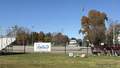
Spectrum Health proposed locating its clinic in a former Stoddard Avenue medical facility.
According to Mayor Bianchi, Spectrum has said they will not participate in any public hearing in Pittsfield until a settlement agreement in its legal dispute with the city is signed.


City Councilors Paul Capitanio, John Krol and Christine Yon attended the gathering, adding their own voices to the chorus calling for reconsideration of the location.

"We are a compassionate community," said Krol. "We are compassionate toward those who definitely have a disease. It's a question of where this is located, and the community ought to be listened to."

Krol put forth a petition late last year to have the Department of Community draft an ordinance that would amend the zoning of the arts overlay and surrounding areas of downtown to prohibit both methadone and Suboxone clinics, though the resolution would not effect already existing Suboxone treatment available on North Street at Experience Wellness Center.

Scientific research on the impact of methadone maintenance clinics to communities and neighborhoods in which they're located has been sporadic over the past few decades, and truly broad comparative meta-analysis of multiple communities is scarce. One recent study by the University of Maryland, however, examined crime data around 13 different clinics and found no resulting increase in neighborhoods from their introduction. The same study compared crime rates in the vicinity of such clinics with those around hospitals and convenience stores, finding convenience stores had the highest rates of reported crimes of the three.

An evaluation of the city's opiate addiction issues by the Department of Public Health previously determined that Pittsfield has an underserved need for treatment, and therefore must add an additional clinic option.  As in the case with the attempted rental on Summer Street, residents nearest Stoddard Avenue say that place is not near them.

Ward 3 Councilor Paul Capitanio said that if the Stoddard Avenue deal falls through, others should refuse to rent to the company as well until more consensus can be reached about a suitable location.

"I encourage all these other people, just don't rent to them, until we find a spot.  I know it's state-mandated that we have it here, but try to find a spot in a business area or somewhere, some place away from residents," he said.

Some residents were displeased that they were not immediately able to reach Bianchi to discuss their concerns early Monday. School Committee member Katherine Yon suggested that residents could express their opinion about the clinic location outside City Hall at Monday night's meeting of that body. While there was no public input period on the agenda for this special meeting to advance the school superintendent hiring process, Yon said gathering outside with signs could be an effective way to make their point. 

Only one individual from the afternoon rally was seen around City Hall chambers later that day.

Representatives of Spectrum Health Services could not be reached for comment Monday.

Tags: drug treatment,   methadone,   methadone clinic,   opiods,   Spectrum Health,   
If you would like to contribute information on this article, contact us at info@iberkshires.com.

BRTA Hears From New ITS System to Help With Rides

By Breanna SteeleiBerkshires Staff

PITTSFIELD, Mass. — The Berkshire Regional Transit Authority heard from an "intelligent transportation system" company on what it can bring to the bus service.

Spare Labs presented to the board last week, showcasing its platform for demand-response services, fixed-route information, service planning, and rider engagement. 

Spare representatives said the company has been working with transit authorities across the state and hope to "de-risk" the service with software changes.

"We know how tough it is to make a software change. It's no small feat. We've done it quite a few times in the states, so you're now working off of a blank piece of paper. We understand what your partners have done, positives and negatives, so you're building with that in mind," said senior growth manager Joshua Bethel.

Bethel emphasized a hands-on implementation where they will work with BRTA staff to prepare data, test the system, train dispatchers, drivers, and administrators, and help with rider communications.

"One example of how we've de-risked is the MBTA, one of the largest paratransit services [The Ride] in North America. In their switch to Spare, they saw immediate results. So our kind of implementation process is extremely white glove," he said. "We like to get in the trenches. We like to be with you on site, opening up a lot of times. We're here 4 a.m. when the days open, working with you. So look at this as an active partnership." 

Bethel gave an example on how the system helped the Massachusetts Bay Transit Authority with a training approach.

"Internally, every stakeholder will have some type of training, whether it's a dispatcher, a driver, admins. You all will have some level of training and different permissions in the system. Because of that approach, MBTA saw immediate great results," he said. "Their on-time performance pre-spare was 88 percent. Within 24 hours of launch, they were up to 95 percent, and they are continuing to grow."

Spare described several ways riders could interact with the system — a BRTA-branded smartphone app, online booking through a web portal, phone booking with a human dispatcher, text-based interactions, and an AI phone agent for routine requests, such as booking, canceling, or checking the status of a trip.

"One of the biggest differences that riders will see is everything will truly be at their fingertips, and we have multiple ways we're going to stay up to date based on what's available to them, we obviously will have a router app on the smartphone, but we offer availabilities for people who don't have that," Bethel said. "So, for someone who doesn't have a smartphone but they have access to a computer, we have a webbooker. For someone who doesn't have access to a computer but they need to call in, we also will be teaming what you have from a dispatcher standpoint. We also offer an AI call taker who can answer frequently asked questions, and when wait time is too hard, too high, automatically clicks in and says, 'Hey, this is the final wait time. You can call, you can cancel.' So effectively, with the technology, you can reduce wait times as you grow."

Their platform could also account for rider accessibility needs when matching trips to vehicles and could flag cases where a rider's booking did not reflect their usual needs. It can also have caregivers and others book on a rider's behalf if need be for medical appointments and more.

Earlier in the meeting, BRTA Deputy Manager Benjamin Hansen spoke on the ridership numbers citing inaccurate data on how many are riding because of the outdated system. Their system will be able to know in real time when a passenger boards and when one gets off. 

Spare also described tools intended to support route and demand-response planning, including; reporting by route, stop, time of day, and rider; integrations with passenger counting hardware and other systems; real-time vehicle and trip information; traffic-aware routing, which could use Google traffic data; and alerts for unusual patterns or apparent data discrepancies.

They said data could be brought into the platform from existing hardware and configured into reports for BRTA. The Spare team would work with BRTA during implementation to decide which data to import and which measures the agency needs. 

Many of the questions posed by the board were about the selling of data and how rider data is protected. Spare representatives said the company does not sell rider data and that BRTA would control the permissions as the data would belong to BRTA. As for a government agency asking for the data, they were unsure and said they would have to verify the rules for sharing information, but added they are compliant with the Americans With Disabilities Act and federal and state law. 

View Full Story

More Pittsfield Stories